wshobson/agents: 63 Plugins That Stop Claude Token Bleed
Claude Code's multi-agent workflows burn tokens fast. wshobson/agents splits 85 specialized agents into 63 single-responsibility plugins that load on-demand, cutting context bloat while keeping orchestration power. Senior devs who've hit token limits treat it as the de facto standard.
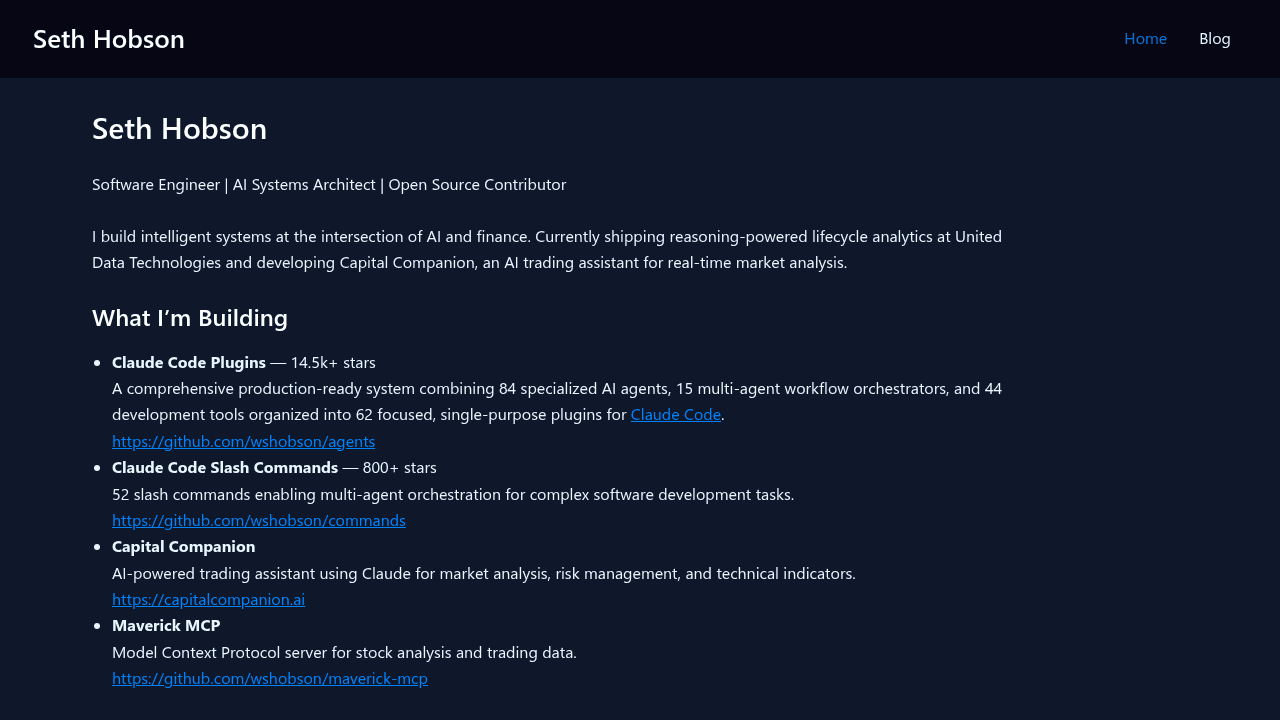
You wire up three agents in Claude Code—one for security hardening, one for Kubernetes deployments, one for database migrations. The session hangs. You check the console: context limit exceeded before a single line of code ships. Loading multiple agents and their knowledge blobs into one workspace burns through tokens faster than most developers realize.
22,000+ engineers use wshobson/agents as their standard answer. The repository splits 85 agents into 63 single-responsibility plugins, each handling one domain with its own commands and skills. You load what you need when you need it, not everything upfront. Context stays small; orchestration power stays intact.
The Multi-Agent Token Problem
Stacking agents inside Claude Code triggers token explosions. Every agent's prompt template, every knowledge blob, every example conversation—all of it sits in context simultaneously. For developers past the initial multi-agent honeymoon phase, this isn't theoretical. It's the concrete limit that stops workflows cold.
The problem compounds when you want orchestration: planning agents that map work, execution agents that write code, review agents that validate output. Building those coordination patterns from scratch means hand-crafting prompt chains and keeping everything in memory. Tokens bleed faster than features ship.
Single-Responsibility Plugins: Load What You Need
wshobson/agents carves functionality into 63 plugins. Each owns one domain—full-stack feature development, security audits, infrastructure automation—with dedicated agents, skills, and tools. The architecture enforces modularity: a Kubernetes plugin loads its deployment agents and Helm skills; a security plugin loads its hardening workflows and vulnerability scanners. You compose them as needed rather than loading the entire catalog into context.
The repo includes 15 prebuilt workflow orchestrators that coordinate agents across planning, execution, and review phases. For developers who want multi-agent coordination without rolling their own orchestration logic, it's batteries-included. You get the coordination patterns; Claude Code loads only the relevant context per task.
Why Other Repos Clone This as Their Base
Repositories like serco-chen/agents and kyle-cassidy/claude-code-agents explicitly instruct users to clone wshobson/agents into ~/.claude/agents as their foundation. lst97/claude-code-sub-agents states its documents scaffold directly from this repo's structure. Multiple "awesome" lists—rahulvrane/awesome-claude-agents, quemsah/awesome-claude-plugins—include it as a primary resource. GitHub Topics and catalog sites rank it in the top tier of Claude Code plugin repositories.
Workshop videos, podcasts, and tutorials use wshobson/agents as the reference implementation for multi-agent automation. It's not just individuals experimenting; derivative projects build on top of its architecture.
The Permission Model and Token Cost Trade-Off
Hacker News threads on Claude Code surface real concerns. Permission limitations applied to root agents don't always propagate to child agents. Documentation is incomplete; generated agent permissions can be invalid without error feedback. One commenter noted Anthropic "not living up to the standard" they usually set, specifically around subagent configuration—the system wshobson/agents relies on.
Token cost skepticism persists. Some engineers question burning tokens on multi-agent systems when LLMs can produce bugs or verbose code. Sandbox limits "are more like suggestions," raising safety questions when agents hold broad permissions. These are real engineering tradeoffs, not edge cases.
Progressive Disclosure Architecture and the Sonnet 4.5 Update
The repo updated explicitly for Sonnet 4.5 and Haiku 4.5, adding 47 skills across 14 plugins in a progressive-disclosure layer. Hybrid orchestration patterns align with newer Claude models that make modular, token-efficient agents viable where earlier versions struggled. The architecture works now because the underlying models finally support it without context collapse.
When You Should (and Shouldn't) Reach for This
wshobson/agents fits teams hitting context limits with complex orchestration needs. It's overkill for simple single-agent tasks. Alternatives exist: ruvnet/claude-flow targets enterprise orchestration with distributed swarm intelligence; automazeio/ccpm manages workflows via GitHub Issues and Git worktrees. This repo's strength is the curated catalog and granular plugin design optimized for minimal token usage inside Claude Code's marketplace model. For developers already at the wall, it's the escape hatch.
wshobson/agents
Multi-harness agentic plugin marketplace for Claude Code, Codex, Cursor, OpenCode, GitHub Copilot, and Google Antigravity