TradingAgents-CN: A股 Market Infrastructure Gap
Western multi-agent trading frameworks like LangGraph and AutoGen weren't built for Chinese equity markets. TradingAgents-CN addresses the fundamental infrastructure gap: native A股/港股 support, domestic LLM integration, and real-time Chinese financial media analysis. The framework has growing pains, but it solves a localization problem that goes far deeper than translation.
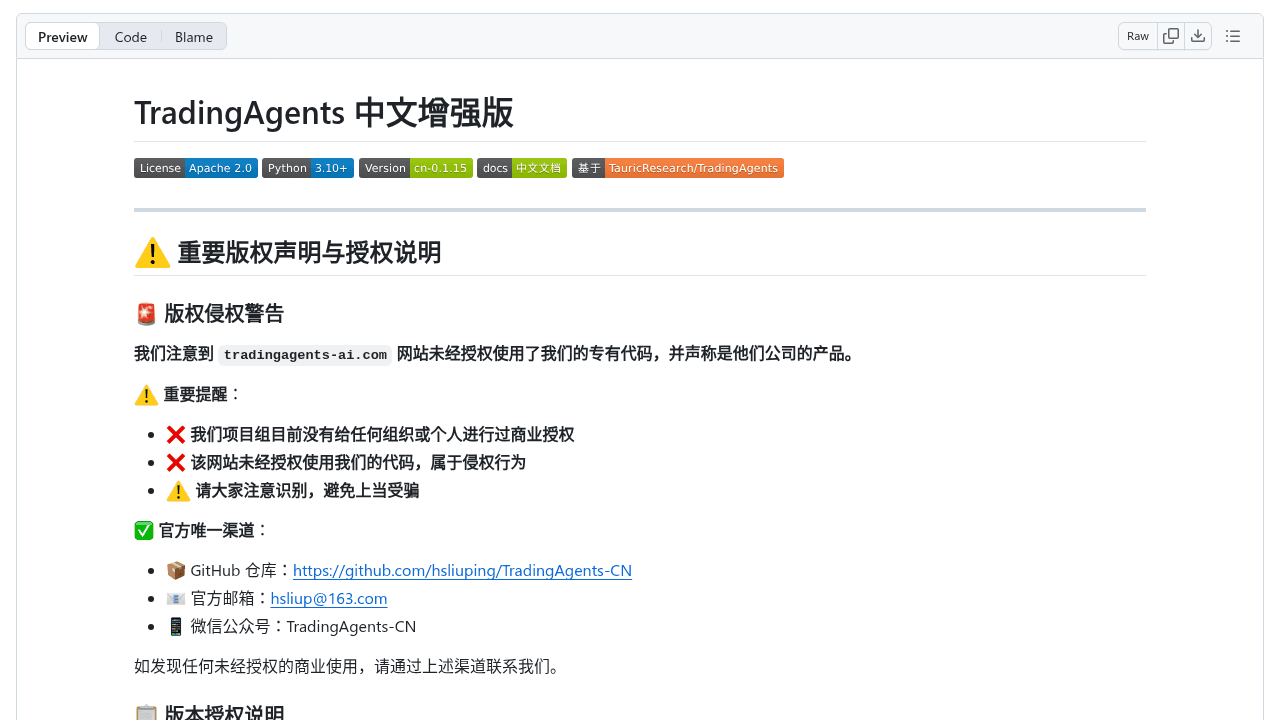
Western multi-agent trading frameworks work brilliantly—if you're analyzing S&P 500 stocks with Bloomberg terminals and English-language earnings calls. Chinese equity traders face a different problem: no framework natively supports A股/港股 data feeds, local LLM integration, or real-time Chinese financial media analysis. TradingAgents-CN exists because that infrastructure gap was real, and no one else was building the bridge.
The Localization Problem Western Frameworks Don't Solve
LangGraph, AutoGen, and crewAI are solid tools for building multi-agent systems. They're also built around Western market assumptions: US stock tickers, English-language sentiment data, API access to OpenAI or Anthropic. A Chinese developer trying to analyze 贵州茅台 or track discussions on East Money forums hits a wall.
The missing pieces aren't trivial. Chinese markets require domestic data sources for A-shares and Hong Kong stocks, integration with models like DeepSeek or Qwen that understand financial Mandarin, and parsers for platforms where retail traders actually congregate. Translation layers don't solve this—you need infrastructure designed for how Chinese markets operate and how Chinese traders communicate.
What TradingAgents-CN Actually Builds
The framework organizes specialized agents into distinct roles: market analysts parse price action, sentiment trackers monitor social discussions, risk assessors evaluate position sizing. These agents don't just run in parallel—they engage in debate loops where conflicting signals get reconciled before generating trading recommendations.
The architecture targets financial research, education, strategy validation, and automated reporting rather than production trading. That positioning matters. This is infrastructure for exploring how multi-agent systems handle Chinese market complexity, not a black box promising alpha.
Integration with domestic LLMs means the system can reason about Chinese financial terminology without the semantic drift that comes from models trained on English text. When an agent evaluates market sentiment around a policy announcement from the CSRC, it's working with models that understand the regulatory context.
Real-World Friction Points
The framework is tackling several problems at once, and that shows. Users report analysis runs that complete but display demo data instead of actual results, with currency formatting errors showing up for A-share stocks. Common deployment headaches include Docker startup failures from port conflicts, stock data fetch errors, and real-time quote delays—the kind of issues that emerge when you're wiring together multiple data sources and agent orchestration layers.
These friction points come from infrastructure work that tries to solve several hard problems: agent coordination, Chinese data source integration, local LLM orchestration, and market-specific logic. The repository is transparent about these limitations, which is how open-source projects mature.
The Missing Piece in Chinese Financial Tooling
The broader significance isn't just one framework. It's the infrastructure gap it highlights. Chinese developers building financial tools have had to either adapt Western frameworks with extensive workarounds or build everything from scratch. TradingAgents-CN demonstrates there's developer demand for Chinese-first solutions in the multi-agent space.
Western frameworks like LangGraph and AutoGen structure specialized roles and data flows for their target markets. They're well-designed tools that solve real problems. TradingAgents-CN doesn't diminish their value—it addresses a parallel need in markets those tools weren't designed to serve.
Different markets require different infrastructure. A framework optimized for parsing SEC filings and Wall Street Journal sentiment won't naturally extend to CSRC announcements and East Money discussions. The technical debt of forcing that adaptation is real, and avoiding it by building localized infrastructure makes sense.
This is infrastructure work that recognizes where general-purpose solutions stop and market-specific needs begin. That recognition alone fills a gap worth watching.
hsliuping/TradingAgents-CN
基于多智能体LLM的中文金融交易框架 - TradingAgents中文增强版