PicoClaw: AI Agents That Run on $10 Hardware in 10MB RAM
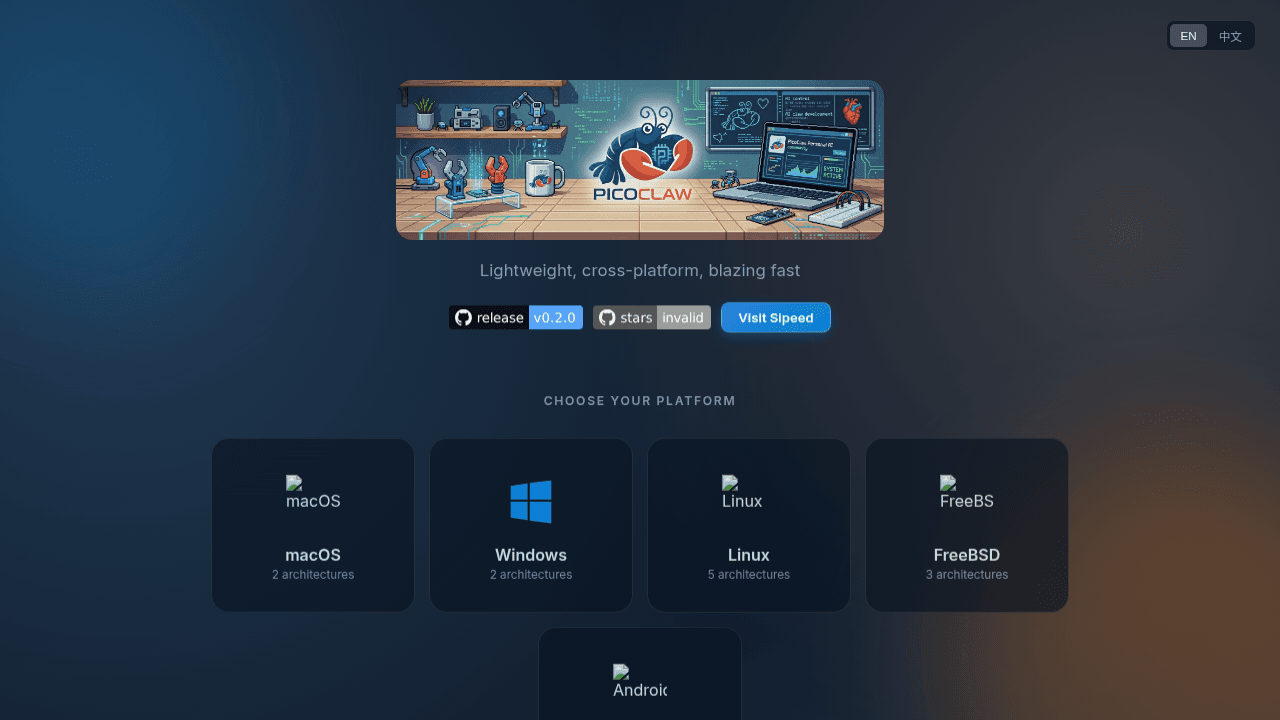
OpenClaw proved AI agents could automate complex workflows. PicoClaw asked a different question: what if those agents ran on edge hardware with minimal resources? The answer opens new deployment scenarios—from isolated security contexts to $10 devices—through aggressive optimization.
OpenClaw pioneered AI agent automation by building a system that could control computers through vision and large language models. It automated workflows, navigated UIs, executed multi-step tasks. The resource requirements reflected its ambition: over 1GB of RAM, deployment on devices like Mac minis, compute headroom for vision models and LLM inference. For enterprise automation, that trade-off made sense.
PicoClaw asked a different question: what if you needed that same automation on hardware costing $10 with under 10MB of RAM?
The Resource Assumption OpenClaw Made (And Why It Made Sense)
OpenClaw's architecture optimized for capability, not constraint. Running vision models alongside LLM agents requires memory. Processing screenshots in real-time demands compute. The project prioritized solving the hard problem of computer control over minimizing resource footprint.
That approach worked for teams with access to cloud infrastructure or local machines. It proved AI agents could reliably automate tasks humans previously handled through GUIs. The resource demands weren't wasteful—they were the cost of doing something difficult.
But that deployment model assumes certain infrastructure: always-on compute, network connectivity, integration into existing systems. For edge devices, IoT deployments, or physically isolated environments, those assumptions break down.
What Changes When You Optimize for $10 Hardware
PicoClaw's design targets scenarios where traditional agent architectures won't fit. The team compressed agent functionality into a footprint small enough to run on microcontrollers and embedded systems. That required rethinking every layer: stripped-down inference, minimal dependencies, aggressive optimization.
The payoff isn't just cost. Physical isolation matters for security deployments. A developer blog notes PicoClaw addresses security risks by providing hardware-level physical isolation on low-cost independent devices, minimizing attack surface compared to software sandboxing on shared compute.
Fitting AI agent capabilities into 10MB requires creativity. This isn't a feature-pruned prototype—it's a rethinking of what an AI agent runtime can be when resource constraints become design requirements rather than afterthoughts.
The Trade-offs: What You Gain and What You Give Up
PicoClaw's GitHub issues reflect the growing pains of a young project scaling fast. NVIDIA API integration fails due to unsupported parameters. Windows builds hit Makefile issues. These are areas to watch as the project matures.
The 21,000 stars the project accumulated shortly after launch suggest developers see value in the trade-off. Edge deployment and physical isolation come at the cost of full-featured compute. For teams that need those properties, PicoClaw opens deployment scenarios OpenClaw never targeted.
Both approaches solve real problems. OpenClaw enables automation where compute is available. PicoClaw enables automation where compute is the constraint. Different contexts demand different optimizations.
Where Ultra-Lightweight Agents Actually Matter
The clearest use cases live at the edge. IoT networks with thousands of distributed nodes can't run 1GB agents on every device. Air-gapped environments in regulated industries need automation without network dependencies. Security systems benefit from agents running on dedicated, physically isolated hardware rather than shared infrastructure.
Constraint-driven design doesn't just reduce cost—it opens possibilities. A $10 device running an AI agent in 10MB can deploy where enterprise solutions can't justify the economics or architecture. Edge networks, remote monitoring, embedded automation—scenarios where the constraint becomes the feature.
PicoClaw won't replace OpenClaw for teams optimizing for capability. But for deployments where resource constraints dictate architecture, it proves AI agents don't need gigabytes of RAM to be useful. Sometimes the most interesting engineering happens when you question what everyone assumed was necessary.
sipeed/picoclaw
Tiny, Fast, and Deployable anywhere — automate the mundane, unleash your creativity