Pi-mono: Composable AI Coding Primitives vs Features
Pi-mono takes a different approach to AI coding assistants: radically composable primitives instead of baked-in features. With 33k GitHub stars and real-world adoption in OpenClaw, it's solving problems like TUI flickering and navigation that polished tools ignore—while accepting trade-offs in startup speed and stability that come with early-stage OSS.
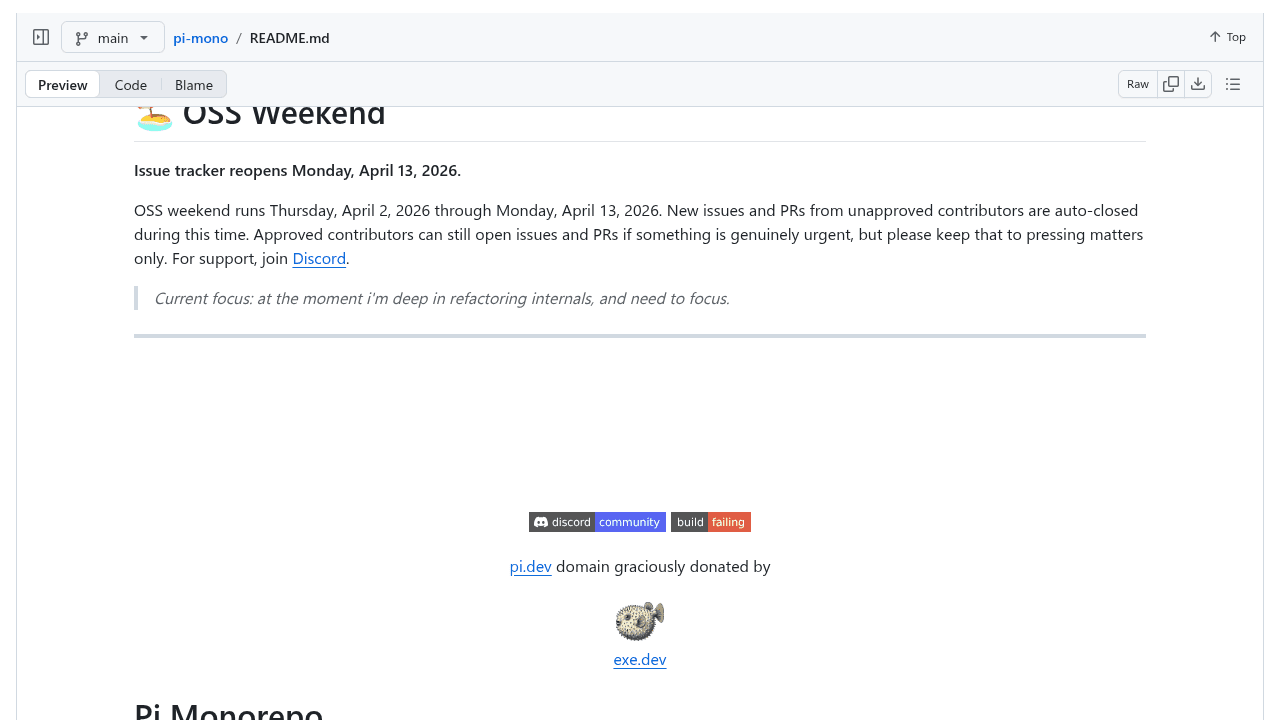
When your AI coding agent freezes mid-task or flickers across terminal screens during agentic workflows, polished tools like Claude Code and Cursor offer little recourse. You file a bug report and wait. Pi-mono takes a different bet: give developers composable primitives instead of pre-baked features, and let them fix it themselves.
The project has accumulated 33,000 GitHub stars not by matching Anthropic's polish, but by solving problems integrated tools ignore. TUI flickering in agentic workflows, state-of-the-art navigation for previous turns in coding agents, and hackability that lets developers compose their own abstractions—these are the wins that matter to builders who want control over their tools.
The Composability Gap in AI Coding Tools
Claude Code and Cursor ship complete experiences: autocomplete, chat interfaces, context management bundled into products most developers can use immediately. That integration creates value, but it also creates walls. When you need behavior the product team didn't anticipate—custom agent orchestration, novel context retrieval strategies, experimental prompting patterns—you wait for the feature request to get prioritized.
Pi-mono's philosophy rejects that constraint. Instead of features, it exposes primitives: the building blocks for TUI rendering, state management, and agent communication that developers can compose into whatever workflows they need. OpenClaw uses pi-mono as its core, building custom coding agent experiences on top of those primitives rather than fighting against an integrated tool's opinions.
The 33,000 stars signal something specific: a critical mass of developers value hackability over polish, at least for AI coding tools. These aren't users looking for consumer-ready products. They're builders who want Lego blocks, not finished castles.
The Performance Trade-offs
Composability costs performance. Pi-mono takes 68 seconds for tasks the official Gemini CLI completes in 41 seconds—a 66% overhead that compounds when you're iterating rapidly. Startup speed matters less when you're building experimental workflows, but it's a tax for daily usage.
Stability shows growing pains. GitHub issues document bugs where pi-messenger and pi-coding-agent stop responding after extended sessions. These aren't architectural flaws—they're typical early-stage open source friction. Projects growing this fast accumulate issues faster than maintainers can close them. The question isn't whether bugs exist, but whether the core value proposition justifies working through them.
For developers building on pi-mono's primitives, the answer appears to be yes. They're trading 27 extra seconds of startup time and occasional agent hangs for the ability to modify how their tools work at the foundational level. Anthropic won't let you rewrite Claude Code's TUI renderer. Pi-mono will.
Two Design Philosophies, Both Valid
The tension between pi-mono and polished alternatives isn't about superior technology—it's about serving different needs. Anthropic and Cursor optimize for the majority: developers who want AI coding assistance that works immediately, integrates with their editor, and requires zero configuration. That's product design serving real user needs.
Pi-mono optimizes for the minority willing to trade polish for control. Developers who hit the ceiling of what integrated tools allow, who need to experiment with agent architectures those products don't support, who want to compose their own abstractions from reliable primitives rather than accept someone else's feature roadmap.
The project's recent GitHub Trending appearance suggests that minority is larger than the major players assumed. Not everyone wants an iPhone. Some developers still want a soldering iron and component library. Pi-mono gives them hackable primitives instead of locked-down features—and accepts the performance gaps and stability issues that come with that choice.
Neither philosophy is wrong. They're solving different problems for different developers. The 33,000 stars just prove the composability gap was real.
badlogic/pi-mono
AI agent toolkit: coding agent CLI, unified LLM API, TUI & web UI libraries, Slack bot, vLLM pods