OpenAI Agents SDK: Simplicity After the Framework Wars
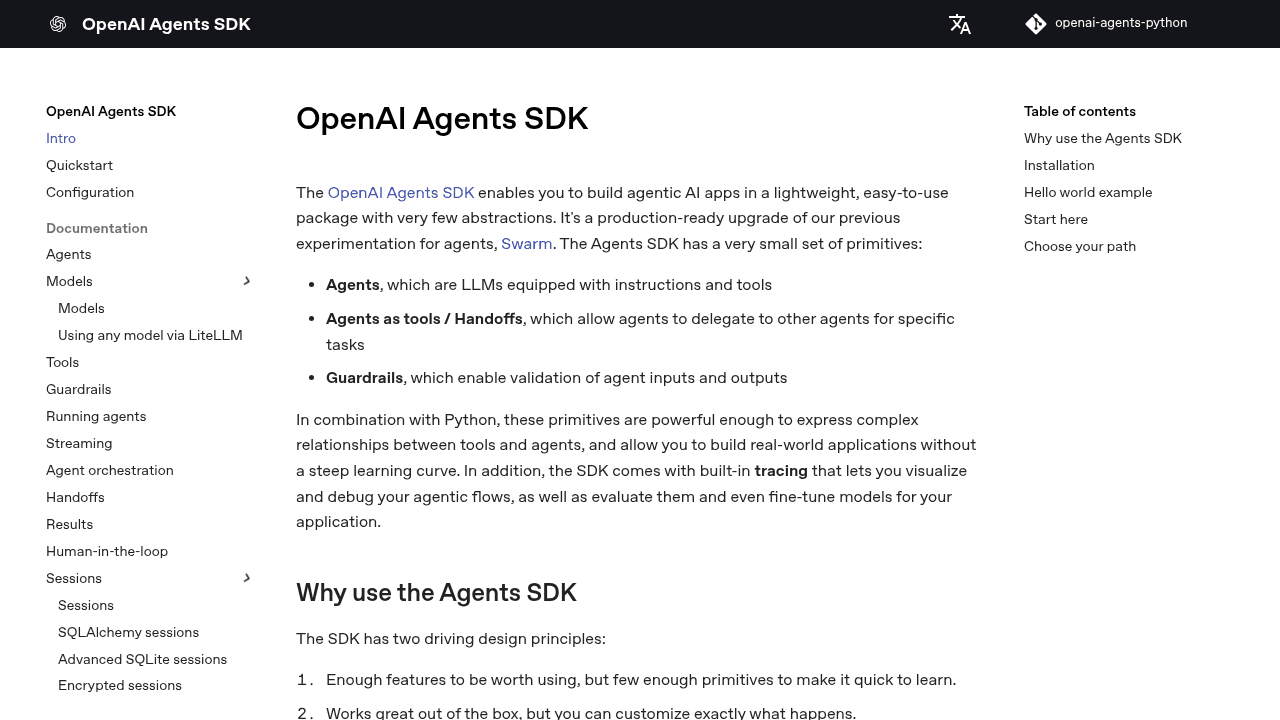
OpenAI's Agents SDK takes the opposite bet from LangGraph and CrewAI: lightweight beats heavyweight for most use cases. The GitHub stars (19,860 in weeks) suggest the community has been waiting for something simpler, even as the SDK wrestles with 11-second response delays and timeout issues that come with being barely two months old.
OpenAI watched for two years as developers built complex abstractions on top of their models. LangGraph introduced state graphs for agent persistence. CrewAI orchestrated multi-agent collaboration. AutoGen engineered conversational patterns. Each framework solved real problems—state management across turns, coordinating specialist agents, handling tool call failures—and pushed the field forward.
Then OpenAI released their own agent framework, and it's simpler than everything else out there.
The Framework Explosion OpenAI Watched Happen
The current landscape of AI agent frameworks includes LangGraph, CrewAI, AutoGen, Semantic Kernel, Smolagents, Pydantic AI, Agno, and Mastra. They tackle real challenges: how do you maintain state across a conversation that spans hours? How do you coordinate five specialized agents working on the same task? How do you recover when a tool call times out mid-workflow?
These frameworks earned their complexity. Building multi-agent systems without them meant reinventing state machines, implementing retry logic, and debugging opaque errors when agents talked past each other. The tooling was necessary because the patterns were hard.
But necessity created its own problem. Developers started wondering whether they needed state graphs to build a customer service bot that hands off between departments.
What the Agents SDK Actually Does Differently
The OpenAI Agents SDK makes a bet: most developers don't need complex state management. They need structured handoffs between agents and automatic tool invocation without the abstractions.
The framework provides built-in agent loops that handle the repetitive call-response pattern. When one agent decides it's done, it can hand off to another with context intact. Tools get invoked automatically when the model decides it needs them—no manual wiring of function calls.
This isn't more powerful than LangGraph's state persistence or CrewAI's orchestration patterns. It's optimized for a different problem: the developer who wants agent behavior without becoming a framework expert first.
The difference shows up in code complexity. Where established frameworks require understanding state graphs and execution plans, the SDK exposes agent handoffs as a first-class primitive. You define agents, specify which ones can hand off to each other, and let the framework manage the loop.
The Performance Problems No One's Hiding
The SDK launched in March 2025, which means it's roughly eight months old. The growing pains show.
Some developers report GPT-4.1 processing times jumping from under 4 seconds to over 11 seconds due to delays in the Responses API. Another thread documents 20-33 second processing times for Excel files with just 20 product details, long enough to trigger gateway timeouts in synchronous REST calls.
These aren't design flaws—they're the friction points of a young project finding its performance profile. The SDK is tackling the same latency challenges every agent framework faces when models make multiple decisions per workflow. LangGraph and similar tools had years to optimize these patterns.
Why 19,860 Developers Starred It Anyway
The GitHub metrics tell a story about what developers were waiting for. The repository collected 19,860 stars in weeks, a signal that framework fatigue is real.
Part of that comes from developers who find existing frameworks too early-stage, abstracting design patterns that aren't yet common. When your use case is straightforward—a support agent that routes between specialists, a research assistant that hands off to fact-checkers—loading a full state management framework feels like overkill.
Sometimes "good enough and understandable" beats "powerful and complex," especially when you're trying to ship.
When You Should (and Shouldn't) Pick This
The SDK makes sense for straightforward agent handoffs, tool calling patterns, and workflows that don't require complex state persistence. If you're building a multi-step assistant where each step is relatively independent, the lightweight approach pays off in reduced cognitive overhead.
Stick with LangGraph or CrewAI when you need battle-tested reliability, complex state management across long conversations, or enterprise orchestration patterns. Those frameworks earned their complexity solving problems the SDK doesn't address yet.
The company that sparked the AI agent explosion is now suggesting maybe the field overcomplicated things. Whether that's true depends on what you're building—and both approaches deserve respect for the problems they're solving.
openai/openai-agents-python
A lightweight, powerful framework for multi-agent workflows