MiroFish: Swarm AI Hit 30K Stars in One Week
MiroFish uses thousands of AI agents in social simulations to predict market trends and public opinion shifts. Built in 10 days by an undergraduate developer, it topped GitHub trending with 30,000 stars in a week. The tool replaces single-model probability outputs with detailed reports from emergent swarm behavior.
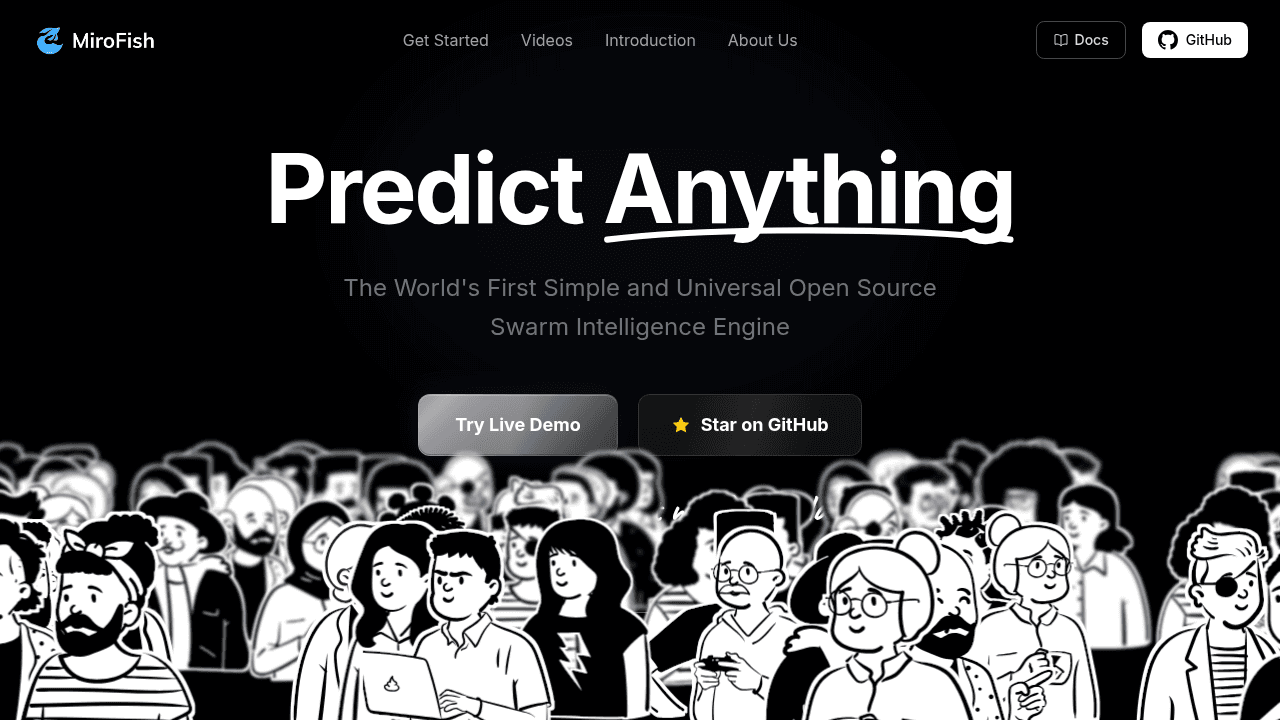
An undergraduate developer built an AI prediction engine in 10 days, and it rocketed to nearly 20,000 GitHub stars in a week, topping the platform's global trending list. MiroFish doesn't output simple probabilities like traditional forecasting tools—it spins up thousands of AI agents in a digital sandbox, lets them interact, and watches emergent social dynamics unfold to predict market sentiment and public opinion shifts.
The speed caught developers' attention. This isn't a research lab project that took years to publish. It's open-source swarm intelligence tooling built in the time most teams spend arguing over API design.
From Zero to GitHub Trending in Seven Days
MiroFish addresses a specific limitation of single-model forecasting: the lack of detail in how predictions form. Where conventional tools might output "68% chance of positive market reaction," MiroFish generates reports from simulated social interactions—agent conversations, opinion clusters, narrative spread patterns.
The builder's background adds context. An undergraduate developer shipping production-grade swarm intelligence in 10 days speaks to how accessible these techniques are becoming. The repo includes scaffolding for multi-agent coordination, simulation state management, and emergent behavior tracking—infrastructure that would have been PhD-level complexity a few years ago.
Why Swarm Simulations Instead of Single Models
Traditional forecasting tools train a model on historical data and output statistical probabilities. MiroFish takes a different path: populate a virtual environment with AI agents, assign them roles and perspectives, let them interact over multiple rounds, then analyze the patterns that emerge.
The distinction matters for specific use cases. Election dynamics don't reduce cleanly to probability distributions—they involve narrative momentum, demographic clustering, and opinion cascades. Product launch simulations benefit from watching how different customer personas react to messaging and influence each other. The tool moves beyond simple predictions to model the social mechanics underneath.
Where enterprise forecasting platforms optimize for statistical rigor and audit trails, MiroFish optimizes for exploring emergent behavior. Both approaches solve different problems. The swarm simulation model helps when you need to understand how a prediction might unfold, not just whether it will.
What Developers Are Actually Using It For
The repo documentation and community discussions point to practical applications: market sentiment analysis, public opinion shifts, narrative spread tracking, election dynamics modeling, and product launch simulations. These align with scenarios where agent interactions reveal non-obvious patterns.
Some claims around the project lean aspirational. Predicting specific election outcomes or market movements with confidence requires validation beyond what's currently documented. The value right now sits more in the exploration of social dynamics than in production forecasting. That's normal for a week-old open-source project moving this fast.
The real achievement is making swarm intelligence approachable. Running thousands of agents used to require distributed systems expertise and custom coordination layers. MiroFish packages that complexity into something developers can clone and experiment with.
The API Cost Reality
Running large-scale agent simulations hits a practical constraint: LLM API costs accumulate fast when thousands of agents are generating responses. The recommendation to limit simulation rounds makes sense—each round multiplies token usage across the entire swarm.
This isn't a flaw. It's an honest engineering tradeoff in 2025's AI ecosystem. You're choosing between simulation depth and API bills. For research and experimentation, that's manageable. For production deployments running continuous forecasts, it becomes a budget line item worth planning around.
The cost transparency helps. The repo doesn't hide the economics. It treats them as parameters to tune based on your use case.
What This Means for Open-Source Prediction Tools
MiroFish signals something broader: swarm intelligence tooling is moving out of academic papers and into repositories developers can actually run. The 30,000 stars reflect genuine interest in prediction approaches that show their work through agent interactions rather than hiding complexity in model weights.
This doesn't replace enterprise forecasting platforms or statistical modeling tools. It complements them. When you need auditable predictions for regulatory compliance, use the statistical tools. When you want to explore how a narrative might spread through different demographic clusters, spin up a swarm simulation.
The project is still early—with plenty of open issues and rough edges typical for a repo growing this fast. But the core insight holds: accessible swarm intelligence opens up prediction approaches that weren't practical for most developers before. That's worth the community's attention.
666ghj/MiroFish
A Simple and Universal Swarm Intelligence Engine, Predicting Anything. 简洁通用的群体智能引擎,预测万物