Prompt Optimizer: One-Click Fix for Bad LLM Prompts
Crafting effective LLM prompts remains a frustrating trial-and-error process for most developers. Prompt Optimizer automates this workflow with intelligent multi-round optimization that consistently improves prompt quality. We examine why this open-source tool earned 24K+ stars and address the deployment challenges users face.
Prompt Optimizer: One-Click Fix for Bad LLM Prompts
You've rewritten the same prompt four times. The model still returns generic nonsense. You add more examples, tweak the phrasing, restart from scratch. Thirty minutes later, you're still guessing what instruction structure will work.
Prompt engineering has become the unexpected bottleneck in LLM development—a craft with no established playbook where experienced developers burn hours on trial-and-error iteration. Prompt Optimizer addresses this directly: one click triggers multi-round AI optimization that analyzes and refines your prompts automatically.
Why Prompt Engineering Remains a Daily Struggle
The challenge isn't writing instructions—it's writing instructions that consistently produce useful results across different contexts. What works for GPT-4 might fail with Claude. A prompt that excels at summarization might collapse when applied to classification tasks. Teams building LLM-powered features face another layer: ensuring prompt consistency across developers with different writing styles and assumptions about what "clear instructions" means.
LLMs respond to nuance, context, and phrasing choices that aren't immediately obvious. The field lacks established patterns because it's new territory. This creates daily friction for anyone doing work with language models.
How Multi-Round Optimization Works
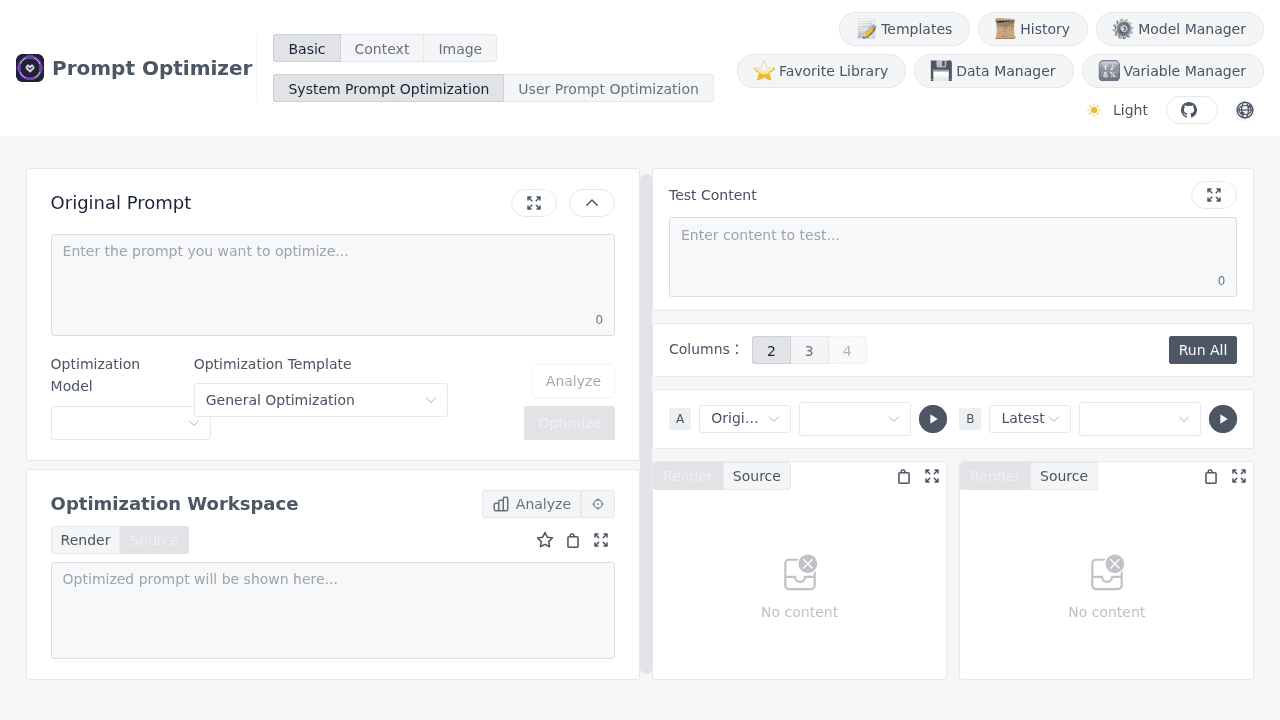
You paste in a rough prompt, click optimize, and the system runs multiple refinement rounds—each analyzing structure, specificity, and clarity before suggesting improvements. The backend handles the complexity while the interface stays minimal.
This iterative process mimics how experienced prompt engineers work manually: write, test, identify weakness, revise, repeat. The difference is speed and consistency. What might take twenty minutes of manual tweaking happens in seconds, and the optimization logic applies learned patterns rather than gut instinct.
The maintainer chose to make this logic transparent through open-source release, earning traction in return.
What 24K Stars Tell Us About Community Validation
24,000+ stars since launch suggests the prompt engineering struggle is widespread enough to drive organic discovery. Developers vote with stars when tools solve real workflow pain.
The decision to open-source rather than immediately commercialize shows confidence that community contributions will strengthen the tool faster than a closed development cycle. It's also validation of the problem space itself: if prompt optimization were trivial or niche, a repo offering automated solutions wouldn't gain this momentum.
The Deployment Reality: Network Proxies and Ollama
Growing pains accompany rapid adoption. Users report network proxy issues with the desktop version, and local Ollama deployment presents integration challenges. These aren't unusual for a young project scaling faster than its initial architecture anticipated.
The proxy problems particularly affect enterprise users behind corporate firewalls—a common friction point for tools that weren't initially built with those network constraints in mind. The Ollama difficulties suggest that local model integration requires more configuration than the one-click promise initially implies.
Neither issue invalidates the core value proposition, but both represent real friction for specific user segments. The project is working through these while handling growth that most open-source tools would envy.
Who Benefits Most from Automated Prompt Refinement
Teams needing prompt consistency across multiple developers get immediate value—the tool establishes a baseline quality level regardless of individual writing skill. Developers building LLM-powered features can prototype faster without getting stuck in prompt iteration cycles. Anyone doing repetitive prompt work (customer support categorization, content generation pipelines, data extraction) gains speed through faster refinement.
The tool matters less if you're doing one-off exploratory prompting or already have established prompt patterns that work reliably. It shines where volume and consistency intersect—exactly where manual prompt engineering becomes unsustainable.
linshenkx/prompt-optimizer
An AI prompt optimizer for writing better prompts and getting better AI results.