Block Shipped AI Agents to Marketing Teams. They Deploy Code Now.
Block deployed Goose AI to 5,000 employees across marketing, finance, and product teams—not just developers. Non-technical staff now automate engineering tasks like deployments, test generation, and compliance workflows. Sprint velocity doubled. The agent era isn't about better autocomplete; it's about who gets to ship code.
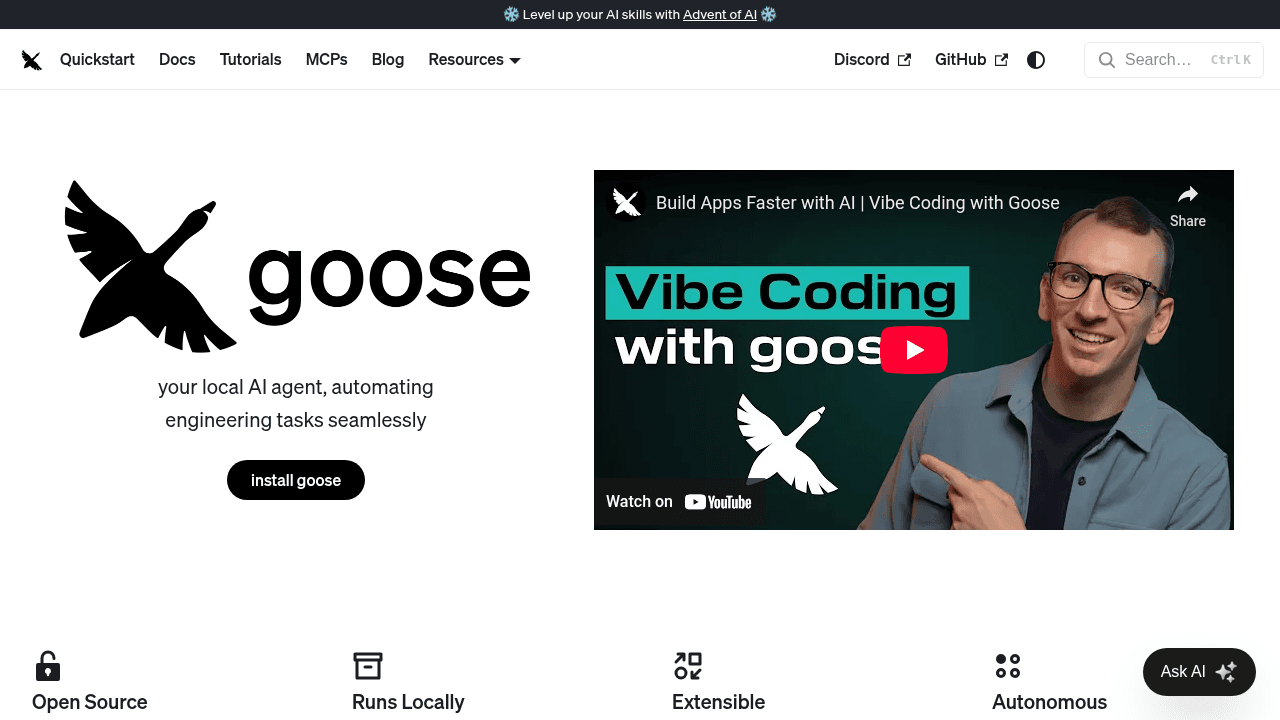
Marketing Teams at Block Ship Code Now. No Developers Required.
Marketing teams at Block handle code deployments. Finance staff automate compliance workflows. Customer service reps assign Jira tickets and run test suites. None of them are developers.
Block gave 5,000 employees access to Goose, an AI agent that runs in their terminal. Sprint teams that previously needed three weeks to ship now finish in one. This isn't a pilot program—it's in production, and it's not limited to engineering.
The Adoption Numbers
When Block open-sourced Goose in early 2025, the internal numbers were already there. Around 5,000 weekly users were running the agent for tasks that typical AI coding assistants don't handle: code migration, refactoring, test generation, orchestrating multi-step compliance workflows.
What separated this from typical developer tool rollouts was the user base. Marketing employees. Finance analysts. Product managers. Teams with no engineering background were automating tasks that previously required developer time—or didn't get done at all.
The sprint velocity metric: teams using Goose consistently collapsed three-week cycles into one-week cycles. That's not improvement from better autocomplete. That's a shift in who can execute technical work.
What AI Agents Actually Do
Copilot suggests your next line of code. Cursor autocompletes functions. Goose installs dependencies, runs git operations, executes code, debugs test failures, and orchestrates workflows without supervision.
The difference is autonomy. Ask Goose to migrate a codebase to a new dependency version, and it handles the package installation, updates imports across files, runs tests, identifies failures, fixes breaking changes, and commits the result. Ask it to handle a Jira ticket, and it pulls requirements, writes code, generates tests, and updates ticket status.
This is what Block's non-developer employees are using. A marketing team member can describe a deployment checklist in plain language, and Goose executes it—environment setup, build verification, deployment scripts, post-deploy validation. No code writing required.
The MCP Standard: 1,700 Integrations
Goose's extensibility comes from the Model Context Protocol, the open standard Block built with Anthropic and OpenAI. There are now 1,700+ MCP servers providing integrations: GitHub, Jira, Slack, Google Drive, Snowflake, and hundreds more.
Block authors internal MCP servers for secure enterprise workflows—proprietary systems that wouldn't work with closed AI tools. Any team can extend Goose to their specific toolchain without vendor permission.
Goose runs in the terminal, works with any editor, supports multiple LLMs, and executes locally. It's Rust-based for performance and Apache-2.0 licensed for enterprise modification.
The Failure Modes
Hacker News critics aren't wrong about the problems. Simple tasks sometimes take longer to prompt than to execute manually. One GitHub issue reports Goose "doing nothing" on basic requests, requiring restarts. Mac users hit hermit cache errors. Containerized environments need GOOSE_DISABLE_KEYRING set to avoid keyring failures.
These aren't edge cases—they're growing pains of a new interaction model. Prompting an agent to change a button color probably wastes time compared to editing CSS directly. But Block wouldn't scale to 5,000 users if the tool broke more workflows than it accelerated.
The value appears in unfamiliar territory: complex MongoDB queries, rarely-used frameworks, multi-system orchestration. Tasks where you know the goal but not the implementation details.
What Remains Developer Work
If marketing teams can automate deployments and finance can run compliance workflows, what remains distinctly developer work?
The optimistic view: engineers move up the stack to architecture, system design, and complex problem-solving while agents handle implementation grunt work. The threat: commoditization of the skills that define junior and mid-level roles.
Block's internal adoption suggests the bottleneck for many organizations isn't developer skill—it's access to developer time. When non-technical teams can execute technical tasks, velocity constraints shift. The question for engineering leaders isn't whether agents work, but whether their current workflow structure assumes artificial scarcity of technical execution capacity.
Goose hit 24,000 GitHub stars in six months. The agent era isn't coming—it's already deployed at Fortune 500 scale.
block/goose
an open source, extensible AI agent that goes beyond code suggestions - install, execute, edit, and test with any LLM