OpenManus: The Open-Source Manus Clone Developers Built
Manus AI's viral demos left thousands of developers waiting for invite codes. OpenManus emerged as a rapid open-source response—not a polished competitor, but a practical escape hatch for builders who need agentic workflows now. We examine what it actually delivers, the controversy around calling it 'open-source AI' when it relies on proprietary LLM APIs, and the early ecosystem taking shape around it.
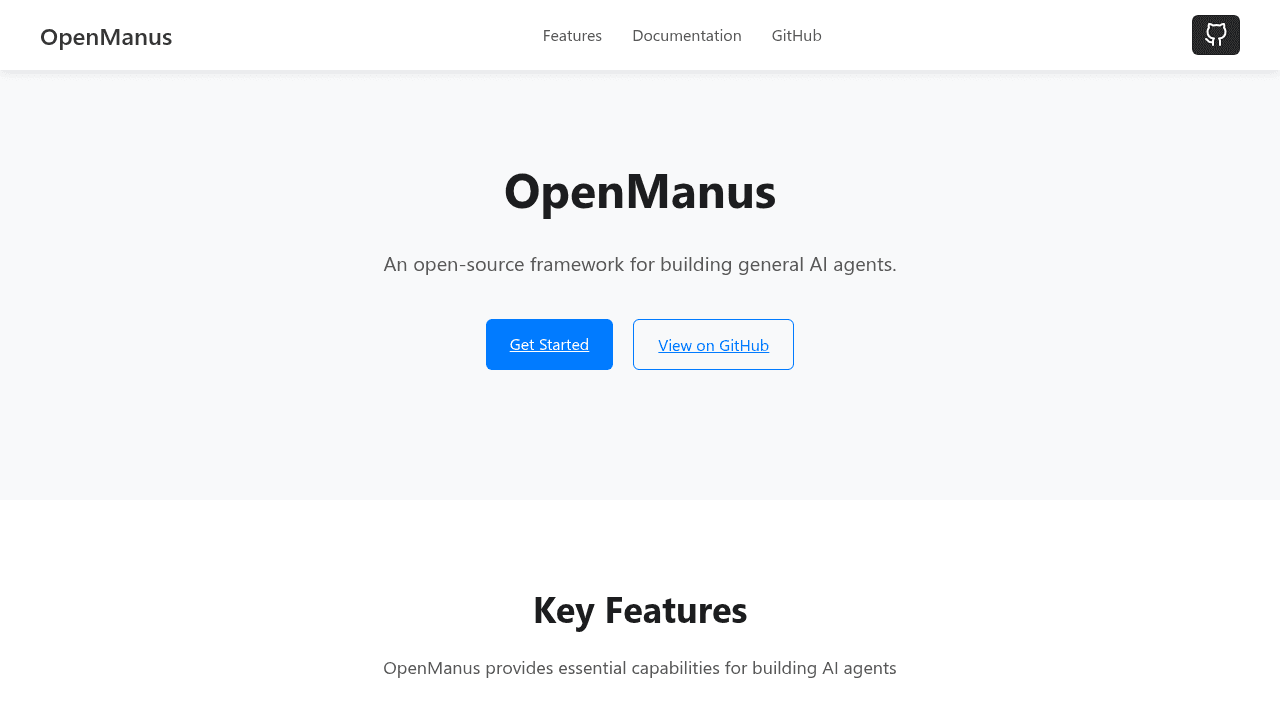
Manus AI's demos went viral in January 2025. Within hours, the invite codes ran out. Developers in regions where Manus wasn't available watched YouTube walkthroughs of an AI agent they couldn't touch. A small team affiliated with MetaGPT spent a few hours building OpenManus as an escape hatch—and 51,000 developers starred it on GitHub within days.
The Waitlist Problem: Why Developers Forked Manus
The pain point was simple: Manus showcased multi-step autonomous workflows—SEO campaigns, data analysis, code execution—but locked most builders out behind invite gates and regional restrictions. OpenManus emerged as the immediate answer. It wasn't polished. It wasn't a Manus-killer. It was available, self-hostable, and required nothing except your own LLM API keys.
Sometimes "good enough right now" beats "perfect eventually."
What OpenManus Actually Is (and Isn't)
OpenManus is a framework for building autonomous AI agents. You get pluggable tools, browser automation, multi-agent orchestration, and the ability to swap LLM backends (OpenAI, Anthropic, or others). You run it locally. You supply your own API credentials. No waitlist, no vendor lock-in.
It's also a work in progress. This isn't a drop-in Manus replacement with enterprise-grade polish. It's a foundation for tinkering—quickly assembled from the MetaGPT codebase to let developers prototype agentic workflows today instead of waiting months for access to a proprietary platform.
The value proposition is local control and immediate experimentation. If you need to test multi-step agent logic or build a custom automation workflow, OpenManus gives you the scaffolding without asking for permission.
The 'Open-Source AI' Debate
Critics on Hacker News were quick to point out the awkward truth: OpenManus relies on proprietary LLM APIs. The code is open. The models aren't. You don't own the weights. You're still paying OpenAI or Anthropic per token.
This matters for cost-sensitive projects, for teams concerned about API rate limits, or for anyone who wants true model ownership. But for many developers, the distinction is academic. They just want agent capabilities without waiting for an invite. They're fine trading API costs for speed and flexibility.
The "open-source" label is more accurate as "open architecture" than "open model." Whether that's enough depends on your use case.
What Developers Are Building With It
The early projects are taking shape. OpenManus-RL, led by Ulab-UIUC and MetaGPT, uses OpenManus as a base environment for reinforcement-learning-based tuning of LLM agents. OpenManusWeb wraps the framework in a browser UI for teams that need a web interface. Open WebUI discussions are exploring integration to enhance automation tooling.
Derivative projects like OpenManus-OWL reference it as a foundation for general-purpose agents. FoundationAgents, the organization behind OpenManus, positions it as a core building block in its broader agent infrastructure.
These aren't just forks—they're signs of real adoption among developers building LLM-powered applications who need agentic workflows today.
Trade-Offs: Token Costs, Speed, and Rough Edges
Heavy browser automation burns tokens. Multi-step workflows can be slow. Performance varies depending on which LLM backend you choose and how hard you hit API rate limits. This isn't optimized infrastructure—it's a framework you configure yourself.
For specialized tasks, single-purpose tools are often faster and cheaper. OpenManus shines when you need flexibility and multi-step orchestration, not when you're solving one narrow problem.
The Broader Agent Landscape: Where OpenManus Fits
Manus remains the invite-only reference. OpenAI's Responses API offers a managed agent framework within their stack. AutoGPT, SuperAGI, and Suna AI compete for open-source mindshare.
OpenManus differentiates on self-hostability, modular architecture, and early RL integration. Pick it when you need local control and multi-agent orchestration. Pick Manus if you get an invite and want a polished product. Pick OpenAI's tools if you're already embedded in their stack.
Getting Started: Running OpenManus Locally
You'll need API keys (OpenAI, Anthropic, or compatible), Python 3.10+, and basic environment setup. Clone the repo, configure your .env, and run the first agent workflow. The docs and community resources on GitHub walk through the rest.
It's not frictionless. But if you're building LLM-powered applications and tired of waiting for access to proprietary platforms, OpenManus gets you moving.
FoundationAgents/OpenManus
No fortress, purely open ground. OpenManus is Coming.