MCP Language Server: Bridging LSP and AI Assistants
An analysis of mcp-language-server, the adapter enabling AI assistants like Claude Desktop to access LSP servers for semantic code navigation. Examines the protocol gap it solves, growth trajectory, architectural implications, and production limitations.
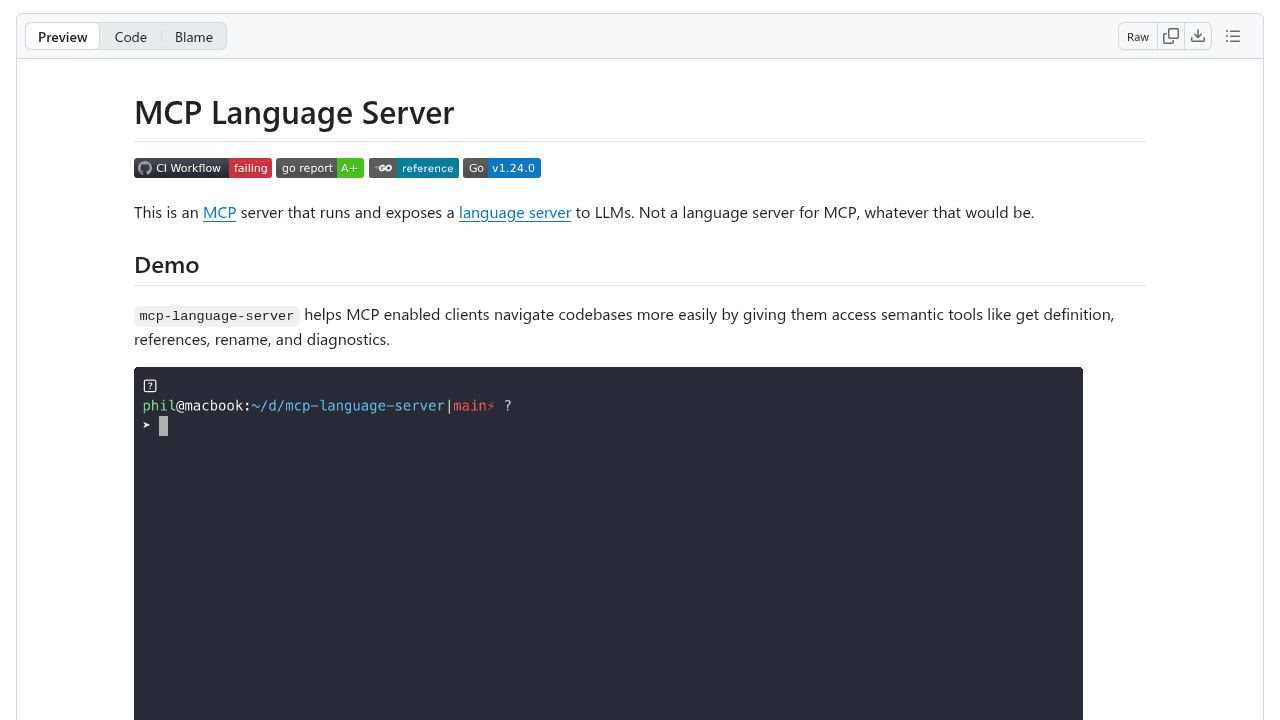
When you ask Claude Desktop to find where a Go function is defined, or pull up all references to a Rust struct, the answer doesn't come from the LLM's training data. It comes from gopls or rust-analyzer—the same language servers your IDE uses for semantic code navigation. But there's a problem: language servers speak LSP (Language Server Protocol), while AI assistants are now standardizing on MCP (Model Context Protocol). Enter mcp-language-server, an eleven-month-old adapter that bridges that gap.
The Protocol Gap AI Assistants Couldn't Cross
Language servers provide the intelligence IDEs rely on: accurate definitions, references, rename operations, and diagnostics that understand code structure beyond pattern matching. LSP servers for Go, Rust, Python, TypeScript, and C/C++ have been production-grade for years. But AI assistants had no standardized way to access them.
The result was predictable: AI coding tools operated partially blind, limited to whatever context you manually fed them or what they could infer from training data. Asking Claude to navigate your actual codebase meant copying files into chat windows. The semantic understanding LSP servers already provided—knowing that this variable references that function definition across 47 files—stayed locked behind stdio-based interfaces AI tools couldn't speak.
Why MCP Became the Bridge Layer
Anthropic's Model Context Protocol is infrastructure for AI tool access—a standardized way for LLMs to interact with external systems. MCP language server solves a specific architectural problem: it wraps any stdio-based LSP server and exposes it through MCP's interface.
The setup is straightforward. Configure Claude Desktop to connect mcp-language-server to gopls for Go projects, or rust-analyzer for Rust codebases. The server translates MCP requests into LSP calls, then packages responses back through MCP. Your AI assistant gets access to the same code intelligence your editor uses—definitions, references, diagnostics—without reimplementing language-specific parsing.
This isn't just convenience. It's architectural consolidation. Companies like Asana, Notion, and Miro are building MCP-ready integrations. The protocol is positioning itself as the standard layer between AI assistants and the tools they need to access.
1,291 Stars in Eleven Months: Growth Trajectory
Created in December 2024, mcp-language-server hit 1,291 stars by November 2025. That growth tracks with broader MCP adoption across the AI tooling space. Developers are configuring local language servers through this bridge. Enterprise teams are evaluating MCP as the infrastructure layer for AI coding workflows.
The velocity matters because it signals infrastructure formation—the kind that happens when a technical gap becomes obvious and a solution appears at the right moment. MCP server marketplaces are emerging. Major AI platforms are endorsing the protocol. The industry is consolidating around shared standards faster than most infrastructure shifts.
The Growing Pains: Latency, Reliability, Protocol Limits
Rapid adoption exposed problems. GitHub issues document unreliable diagnostics, startup freezes with large files, and missing responses from certain language servers. These aren't implementation bugs—they're architectural constraints.
MCP operates on single request/response cycles without streaming. Tool chaining is inefficient. Observability is limited, making debugging opaque when responses fail. Latency spikes when language servers process large codebases. Memory leaks and server crashes degrade user experience in ways that are hard to diagnose.
These are the expected growing pains when infrastructure deploys faster than it matures. The question is whether the protocol evolves to handle production demands or fragments as alternatives emerge.
What This Means for AI Coding Architecture
The old architecture was isolated: standalone LSP servers for your editor, separate AI chat for assistance. The new architecture unifies them through MCP as a protocol layer connecting AI to code intelligence.
Engineering leads evaluating this shift need to track competing approaches. Tools like OpenCode and Cody integrate LSP differently, with varying trade-offs in model flexibility and session management. Microsoft's Pyright and Pylance prioritize performance and typing over protocol bridges. The strategic question is whether MCP becomes the standard or whether the industry fragments.
For teams in polyglot environments or standardizing on Claude Desktop, mcp-language-server offers immediate value. For production-critical workflows intolerant of latency or requiring streaming responses, the protocol's limitations suggest waiting. You're either building on infrastructure that's still maturing or waiting for consolidation. Both are defensible—but you need to know which you're choosing.
isaacphi/mcp-language-server
mcp-language-server gives MCP enabled clients access semantic tools like get definition, references, rename, and diagnostics.