Nook Browser: The GPL-Licensed Arc Alternative That Hit 1,375 Stars
This article examines Nook Browser's rapid growth as an open-source alternative to Arc Browser following its Atlassian acquisition. It explores the technical implementation, community reception, and philosophical differences between GPL-licensed and proprietary browser development.
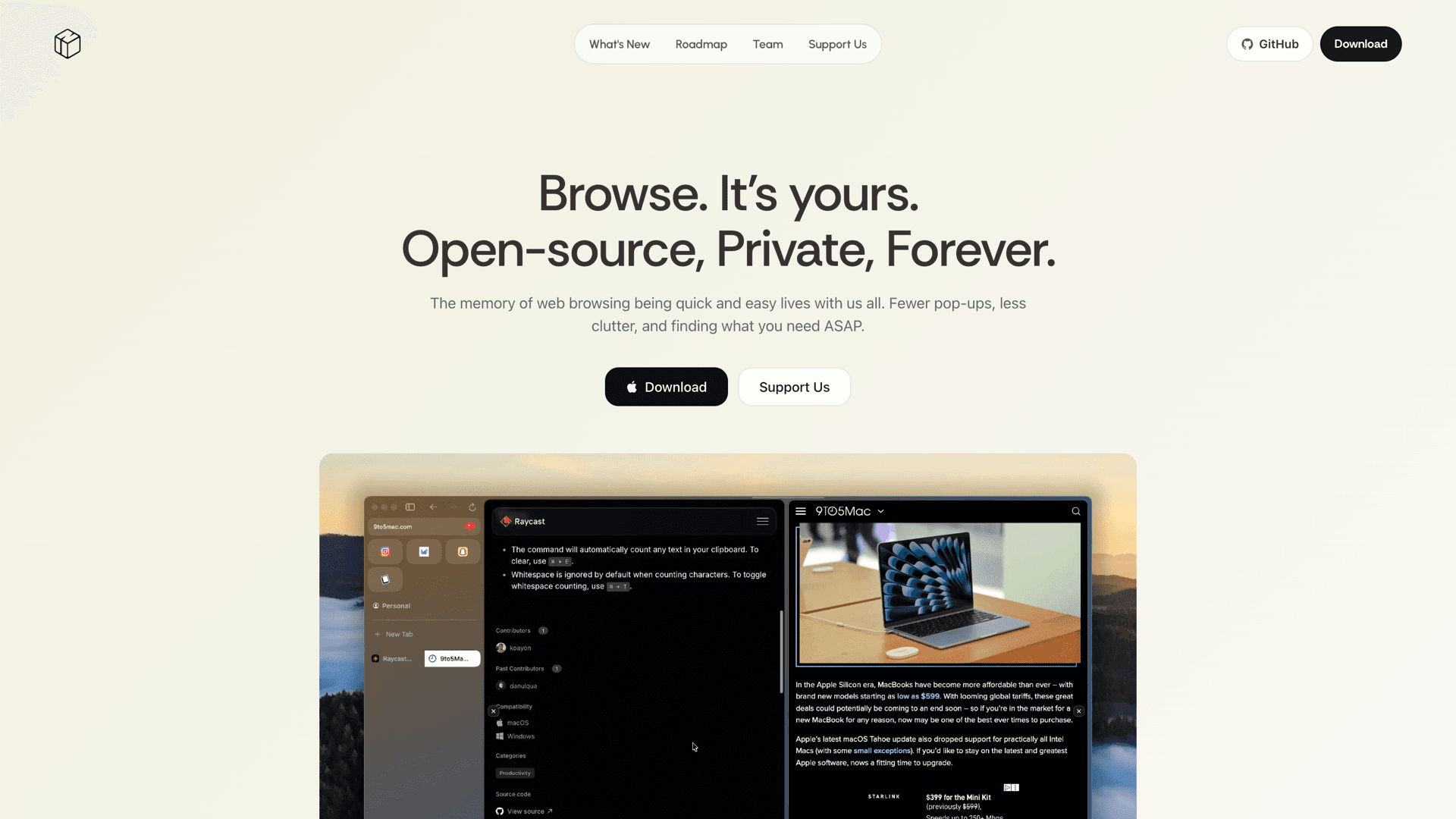
Arc Browser defaulted to Google search. The irony wasn't lost on developers who'd chosen it for a cleaner workflow, only to watch it get absorbed into Atlassian—closed-source, proprietary, and making feature decisions without consulting the people who used it eight hours a day.
One developer had enough. Three thousand lines of code later, Nook Browser shipped as a GPL-3.0 licensed alternative that hit 1,375 GitHub stars in three months.
The Arc Problem: When Your Favorite Browser Gets Bought
The frustration with Arc wasn't about the product—it was about control. Developers don't like their daily tools making decisions for them. When your browser becomes proprietary, you inherit someone else's roadmap. Feature requests disappear into closed issue trackers. Data syncs to servers you don't control. Updates arrive with changes you didn't ask for.
Arc's Atlassian ownership crystallized the tension. Here was a browser designed for power users, now funded by a company known for enterprise software. The workflow tool developers loved was now a product they couldn't fork, audit, or modify.
For developers who've watched their favorite tools get acquired and homogenized, this pattern is familiar. The solution used to be "switch to something else." But what if nothing else existed?
Enter Nook: 3,000 Lines of Code vs. a $4M War Chest
Nook launched October 6, 2024, with a straightforward pitch: sidebar-first navigation, WebKit rendering, macOS 15.5+, and GPL-3.0 licensing. No venture capital. No cloud sync. Just local-first data storage and a single developer shipping v1.0.1.
The technical stack is minimal. WebKit handles rendering. Modern macOS APIs optimize memory usage. The sidebar replicates Arc's vertical tab model without the proprietary constraints. Version 1.0.3 shipped three days after launch.
This isn't a polished Arc competitor—it's a scrappy alternative built on principle. The codebase is short enough to audit in an afternoon. The license guarantees any fork stays open. The entire project operates as a rebuke to VC-funded browser development.
Zero to 1,375 Stars in Three Months: What the Numbers Say
The GitHub metrics tell a specific story: 1,375 stars, 24 forks, 7 contributors. Product Hunt featured it as "a new WebKit browser for Mac." A Discord community formed around development. HackerNews picked it up on October 13.
Compare this to Zen Browser, another open-source Arc alternative that launched on Firefox instead of WebKit. Zen supports Windows, Mac, and Linux. It has broader platform reach but targets the same frustrated developer demographic.
The movement isn't about Nook specifically—it's about developers rejecting proprietary browser control. Multiple projects, different technical approaches, same core philosophy.
The HackerNews Roast: 'It's Just a WebKit Wrapper'
HackerNews wasn't kind. "It's a WebKit wrapper," one user wrote. Others noted the Google search default—exactly the kind of privacy contradiction that drove people away from Arc. GitHub issue #142 documents users trying to install Chrome extensions they already own, only to discover Nook doesn't support them.
Intel Macs can't build from source cleanly. The codebase notes "obj-c libraries may not play nice with Intel Macs." Windows and Linux users are completely excluded by the macOS 15.5+ requirement.
These are v1.0 problems, not deal-breakers. But they're real technical limitations. The criticism proves people are paying attention. Communities fix these issues together—if the project survives long enough.
GPL-3.0 vs. Proprietary: The Philosophy
GPL-3.0 licensing means any modification must remain open. You can fork Nook, add features, redistribute it—but you can't close the source. Arc's model is the opposite: controlled development, proprietary code, features gated by business decisions.
For some developers, that trade-off matters more than feature parity. Local-first data storage means your browsing history stays on your machine. No cloud sync to servers you don't audit. No telemetry you can't disable.
The question isn't whether Nook matches Arc feature-for-feature today. It's whether software freedom justifies using a less polished tool.
Can Open-Source Browsers Compete on UX?
Nook's bare-bones interface versus Arc's polished design exposes the tension developers face: they want both freedom and polish, but rarely get both. Firefox proved open-source browsers can achieve mainstream UX—until Chrome outpaced it with Google's resources.
Zen Browser's Firefox-based approach offers more platform support but inherits Mozilla's baggage. Nook's WebKit wrapper is leaner but more limited. Both face the same challenge: community contributions move slower than VC-funded teams.
What Happens Next: Community-Driven vs. VC-Funded
Nook needs Windows and Linux ports. Extension support. Performance parity with Safari. These problems are solvable—if enough developers contribute code instead of GitHub stars.
Arc will keep shipping features faster. Atlassian's funding guarantees that. But every closed-source update reinforces why Nook exists: some developers would rather build their own tools than use someone else's product.
Contributing to Nook isn't about replacing Arc. It's about voting with code for a different model entirely.