Crush: Terminal-Native AI Coding Without the GUI
Crush rocketed to 21,000 GitHub stars by solving AI coding assistance for terminal-native developers. While competitors focused on GUI editors, Charm's CLI-first tool carved out meaningful space through LSP integration, multi-model switching, and session management that meets developers in their existing workflows.
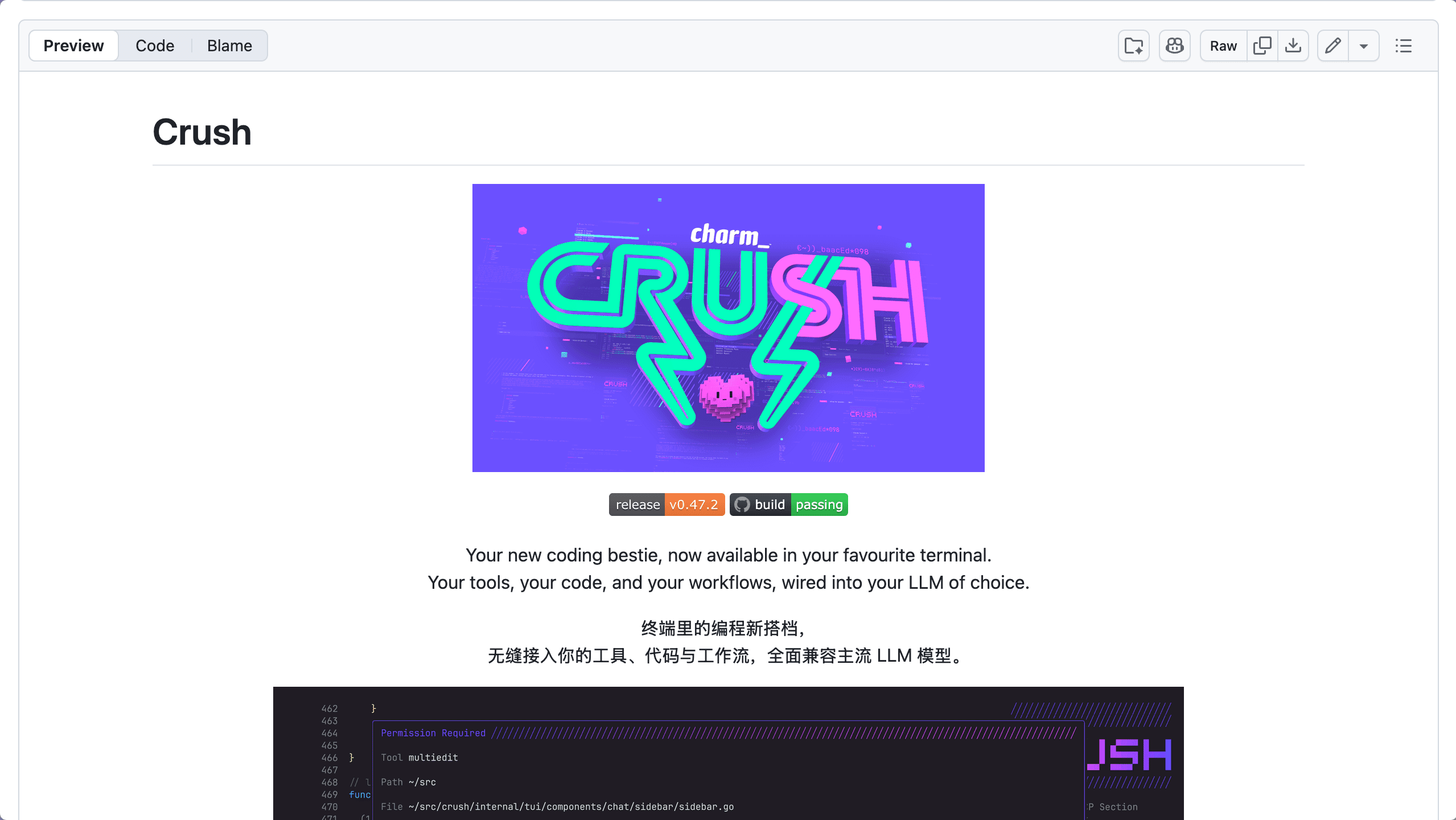
Cursor has $400M in funding. Claude Code has Anthropic's backing. Crush has 21,000 GitHub stars—built by a small team at Charm for developers who never wanted to leave the terminal in the first place.
Two Philosophies: Terminal-First vs. Editor-First
The AI coding assistant landscape has split into two camps. Cursor and Claude Code bet on rich graphical interfaces integrated into modern editors. Charm's Crush went the opposite direction: pure CLI, built for developers who already live in the terminal. These aren't competing products—they're different philosophies serving different workflows.
For DevOps engineers managing remote servers, sysadmins working over SSH, and developers who've spent years mastering Vim or Emacs, context-switching to a GUI breaks flow. Crush respects that. Where editor-first tools optimize for mouse-driven workflows and visual feedback, Crush optimizes for staying exactly where terminal-fluent developers already work.
What Makes Crush Terminal-Native (Not Just Terminal-Available)
Plenty of tools run in the terminal. Crush was designed for it. Language Server Protocol (LSP) integration provides code context, while Model Context Protocol (MCP) support allows custom tool extensions—both critical for CLI workflows where developers can't rely on visual context from an editor sidebar.
Session management matters here. Crush lets you pause a conversation, switch terminals, resume later—treating terminal sessions as first-class citizens rather than afterthoughts. Multi-model switching means hopping between OpenAI, Anthropic, or local models without leaving your shell. These aren't features tacked onto a GUI tool; they're architectural decisions made for people who think in commands, not clicks.
21,000 Stars in Months: Who's Actually Using This
The numbers suggest Crush found its audience. Twelve thousand GitHub stars arrived within six weeks of the July 2025 public release, climbing past 20,000 by November. This isn't hobbyist territory—Z.AI integrated Crush into their GLM Coding Plan for terminal-based workflows, signaling adoption beyond individual tinkering.
The velocity demonstrates demand for an alternative approach. While GUI tools captured headlines and venture dollars, a segment of developers wanted something built for their existing habits—no migration required.
The OpenCode Acquisition: Growing Pains
Charm's growth hit turbulence when they acquired OpenCode from creator Kujtim Hoxha. Contributors Dax and Adam raised concerns about git history rewrites, comment deletions, and community moderation following the acquisition. The controversy reflects tensions in open source around governance and attribution when projects change hands.
Separately, users reported Crush displaying inflated token usage calculations—roughly 4x actual costs—though investigation traced this to delayed OpenAI console updates rather than Crush's math. The project is working through these issues as it matures.
Performance Over Features: Recent Development Focus
Rather than chasing feature parity with GUI competitors, Crush's v0.32.0 and v0.36.0 releases prioritized memory reduction and speed improvements. UI refactoring in v0.36.0 landed behind a feature flag—performance first, polish second. That priority signals understanding: terminal users value responsiveness over visual flourish.
Why the Terminal Matters for AI Coding
For developers who pipe outputs, chain commands, and script workflows, the terminal isn't a fallback—it's the primary interface. Crush doesn't try to convert them to a different way of working. It meets them where they already are, with tools that fit existing muscle memory.
Cursor and Claude Code will continue serving developers who prefer integrated editor experiences. But Crush carved out space by recognizing that "better" isn't universal—it depends on whose workflow you're optimizing for. Sometimes you win by refusing to compete for the same audience.