Context Rot Is Killing Your Claude Sessions. Here's The Fix
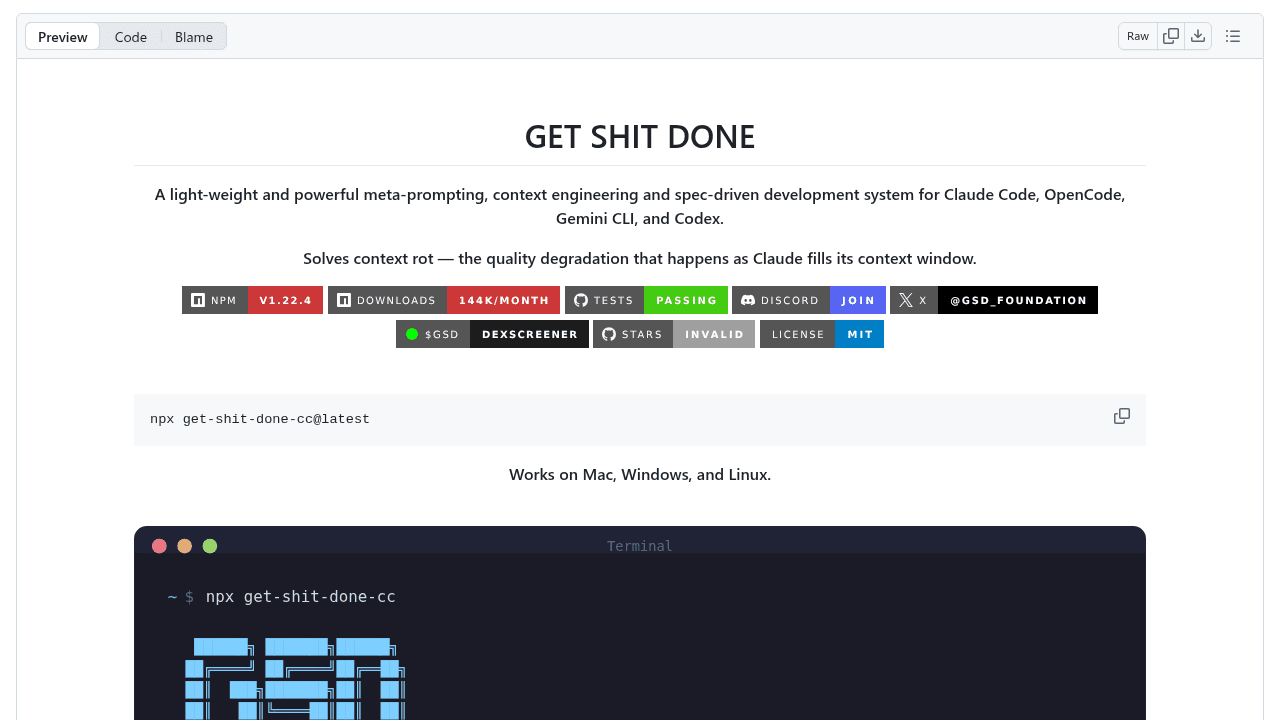
Claude's context window fills with garbage during extended coding sessions, causing response quality to plummet. GSD attacks this 'context rot' problem with meta-prompting, context engineering, and spec-driven development—letting developers work with Claude for hours without degradation. 13.7k stars in three months suggests they've hit a nerve.
Three hours into a refactor, Claude starts hallucinating. Method names that don't exist. Code snippets you already rejected an hour ago. Suggestions that contradict the architectural decisions from earlier in the conversation. You're not imagining it—your AI coding assistant is degrading in real time.
That's context rot: the accumulated garbage in Claude's conversation window from previous tasks, slowly poisoning every subsequent response. It's a known limitation of working with large language models in extended sessions, and GSD (Get Shit Done) targets this problem with a three-pronged technical approach.
Why 'Just Start a New Chat' Doesn't Cut It
The standard workaround—opening a fresh Claude conversation—works for isolated questions. For multi-hour projects, it kills momentum. You lose the architectural context from earlier decisions. You re-explain the same constraints. You watch Claude rediscover problems you already solved together.
The workaround breaks flow precisely when you need it most: during deep refactoring work where AI assistants deliver the most value. You need context continuity, but not the kind that fills the window with irrelevant cruft.
How GSD Attacks Context Rot
GSD's approach centers on three techniques: meta-prompting, context engineering, and spec-driven development.
Meta-prompting structures requests to minimize cruft accumulation. Instead of conversational back-and-forth that leaves dead-end explorations in the context window, GSD formats interactions to keep the window focused on the current task state.
Context engineering manages the window actively. Rather than letting context degrade passively, GSD treats the conversation window as a resource that requires maintenance—pruning irrelevant history while preserving architectural decisions and project constraints.
Spec-driven development maintains a single source of truth outside the conversation. Project requirements and architectural decisions live in structured specs, not scattered across chat history. When context does need refreshing, GSD can reconstruct it from specs rather than from degraded conversation history.
Real Wins From Production Use
Developers aren't using GSD for toy examples. On Hacker News, users report applying it to refactor Effect pipelines for better performance, add DuckDB error parsing with tests, and improve test suites to verify specific behaviors. These are production features shipped with AI assistance that remained coherent across multi-hour sessions.
The workflow difference shows up in what you don't do. No restarting conversations mid-task. No re-explaining the same context three times. No watching Claude suggest the same broken approach you rejected 90 minutes ago.
The 13.7k Star Signal
The repository has accumulated 13.7k stars and 1.3k forks in recent months—adoption that validates the pain point. Developers working with Claude, Cursor, and similar AI coding assistants immediately recognized the problem GSD solves.
The project is actively maintained. A recent release fixed an issue preventing API keys from being committed via /gsd:map-codebase—the kind of security improvement that signals real usage, not just GitHub stars from curiosity.
With open issues typical of a repository growing this fast, the maintainers are working through the usual growing pains.
Working With Claude, Not Around It
GSD doesn't fix Claude's mistakes because context rot isn't a mistake—it's a fundamental characteristic of working with large context windows over extended sessions. Claude remains powerful for code generation, refactoring, and architectural discussion. GSD makes that power sustainable past the first hour.
The tool optimizes human-AI collaboration for the reality of production development: projects that don't fit in a single conversation, architectural decisions that span days, and refactoring work that requires maintaining coherent context across multiple sessions. That's the workflow where AI coding assistants deliver the most value, and where context rot has historically cut sessions short.
GSD's adoption suggests thousands of developers were already working around this limitation manually. Now they have tooling that handles it systematically.
gsd-build/get-shit-done
A light-weight and powerful meta-prompting, context engineering and spec-driven development system for Claude Code by TÂCHES.