AIHawk: 29K Stars, Then Lost Its LinkedIn Feature
AIHawk solved the brittle Selenium selector problem that plagued job application bots, exploded to 29,000 GitHub stars, then had to pull its core LinkedIn feature over copyright concerns. Its 6,000-member Telegram community and active fork ecosystem reveal why developers keep building tools that platforms don't want to exist.
LinkedIn's CSS class names change constantly. For developers building job application bots, this breaks Selenium selectors that worked yesterday, and the automation pipeline stops. AIHawk solved this problem, building a more resilient approach to detecting and applying to jobs despite the platform's shifting HTML structure. In four months, the repository collected 29,000 stars.
Then the copyright concerns arrived, and LinkedIn support disappeared from the repository.
The selector problem that launched 29,000 stars
Job bots rely on Selenium selectors—hardcoded references to CSS classes that identify form fields and buttons. LinkedIn's frontend changes turn these selectors into a maintenance problem. Each update breaks the bot. Each fix is temporary.
AIHawk's architecture addressed this fragility, using adaptive detection methods that survived LinkedIn's HTML changes. For developers who'd burned hours debugging why their application scripts suddenly stopped working, this wasn't just a technical improvement—it was a recognition of a real problem. The repository's growth reflected both the quality of the solution and the scale of frustration it addressed.
The timing mattered. During periods of economic uncertainty and hiring freezes, developers and job seekers gravitate toward automation tools that promise to increase application volume. AIHawk hit that intersection of technical solution and market need.
Four months from launch to controversy
The growth trajectory was steep. A solo developer's side project became a community with over 6,000 members on Telegram, sharing configuration tips and actual interview outcomes. Users were getting callbacks.
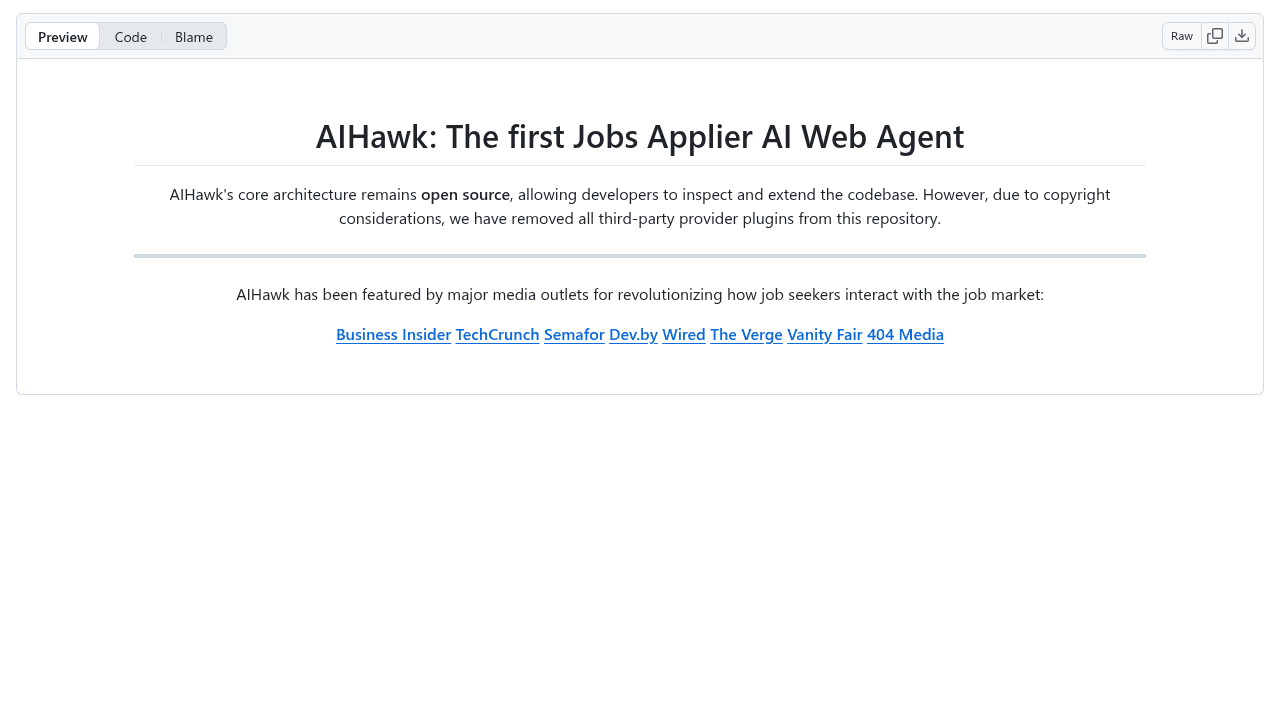
That scale brought attention. Copyright considerations forced the removal of third-party provider plugins, including the LinkedIn integration that had driven much of the initial interest. The core automation engine remains, but the feature that demonstrated its power most clearly is gone.
The fork situation that filled the gap
Open source doesn't stop at takedown notices. EasyApplyJobsBot by wodsuz offers a simpler approach, automating LinkedIn and Glassdoor applications without AI personalization. Forks like pillow34/aihawk and 11844/Auto_Jobs_Applier_AIHawk branched off to add dynamic resume generation and company blacklisting features.
This is evidence of persistent demand. When a tool addresses a genuine need and the original version becomes legally constrained, the community builds alternatives. Each fork represents a different bet on which features matter most and how to navigate the tension between utility and platform terms of service.
6,000 users in Telegram, talking about interviews
The Telegram community offers proof beyond GitHub stars. Users don't just configure the bot and disappear—they return to share what worked, critique what didn't, and report on interview outcomes. This feedback loop indicates the tool serves a real function.
The conversations reveal the bot's practical impact: application volume increases, callback rates vary by industry, and users develop strategies for customizing the automation to specific job markets. This is a community of practice, not just enthusiasts.
What happens when automation meets ToS
AIHawk sits at a familiar crossroads: developers will continue building tools that users want, and platforms will continue restricting automation that challenges their business models or user experience principles. LinkedIn has reasons to limit bots—quality control, fraud prevention, resource management. Developers and job seekers have reasons to build them—efficiency, accessibility, volume requirements in competitive markets.
The story doesn't resolve cleanly. The original repository lost its flagship feature. The community kept growing. The forks multiplied. The underlying problem—job application processes that feel designed to waste time—persists. Whether this represents a temporary setback or a permanent shift for AIHawk depends on factors beyond code quality: legal interpretations, enforcement priorities, and how far the developer community is willing to push boundaries that platforms want to maintain.
feder-cr/Jobs_Applier_AI_Agent_AIHawk
AIHawk aims to easy job hunt process by automating the job application process. Utilizing artificial intelligence, it enables users to apply for multiple jobs in a tailored way.