Better Auth: TypeScript's Missing Authentication Library
TypeScript developers have long faced a false choice in authentication: simple libraries that can't scale, or enterprise solutions that drain budgets. Better Auth emerged to fill the gap with batteries-included features like MFA and multi-tenancy while maintaining type safety. Despite growing pains with type inference bugs and integration issues, the library's 26K stars and production usage signal a real need in the ecosystem.
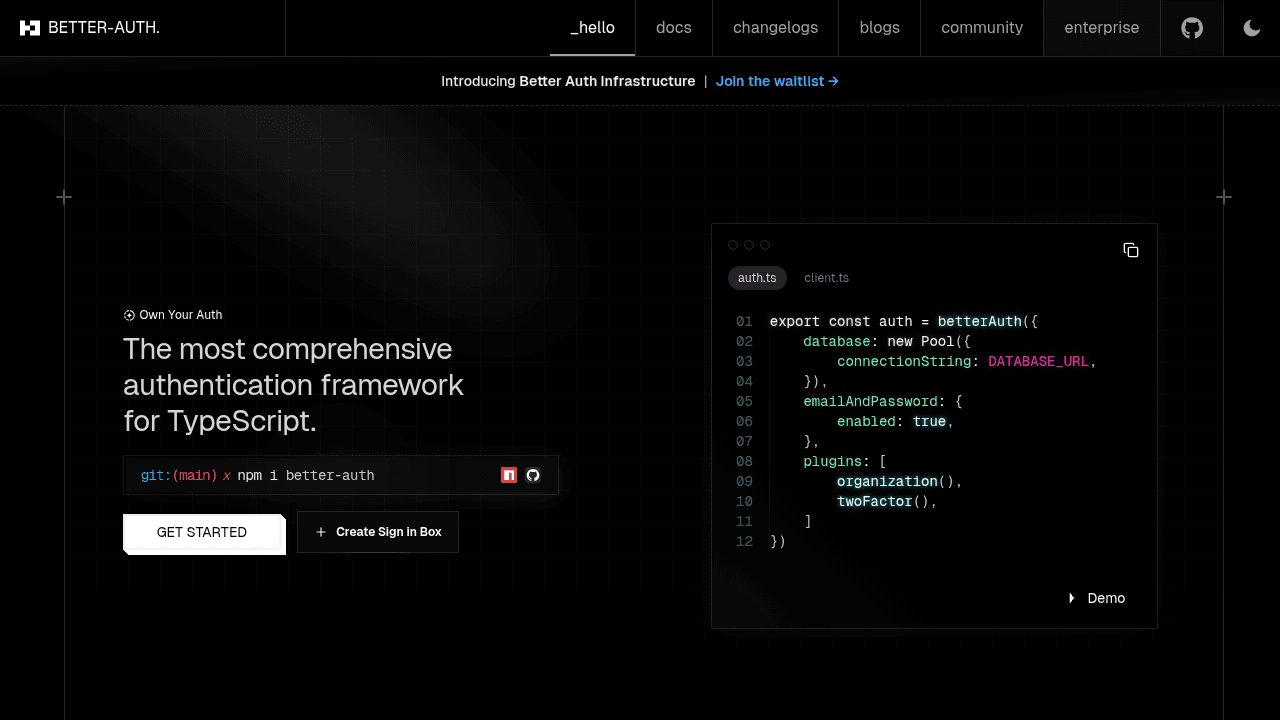
TypeScript developers building production apps know the authentication calculus. You can piece together open-source libraries that handle basic login but need extensive code for anything beyond email/password. You can pay for third-party auth services that work well but drain budgets. Or you can spend weeks wrestling with poorly documented libraries that promise flexibility but deliver confusion. Better Auth arrived to fill the gap between these three options.
The Authentication Gap Nobody Wanted to Admit
The TypeScript auth landscape developed a quiet dysfunction over the past few years. Auth.js (formerly NextAuth) became the default choice for Next.js projects, but developers hit walls when they needed multi-factor authentication or role-based access control—features that required cobbling together third-party plugins or writing custom code. Lucia took the opposite approach, embracing simplicity so thoroughly that advanced features weren't just missing, they were philosophically out of scope. Both libraries served their design goals, but developers kept facing the same pain point: implementing authentication beyond basic username/password meant choosing between incomplete tools or expensive SaaS.
This wasn't anyone's fault. Authentication is hard, and open-source maintainers were solving real problems with limited resources. The TypeScript auth world just had a hole where a batteries-included solution should have existed.
What 'Batteries Included' Actually Means
Better Auth's core differentiator shows up when you need MFA, multi-tenancy, or SSO. These features work out of the box with full type safety, no configuration required. FaithBase uses Better Auth with the Drizzle adapter on their Vercel/Next.js stack in production—a signal that the library handles real-world demands, not just tutorial examples.
The framework-agnostic design matters more than it sounds. Auth.js locked developers into Next.js patterns; Better Auth works across frameworks while maintaining TypeScript's type inference. You get advanced features without abandoning the type safety that drew you to TypeScript in the first place.
The Growing Pains Are Real
Better Auth's GitHub issues tell the story of a project scaling faster than its maturity. Type inference errors currently break the organization plugin in recent versions. Developers report session null bugs in Expo and cache problems with Next.js 16—integration friction that shows up when a library meets diverse production environments. These aren't hidden flaws; they're documented issues being worked on.
Growing pains hit every open-source project that gains traction quickly. The question isn't whether Better Auth has rough edges—it does—but whether the core architecture can handle them as the maintainer team catches up to demand. For teams expecting enterprise-grade stability, these issues matter. For teams willing to file detailed bug reports and contribute fixes, they're part of the open-source bargain.
Where Better Auth Fits
Better Auth absorbed Auth.js maintenance when the original team moved on, preventing the deprecation of a library thousands of projects depended on. That context matters. This isn't a competitor trying to defeat Auth.js; it's a different philosophical approach to the same problem space. Auth.js optimized for getting started quickly. Lucia optimized for minimal API surface. Better Auth optimizes for comprehensive features without requiring developers to wire up third-party services.
The target audience isn't developers choosing their first auth library. It's developers who've already tried other solutions, hit their limitations, and wondered why there wasn't a middle path between basic auth and enterprise IAM platforms.
26K Stars in 18 Months: Signal vs Noise
Rapid GitHub growth proves demand exists, but it doesn't guarantee long-term stability. Production usage matters more than stars. The FaithBase deployment provides one data point; more are needed before Better Auth graduates from "promising project" to "battle-tested tool."
For teams evaluating Better Auth today, the calculation is straightforward: if you need advanced auth features and have engineering capacity to report bugs and review pull requests, the library fills a real gap. If you need enterprise support contracts and guaranteed SLAs, you're still better off with paid services. Better Auth works best for developers who appreciate the philosophy enough to contribute back when they hit problems.
better-auth/better-auth
The most comprehensive authentication framework