Dokploy: How an Open-Source Team Took on Vercel
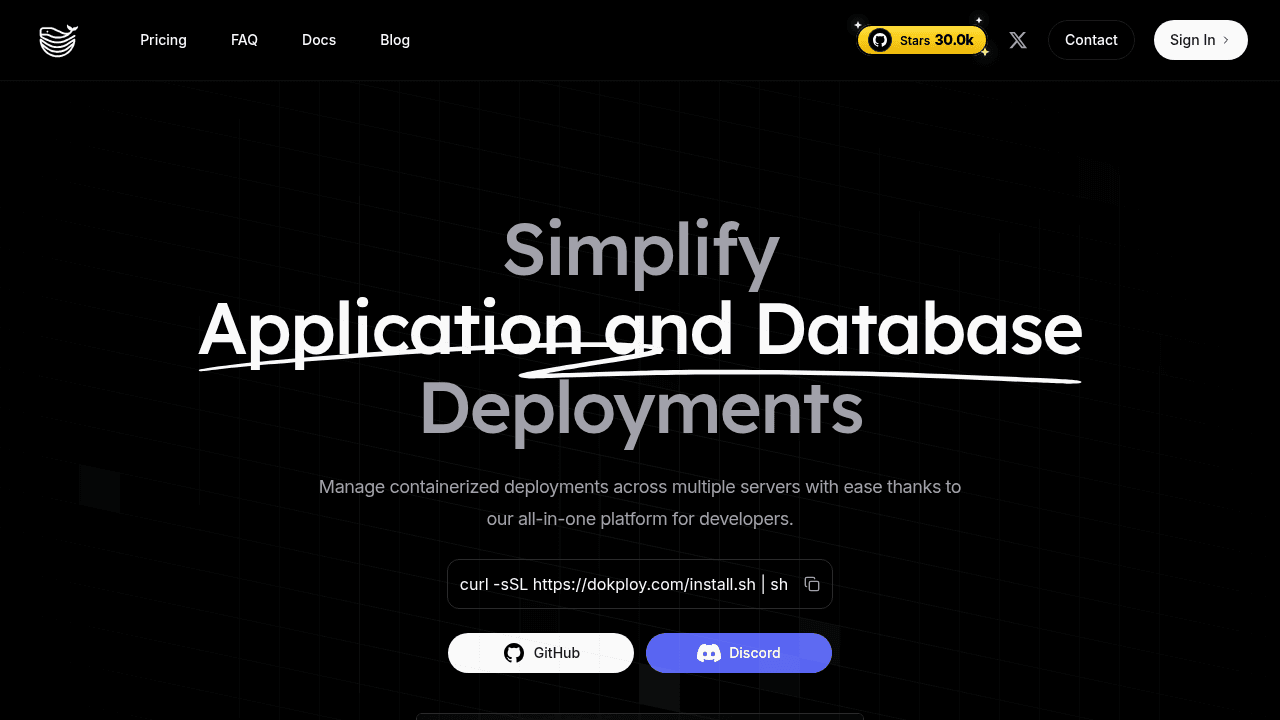
Dokploy brings one-click deployments to your own servers. Small teams and freelancers are using it to escape platform lock-in and monthly bills while keeping the developer experience they love. We look at real usage, growing pains, and how it stacks up against Coolify and CapRover.
Freelance developers hosting five client projects on Vercel or Netlify can easily hit $200–300 in monthly platform fees. For someone billing $5,000 per month, that's 4–6% of revenue disappearing into infrastructure before accounting for their own time or tools.
One freelancer documented switching to Dokploy and reported 40% higher profit margins by self-hosting client projects. Each application gets isolation, automatic SSL certificates, and independent backups—running on their own VPS instead of a managed platform. The math changes when you're paying $40/month for a server instead of per-project fees that scale with success.
What Dokploy Actually Does
Dokploy runs on your own infrastructure—a VPS, home server, or dedicated machine—and provides a web interface for managing deployments without touching the command line. It handles Docker and Docker Compose applications, provisions Let's Encrypt SSL certificates automatically, and isolates each project in its own container environment.
The value sits between running docker-compose up manually and paying for Vercel's managed experience. You get a dashboard, automated certificate renewal, and deployment controls while maintaining full access to the underlying server. No vendor lock-in, no usage-based pricing, no surprise bills when a project goes viral.
The Growing Pains
Approaching 30,000 GitHub stars in under two years means scaling faster than infrastructure can always keep up. A security researcher discovered that roughly 600 public Dokploy instances had exposed admin access—a configuration issue that allowed unauthorized control panel access. The team patched it quickly after disclosure, but the incident showed the risks of self-hosting without hardening defaults.
Performance issues appear in active use. Some users report significant HTTPS slowdown—sometimes 10x slower than HTTP—when routing through Let's Encrypt certificates. Another user found that deleting a git branch could brick their entire panel for hours, leaving services unresponsive during the outage.
These aren't dealbreakers for an open-source project with this growth velocity, but they matter if you're hosting production client work. The codebase is evolving quickly; stability hasn't caught up to adoption yet.
How It Compares to Coolify and CapRover
The self-hosted deployment space has several options. Dokku attracts power users comfortable with CLI-first workflows. CapRover balances features and complexity for mid-sized teams. Coolify targets team collaboration with more built-in services.
Dokploy prioritizes speed and minimal configuration—you can deploy a Next.js app in minutes without reading documentation. That simplicity trades off against Coolify's deeper feature set or CapRover's flexibility. Each tool optimizes for different pain points.
Who This Actually Serves
The ideal Dokploy user is managing multiple projects where platform costs compound—freelancers with several client sites, indie hackers running half a dozen side projects, small agencies hosting customer applications. Teams managing complex infrastructure like mobile app backends and web crawlers are using it in production.
It's less suitable if you need enterprise support contracts, compliance certifications, or guaranteed uptime SLAs. Managed platforms earn their cost through abstraction; self-hosting trades money for operational responsibility.
What 30,000 Stars Represents
Dokploy's growth signals demand for deployment tools that respect different constraints than enterprise platforms. Not everyone needs globally distributed edge functions or automatic DDoS mitigation. Some developers just want to deploy a database-backed web app without fighting Docker networking or paying per-seat licensing.
The open-source world gets healthier when projects like this expand options rather than just replicating existing solutions. Vercel and Netlify set the standard for developer experience at scale. Dokploy makes a version of that experience accessible to developers building at different scales, with different budgets, optimizing for control instead of convenience.
That's not disruption. It's diversification—and the developers hosting five client sites on a $40 VPS would argue that matters just as much.
Dokploy/dokploy
Open Source Alternative to Vercel, Netlify and Heroku.