Why Agent Code Edits Fail: The Stale-Line Problem
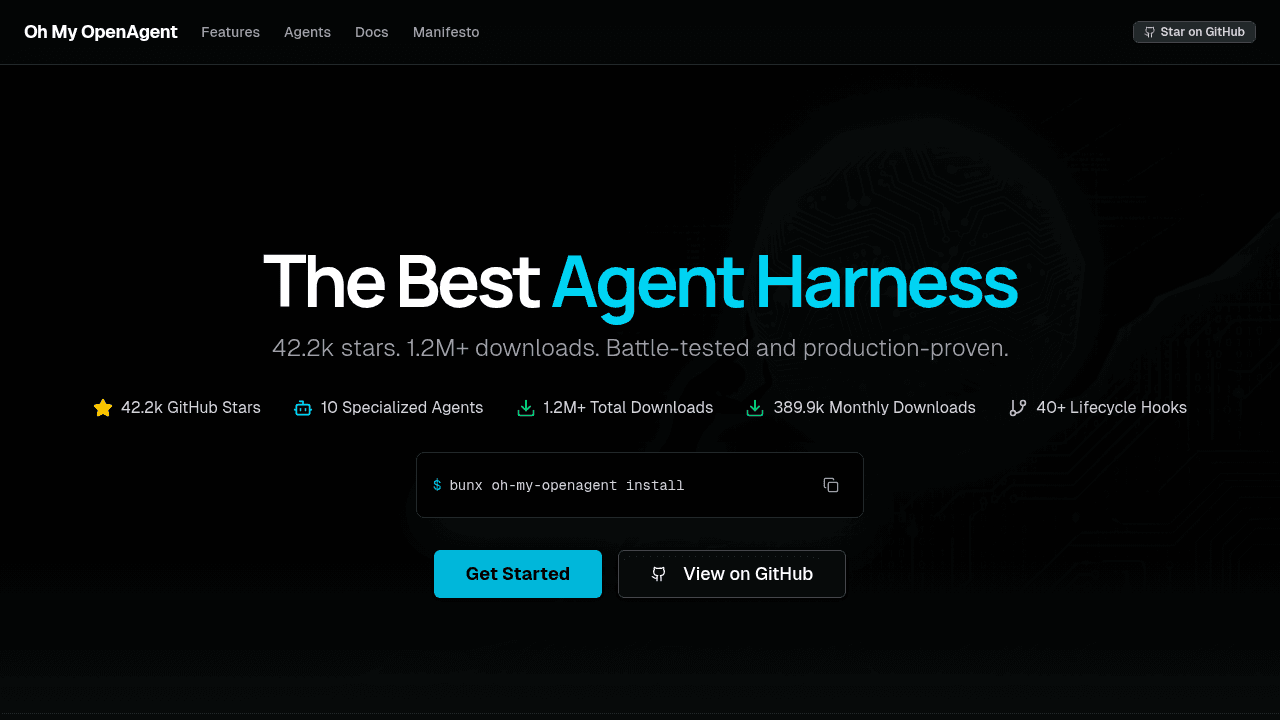
Agent development hits a wall when tools rely on models to reproduce code content instead of using stable line identifiers. This causes stale-line errors that corrupt files mid-edit. oh-my-openagent addresses this infrastructural problem directly, though the approach brings its own challenges around token consumption and orchestration.
Your agent didn't crash because it couldn't reason through the problem. It crashed because halfway through editing a file, it lost track of where lines 47 through 52 actually were.
The harness problem is an infrastructure failure that corrupts agent edits before they reach the filesystem. When an AI coding tool needs to modify existing code, most implementations ask the model to reproduce enough surrounding context to locate the target lines. The model generates something close to the original—maybe it changes whitespace, maybe it paraphrases a comment—and every subsequent line number is off by one. The next edit targets the wrong location. The file corrupts itself mid-operation.
Developers building agents often mistake this for a reasoning failure. The model seemed to understand the task, generated sensible code, then inexplicably broke everything. But the reasoning was fine. The tooling underneath failed to maintain stable references to code locations.
The Harness Problem: When Edits Corrupt Themselves
Stale-line errors emerge from a mismatch between how models handle context and how file systems handle edits. An agent decides to modify line 50. To build that edit, it asks the model to reproduce lines 45-55 for context. The model outputs something that's 99% identical but adds a newline. Now line 50 is actually line 51. The edit instruction—still targeting line 50—hits the wrong code.
This compounds. Each edit potentially shifts line numbers for every operation that follows. By the third or fourth modification in a sequence, the agent is editing against a phantom version of the file that no longer matches reality. Diff-based approaches handle some of this, but they assume models produce consistent output across multiple turns—a property that large language models don't guarantee.
Why Stable Line Identifiers Matter
oh-my-openagent addresses this by maintaining references that don't depend on model reproduction. Instead of asking "what does line 50 look like so I can find it," the system keeps stable identifiers that survive edits. When one modification shifts content, the identifiers update accordingly. Operations target the logical location, not the numerical line that's already moved.
This is infrastructure work—the kind that doesn't demo well but determines whether a system survives contact with real codebases. It trades simplicity for reliability. Where lightweight tools can pass file snippets back and forth, this approach requires tracking state across operations.
The Token Consumption Trade-Off
That state isn't free. Users report burning $15-20 in 30 minutes when running oh-my-opencode agents. Maintaining context across edits means sending more information per request. Stable identifiers prevent stale-line errors, but they require the system to transmit enough structural information that those identifiers mean something.
This is an engineering trade-off between edit reliability and API cost. For agents making dozens of coordinated file changes, paying for correctness may be worth it. For quick one-off edits, probably not. Manual model switching by editing config files or waiting for resets interrupts workflows that need sustained operation.
Orchestration Challenges: When Agents Move at Different Speeds
Solving the harness problem surfaces the next layer of complexity: coordination between fast orchestrators and thorough subagents. When Sonnet rushes Codex through an edit sequence, the system hits timing mismatches. The orchestrator assumes completion and moves to the next task before the subagent finishes validating its changes.
These are hard problems that only become visible once you've stabilized the layer underneath. Multi-agent systems need synchronization primitives that don't exist yet in most agent frameworks. The fact that oh-my-openagent exposes these issues means it's working on problems beyond what simpler tools encounter.
Where This Fits in the Agent Tooling Landscape
Cursor and Claude Code solve related but different challenges around AI-assisted coding. They optimize for developer experience in interactive contexts. oh-my-openagent targets the specific infrastructure problem of multi-step edit reliability in autonomous agents.
Choosing between them depends on what problem you're facing. If stale-line errors are corrupting your agent's output, stable line identifiers matter. If token costs and orchestration complexity are the constraints, lighter-weight approaches may fit better. The work here tackles a problem that becomes critical at scale—even if that means accepting trade-offs elsewhere.
code-yeongyu/oh-my-openagent
OmO: Just type "mass ulw" keyword with your prompt. Now you are the master of graph engineering.