Claude Code Templates: The Configuration Layer It Needed
Anthropic's Claude Code is powerful but lacks production-ready configuration. This community project provides the scaffolding teams actually need: tested agent configs, MCP server integrations, hooks, and monitoring templates. The project also exposes the rough edges—field naming mismatches and plugin loading issues show this infrastructure is still evolving.
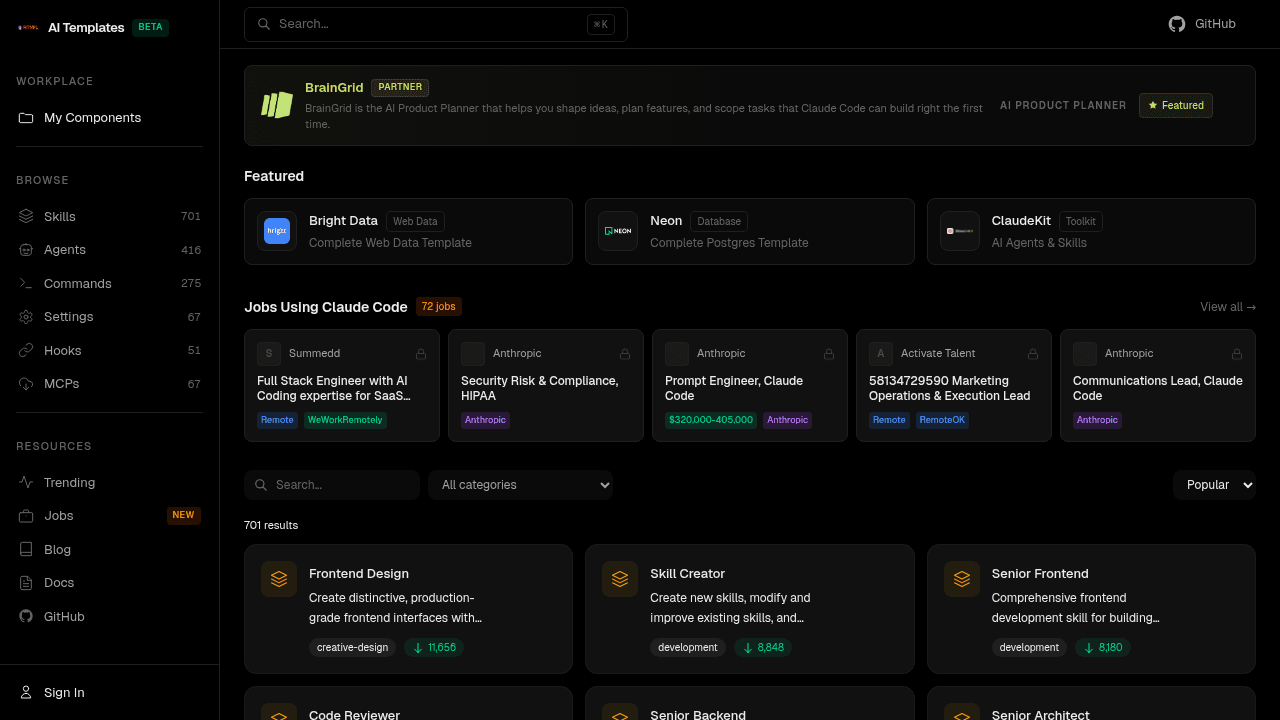
Anthropic shipped Claude Code with impressive AI capabilities, but developers quickly hit a wall: no pre-built configurations, no production-ready setups, no curated integrations. The tool worked, but setting it up meant starting from scratch every time.
Developer Carlos Dávila built what was missing. His claude-code-templates repository provides the scaffolding Anthropic didn't include: pre-configured AI agents, custom commands, settings files, hooks, MCP server integrations, and monitoring templates. It's the difference between a powerful tool and one teams can actually deploy.
What's Actually in the Box
The repository solves a concrete problem. Instead of spending hours figuring out which Model Context Protocol servers work with Claude Code, developers get a tested list. Instead of writing monitoring configurations from scratch, they get templates. Instead of debugging hook implementations, they get working examples.
The components are practical: agent configurations for different workflows, custom commands that extend Claude Code's behavior, settings files that handle authentication and permissions, and integrations with external tools through MCP. One developer building Dyad, an open-source AI app builder, specifically references claude-code-templates for its curated MCP server lists—the infrastructure work has real utility.
The Curator Role: Maintaining Working Configs
This isn't just about shipping code once. Dávila maintains lists of working MCP servers, tests configurations against Claude Code updates, and documents which setups function in production. As AI coding tools evolve rapidly, this curation work matters more than the initial code drop.
The repository functions as living documentation. When Anthropic changes field names or updates their plugin system, someone needs to track which configurations break and update the templates. That ongoing maintenance—unglamorous but necessary—is what transforms a collection of YAML files into infrastructure teams rely on.
Rough Edges Still Show
The GitHub issues reveal this infrastructure is still evolving. One issue documents field naming mismatches where configurations use 'allowed-tools' but Claude Code expects 'tools'. Plugin loading errors surface when manifest files reference components that don't exist yet. Skills installation sometimes fails silently.
These aren't problems—they're artifacts of building infrastructure for a platform that's itself still finding its footing. Every new tool ships with gaps between documentation and reality. The issues demonstrate the project's value: developers are using these configurations in real workflows and reporting back when something breaks.
Where Claude Code Fits in the Landscape
Claude Code entered a crowded market. Cursor locks users to Claude models and costs $20 monthly. Aider runs in terminals with bring-your-own-key flexibility. Cline integrates VS Code with command-line workflows. GitHub Copilot dominates enterprise adoption. Each serves different needs—IDE integration versus terminal workflows, model flexibility versus simplicity, enterprise support versus indie tooling.
Claude Code's differentiator is its native hooks system, which lets developers extend functionality without fighting the tool's architecture. But hooks only matter if developers can find working examples and tested configurations—exactly what claude-code-templates provides.
Community Infrastructure as Platform Feature
Every platform launch follows this pattern. A company ships the core tool. The community builds the connective tissue that makes it usable. Both parts matter. Anthropic built powerful AI capabilities. Dávila built the configuration layer teams need to deploy those capabilities without drowning in setup time.
This isn't about Claude Code shipping incomplete—it's about open source communities doing what they do best: filling gaps faster than any single company could. The project deserves appreciation because it demonstrates how community infrastructure transforms good tools into great ones.
davila7/claude-code-templates
CLI tool for configuring and monitoring Claude Code