VibeVoice Hit 40K Stars: Reality vs. Hype
VibeVoice exploded to 40,000+ GitHub stars since August 2025, signaling massive interest in open-source conversational AI. The community is discovering both its potential for podcast-quality, multi-speaker TTS and its growing pains—18GB VRAM requirements, slow performance on older GPUs, and technical hiccups that sparked alternatives like SoulX-Podcast-1.7B.
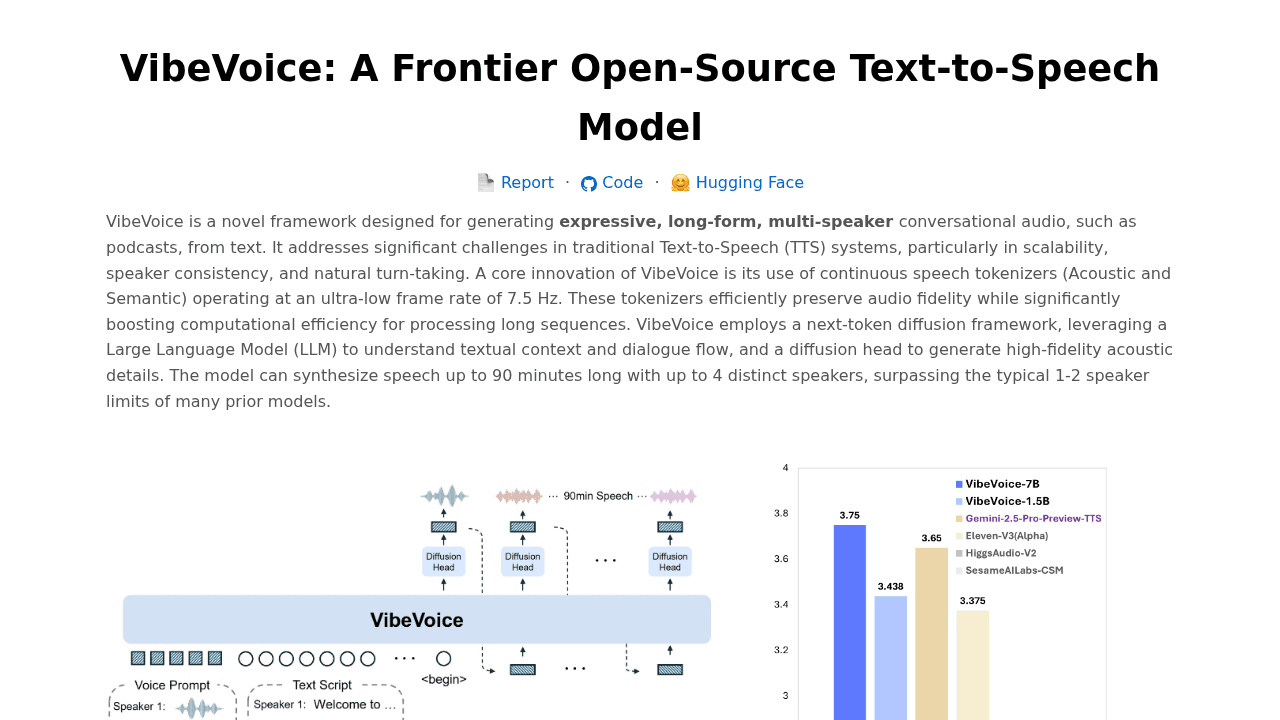
Microsoft's VibeVoice reached 40,000 GitHub stars in the months since its August 2025 launch—rare for a frontier voice AI project going fully open-source. The community rushed in to test its promise of podcast-quality, multi-speaker Text-to-Speech. Then they tried running it on their hardware.
The Momentum Behind 40,000 Stars
40,000 developers bookmarking a repository this quickly means the problem space resonates. VibeVoice tackles scalability issues in traditional TTS systems, speaker consistency across multi-speaker scenarios, and natural turn-taking for long-form conversational audio. Most open-source TTS tools handle single-speaker scenarios well enough, but maintaining speaker identity and natural conversation flow across extended podcasts or multi-party dialogues? That's frontier territory typically locked behind commercial APIs.
The timing matters. Developers frustrated with per-minute pricing on commercial TTS services saw an opportunity: Microsoft open-sourcing the kind of technology that powers high-end conversational AI. For ML engineers building podcast generators, voice assistants, or audiobook tools, this represented an alternative to services they'd been paying for.
The Hardware Reality Check
The excitement met reality when users started spinning up their own deployments. Community reports surfaced 18GB VRAM requirements for the 9B parameter ASR model, alongside slow generation speeds on older GPUs like the RTX 1080. This isn't a criticism of the architecture—it's the nature of state-of-the-art voice synthesis. Quality comes at a computational cost.
The community responded by documenting workarounds, testing configurations, and identifying which hardware profiles work. The Hugging Face model repository became a testing ground, with ML practitioners sharing inference results and optimization strategies. This is what healthy open-source adoption looks like: users pushing boundaries and mapping the constraints.
Technical Hiccups in the Wild
GitHub's issue tracker filled with real-world friction points: missing tokenizer files blocking offline setups, floating point exceptions on certain hardware configurations, runtime errors with specific backends, voices generating unnaturally fast in some scenarios. These are symptoms of a project being stress-tested by thousands of developers with different environments, use cases, and expectations.
When users file detailed bug reports about tokenizer paths or backend compatibility, they're investing time because they see potential worth debugging. Projects that attract this level of scrutiny are projects people want to use in production.
The Alternatives Emerging
The community response came quickly. SoulX-Podcast-1.7B emerged as an alternative, positioning itself as a lighter-weight option for multi-speaker TTS. Discussions began comparing VibeVoice against ElevenLabs, Chatterbox, and Whisper, mapping the trade-offs between commercial polish and open-source flexibility.
This proliferation matters more than any single repository's limitations. When a technology is compelling enough, people don't just use it—they build around it, fork it, improve on it, and create alternatives that solve adjacent problems. The appearance of SoulX-Podcast-1.7B doesn't diminish VibeVoice; it validates that the problem space is real and worth multiple approaches.
What This Momentum Means
Microsoft released frontier voice AI into the wild, and the open-source community responded by testing boundaries, documenting limitations, and building alternatives. The hardware requirements will become more manageable as inference optimization improves. The technical issues will get resolved through community contributions. The alternatives will push the entire stack forward.
Forty thousand stars in months doesn't guarantee success, but it indicates something: a critical mass of developers believe podcast-quality, multi-speaker TTS belongs in the open-source stack. The growing pains are just the beginning of that conversation.