TradingAgents: When 27K Stars Meet Production Reality
TradingAgents promised autonomous trading desks powered by debating LLM agents. Users cloning the 27K-star repo found the code defaults to OpenAI search instead of Bloomberg/Reddit feeds, agents issuing conflicting buy/sell signals on the same stock, and a live service shut down over budget constraints. The gap between academic claims and production-ready code reveals hard truths about deploying LLM trading systems.
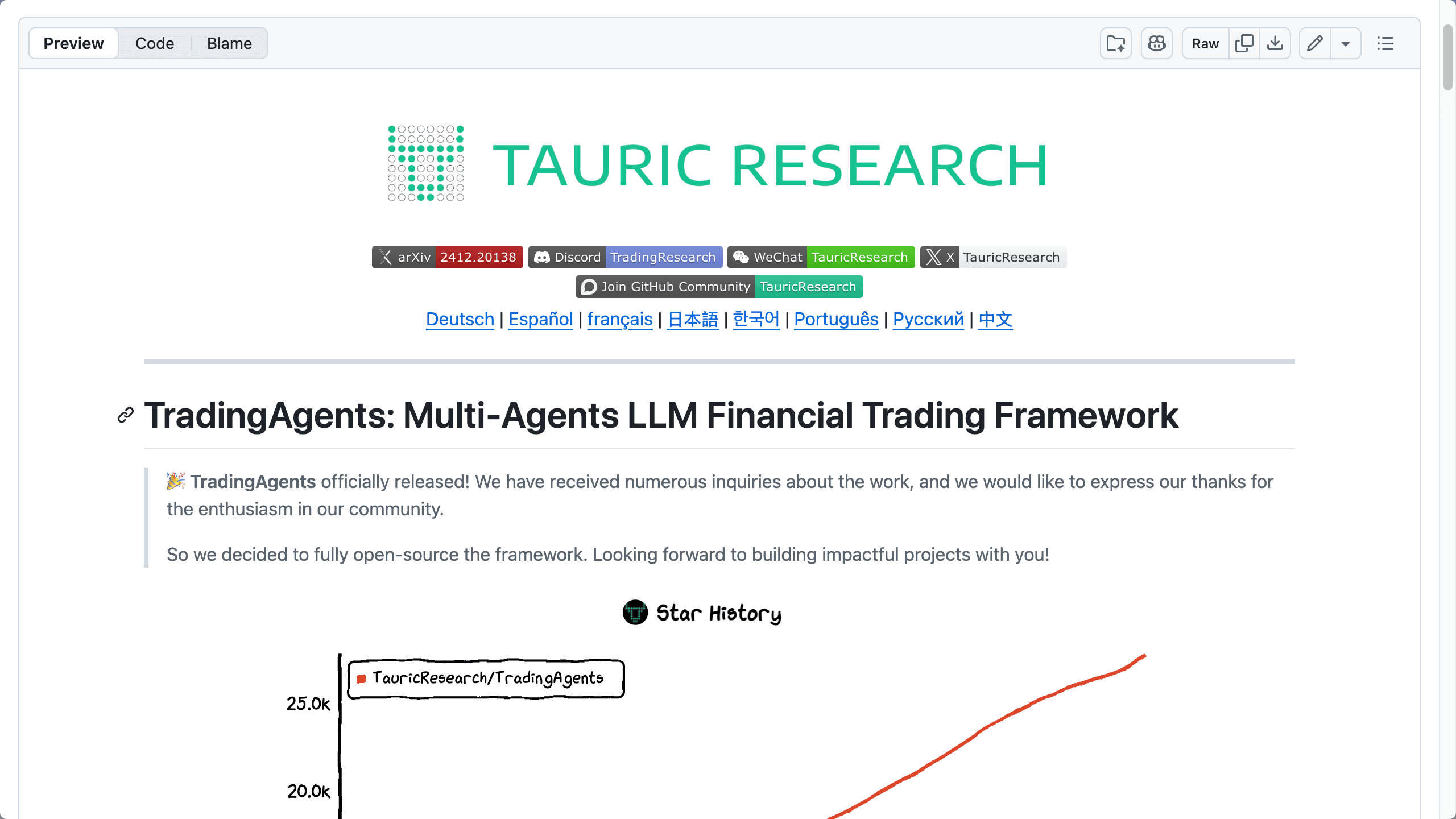
A 30.5% annualized return drew 27,000 GitHub stars. Then users started cloning the repository.
TradingAgents models a virtual trading firm—fundamental analysts debate with sentiment researchers, risk managers intervene before execution, traders act on consensus. The architecture addresses gaps in black-box trading models: explainability through natural-language reasoning, multi-modal data integration, structured collaboration instead of single-agent decisions. On paper, it's the kind of system quant developers have wanted since LLMs became viable for finance.
The open-source framework promised Bloomberg feeds, Reddit sentiment, Yahoo Finance fundamentals—a multi-modal stack orchestrated by specialized agents. Users found something else.
The Data Source Gap
Issue #86 cuts straight to it. The paper describes diverse sources—Bloomberg, Yahoo, Reddit—but the code defaults to OpenAI search. Not a supplementary tool. The primary data-gathering mechanism.
This isn't a minor implementation detail. LLM search APIs behave nothing like structured financial feeds. They introduce latency, cost unpredictability, and reproducibility problems. When a DigitalOcean walkthrough demonstrates running TradingAgents on SPY, it's querying OpenAI's search endpoint—not the data infrastructure the academic paper describes.
One commenter in the same issue points to "a discrepancy between the data sources mentioned in the paper and the default configuration in the code." Users trying to replicate the 30.5% backtest aren't working with the same inputs the researchers used.
Conflicting Signals and Service Shutdown
Issue #222 reports agents issuing conflicting buy and sell recommendations for the same stock. Issue #220 flags ticker symbol inconsistencies across data providers causing tool access failures.
Then there's issue #7. In May 2025, users repeatedly asked the maintainers to "release it"—referring to a live TradingAgents service. The response: the online service was paused due to "large query volume and budget constraints."
If the creators can't afford to run their own system at scale, the operational message to practitioners is clear.
The Reliability Problem
TradingAgents isn't alone. A recent arXiv study groups it among LLM trading agents vulnerable to reliability and faithfulness issues. The paper notes that systems like TradingAgents depend heavily on external APIs—Price, X/Twitter, Reddit—and can behave unpredictably despite strong backtest performance.
This is the LLM-in-finance reproducibility crisis in microcosm. Controlled backtests don't predict live market behavior when external API dependencies are brittle, when data sources shift between paper and code, when agent outputs contradict each other on the same ticker.
What Actually Works
The contributions are real. Role specialization—fundamental analysts, sentiment researchers, risk managers—mirrors actual trading desk structure. The hybrid communication scheme blending structured outputs with natural-language debate is a smart architectural choice. Explainability via detailed rationales addresses a gap in black-box models.
But the GitHub issues aren't edge cases. They're signals that the framework remains a research prototype, not a production-ready system.
The Verdict for Quant Teams
If you're evaluating TradingAgents: expect to rebuild data pipelines from scratch. Budget for API costs the paper doesn't surface. Validate every agent output—conflicting signals aren't theoretical risks.
The question extends beyond this project. TradingAgents appeared at AAAI 2025 alongside competitors like TradingGPT, FinMem, and QuantAgent. Can any LLM trading agent survive contact with real markets, or are we watching peak hype in a cycle that confuses research artifacts with deployable infrastructure?
The 27,000 stars suggest appetite. The GitHub issues suggest caution.
TauricResearch/TradingAgents
TradingAgents: Multi-Agents LLM Financial Trading Framework