Proxmox Helper Scripts Hit 25K Stars as VMware Users Flee
Broadcom's VMware pricing shakeup sent infrastructure teams searching for alternatives. Proxmox VE became the obvious choice, but its manual container setup was painful. A community-maintained script collection turned that pain point into one-command deployments—timing that explains 25,000+ GitHub stars and production usage from homelabs to enterprises like Stackscale.
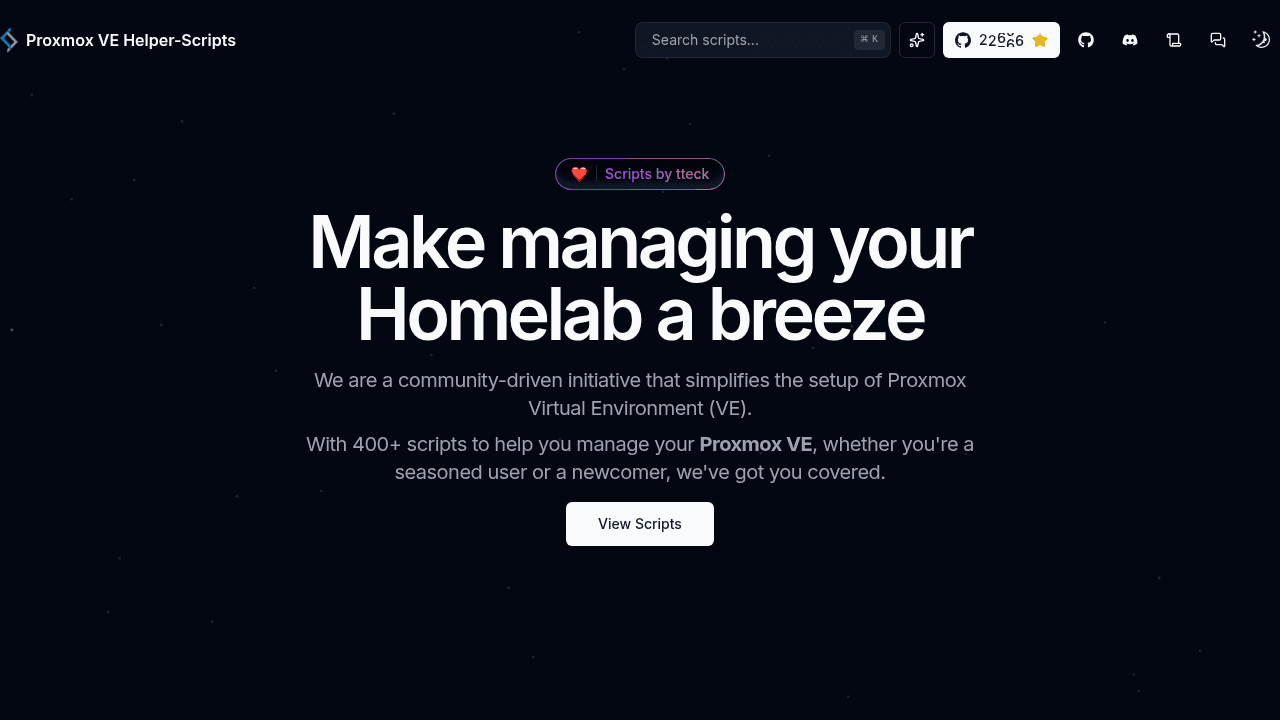
Broadcom's VMware pricing overhaul sent infrastructure teams scrambling for alternatives in 2025. Proxmox VE became the obvious landing spot, but the migration exposed a friction point: Proxmox's manual approach to LXC container deployment. What worked for small homelabs became deployment hell at scale.
A community-maintained collection of automation scripts turned that pain point into single-command installations. The timing explains its 25,000+ GitHub stars.
The VMware Exodus Created a Proxmox Problem
VMware users arriving at Proxmox expected automation. They found a powerful platform that required manual configuration for each container deployment—editing configs, setting resource limits, installing services from scratch. For teams migrating dozens of workloads, the hours multiplied.
The scripts solve exactly this: automated deployment of LXC containers and services with commands like bash -c "$(wget -qLO - https://github.com/community-scripts/ProxmoxVE/raw/main/ct/nginx.sh)". One line replaces the manual setup work.
One Command Replaced Hours of Configuration
Before these scripts, deploying a container meant navigating Proxmox's web UI, configuring storage, setting CPU and RAM allocations, choosing an OS template, then SSHing in to install and configure the application. Each step introduced opportunities for configuration drift across environments.
The helper scripts collapse that workflow. Choose a script for your service—Caddy, WireGuard, Pi-hole, Home Assistant, hundreds of options—run the command, answer a few prompts. The script handles template selection, resource allocation, network setup, and application installation. Stackscale, a private cloud provider built on Proxmox VE, uses them in production for speed and consistency across their infrastructure.
From Homelabs to Production Infrastructure
The usage spectrum tells the story. Homelab enthusiasts deploy around 20 containers each using the scripts—media servers, network services, development environments. Stackscale runs them in commercial hosting environments where deployment consistency matters.
The repository caught attention on Hacker News in November 2024, where users praised the approach to getting services like Caddy and WireGuard running in LXC containers. That visibility wave coincided with the VMware migration urgency.
Community Fork, Open Source Evolution
The project's origin story matters: this is a community continuation following a transfer from tteck's original Proxmox repository. The community-scripts organization maintains a sed command for users to switch their update repos, handling the transition transparently. This isn't competition—it's how open source works when maintainership changes hands. Both the original tteck project and this continuation deserve credit for solving real problems.
Growing Pains: Updates, Breaks, and Cluster Errors
Adoption at this scale surfaces rough edges. Some users report script updates that fail or break applications, particularly with Pi-hole—backups before updates are essential. Some have encountered cluster errors after running post-install scripts or other automation. Post-install tasks occasionally take 20-30 minutes for operations that should complete faster, like updating LXC template lists.
These aren't dealbreakers—they're the friction points of a tool growing faster than its maintainers can smooth the edges. The mitigation is standard ops practice: test in non-production, maintain backups, understand what each script does before running it.
Right Tool, Right Time
The convergence is clear: infrastructure teams needed Proxmox alternatives, and they needed those alternatives to work without weeks of manual configuration. These scripts met both needs.
What this collection is: community-maintained automation solving a deployment problem for Proxmox VE. What it isn't: enterprise-supported software with guaranteed stability or SLAs. For teams evaluating it, that distinction matters less than the hours saved and the consistency gained.
As Proxmox continues capturing VMware's displaced users, the scripts' trajectory follows that momentum—solving the problems that emerge when theory meets production reality.
community-scripts/ProxmoxVE
Proxmox VE Helper-Scripts (Community Edition)