OpenScreen: Free Alternative to Screen Studio Hits 22K Stars
A solo developer identified Screen Studio's $29/month price as a barrier and built OpenScreen—a genuinely free, open-source alternative with comparable polish. The project earned 22,000+ GitHub stars in under three months, proving demand for accessible screen recording tools with professional features like automatic zoom and motion effects.
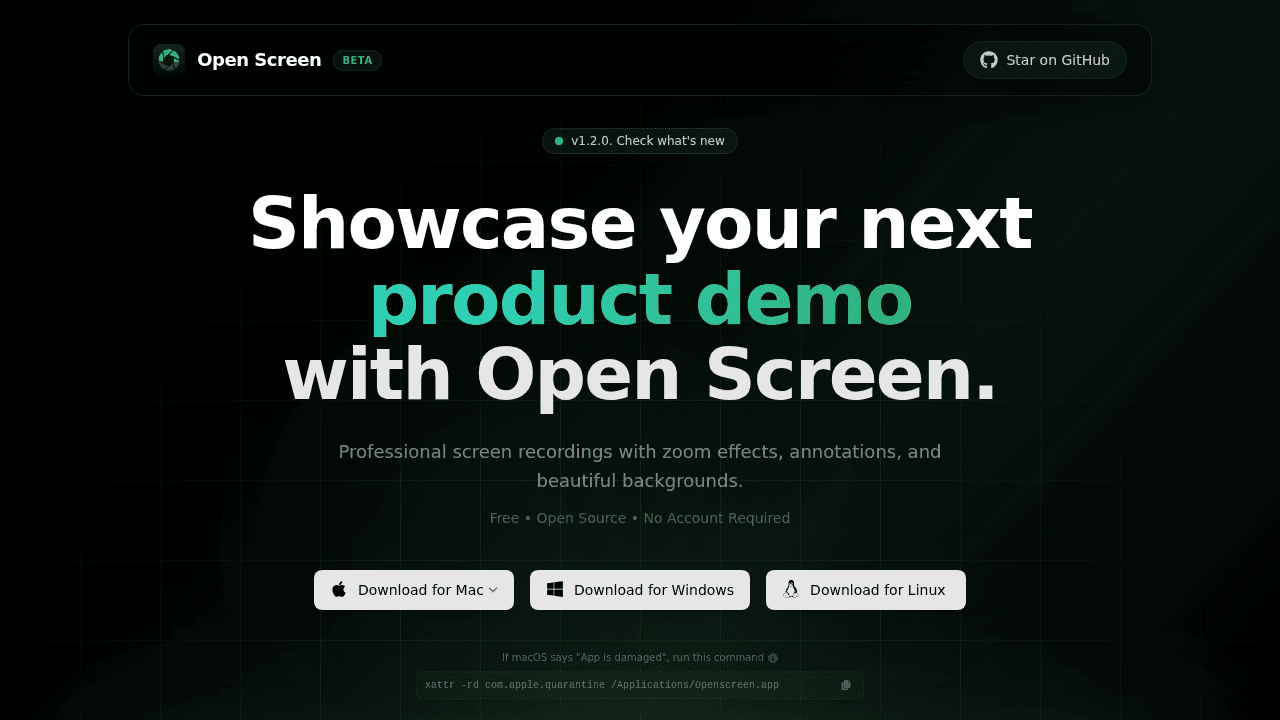
Siddharth Vaddem watched Screen Studio prove that developers would pay $29/month for polished screen recordings with automatic zoom and smooth motion effects. Then he built the same thing, made it free, and released it under an MIT license. The GitHub community responded with 22,000+ stars in under three months.
The Problem: Polished Demos Shouldn't Require Subscriptions
Screen Studio earned its subscription revenue—it took a tedious manual workflow and automated it. Recording a demo, adding smooth camera movements, timing zoom effects to highlight key moments: these tasks eat hours without the right tools. For agencies and developer relations teams with recording budgets, $29/month is reasonable.
But indie hackers launching weekend projects? Students building portfolios? Developers in markets where $29/month represents serious money? They faced a choice: pay the subscription, accept watermarked exports from free tiers, or spend hours editing manually in Final Cut or Premiere.
OpenScreen eliminates that tradeoff. No watermarks. No usage limits. No commercial restrictions. Just a free alternative with the automatic zoom and motion effects that made Screen Studio worth paying for.
What Siddharth Vaddem Built
Matching Screen Studio's polish wasn't about cloning an interface—it required implementing the intelligent camera work that makes these tools valuable. OpenScreen tracks cursor movement and application focus, then applies zoom and pan effects that feel purposeful rather than algorithmic.
The MIT license removes friction. Download it, use it for client work, fork the codebase if you want different behavior. No attribution requirements beyond the license file. For content creators who monetize tutorials or developer advocates producing company demos, that legal clarity matters as much as the feature set.
The feature list reads like Screen Studio's marketing page: automatic camera movements, customizable zoom levels, background replacement, and export formats optimized for social platforms. Vaddem didn't reinvent the category—he made the validated feature set accessible to everyone.
22,000 Stars Says This Mattered
GitHub stars measure hype more than usage, but 22,000+ in three months signals real momentum. The growth rate suggests OpenScreen solved a problem for developers who couldn't justify Screen Studio's pricing or preferred open-source tools on principle.
The rapid adoption also validates Screen Studio's original insight: there's massive demand for screen recording tools that produce polished output without manual editing. OpenScreen didn't create that market—it expanded who gets to participate in it.
The Competitive Landscape
Screen Studio still makes sense for teams with recording budgets and users who value commercial support. The $29/month price includes updates, customer service, and the confidence that comes from an established product.
Other alternatives exist too. Cap and Debut offer different value propositions—Debut charges $25 as a one-time lifetime purchase, while Cap pursues its own open-source approach. Each tool makes different tradeoffs around pricing, features, and platform support.
OpenScreen's differentiation is straightforward: fully free, fully open-source, no strings attached. That combination appeals to users who either can't afford subscriptions or want the flexibility to modify and self-host their tools.
Who This Matters For
Content creators producing YouTube tutorials on tight budgets. Indie hackers recording product demos for Product Hunt launches. Developer advocates at startups who need screen recording capabilities but lack enterprise tool budgets. Students building portfolios who need professional-looking project demonstrations.
Anyone creating technical content consistently enough to justify learning a dedicated tool, but not frequently enough to justify recurring subscription costs, fits OpenScreen's sweet spot. The open-source license adds another audience: developers who want to integrate screen recording into their own applications or customize behavior for specific workflows.
Vaddem identified a clear gap between what Screen Studio validated people wanted and who could access it. OpenScreen fills that gap without pretending the commercial option shouldn't exist. Both tools can succeed—they serve overlapping but distinct audiences.
siddharthvaddem/openscreen
Create stunning demos for free. Open-source, no subscriptions, no watermarks, and free for commercial use. An alternative to Screen Studio.