The Manual Anthropic Didn't Write for Claude Code
Anthropic's Claude Code arrived as a powerful agentic coding assistant, but developers had to learn best practices through expensive trial and error. shanraisshan's repository fills that gap with 84 documented practices covering CLAUDE.md configuration, the 30-minute chunking rule that hits 90% success rates, and skills management strategies. The guide topped Hacker News because it answers the question every AI coding tool leaves open: now that I have this, how do I actually use it well?
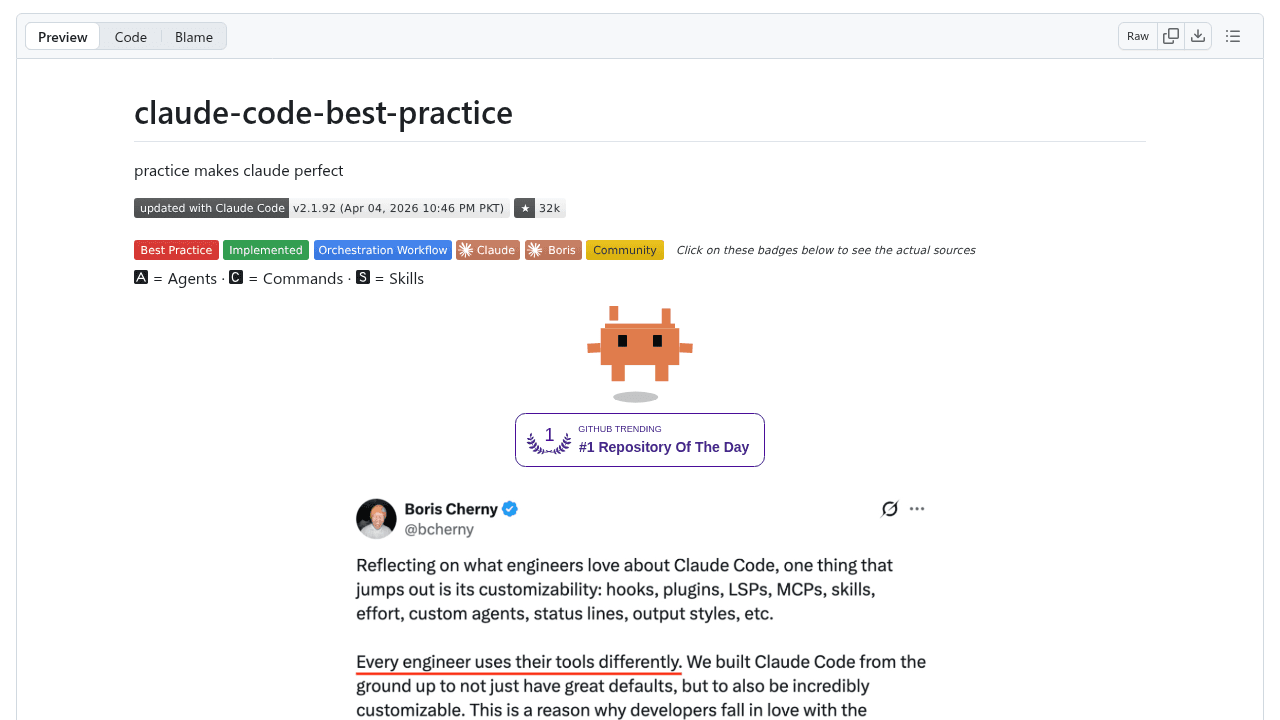
Anthropic shipped Claude Code without documentation on how to actually use it. Developers filled the gap through expensive trial and error until shanraisshan documented 84 lessons that hit #1 on Hacker News.
What 84 Best Practices Actually Look Like
The repository covers CLAUDE.md configuration patterns, skills management, and debugging strategies—the practical details vendor docs skip. The most useful finding: tasks broken into 30-minute chunks of human-equivalent coding succeed 90% of the time. Larger features attempted in single passes fail far more often.
This comes from production use. 70% of Vim mode code in Anthropic's own products came from Claude Code. But knowing it's possible and knowing how to replicate it are different problems. The repository provides specifics: how to structure prompts, when to intervene manually, which skills configurations work for different project types.
The Meta-Irony Nobody Mentions
This is human-written documentation about making an AI coding assistant write better code. The irony reveals current limitations. Claude Code doesn't automatically know your project conventions, your team's coding standards, or which architectural decisions should remain human-directed. That context still requires documentation—now written for AI consumption as much as human reference.
Different Philosophies, Same Problem Space
Cursor appeals to IDE users, while Aider offers cost savings through bring-your-own-key models. These aren't competing solutions—they're different trade-offs. Where Claude Code chooses managed simplicity, OpenCode emphasizes keeping key decisions visible and adjustable. Neither approach is better universally, but the differences matter when matching tools to team workflows.
The choice between managed services and BYOK flexibility mirrors infrastructure decisions: convenience versus control, integrated experiences versus composable toolchains. Teams comfortable with Anthropic's hosted approach get faster onboarding. Teams wanting control over API keys and model selection trade that convenience for flexibility.
When Unofficial Guides Become Essential
The September 2025 quality controversy showed how dependent developers became on consistent Claude Code behavior. When Anthropic confirmed technical bugs after weeks of complaints, the community reaction revealed that shanraisshan's practices had become infrastructure. Developers had built workflows assuming documented best practices would continue delivering those 90% success rates.
This pattern repeats across developer tools: community documentation fills gaps until it becomes load-bearing. The repository represents accumulated knowledge that teams depend on for production workflows.
What Engineering Teams Should Evaluate
Tool capability matters less than team practices around using it. Claude Code's features look identical on every sales deck, but productivity depends on whether your team develops the kind of operational knowledge shanraisshan documented. That's true for Cursor, Aider, or any AI coding tool.
The repository's reception proves a point: success with agentic assistants requires institutional knowledge, not just API access. Teams evaluating these tools should plan for the learning curve that comes with building that knowledge, whether through community resources or internal documentation. The 556 Hacker News points weren't celebrating clever prompts—they were thanking someone for doing the documentation work vendors skipped.
shanraisshan/claude-code-best-practice
from vibe coding to agentic engineering - practice makes claude perfect