Solo Dev Builds AI Tool With IDE Powers Claude Code Lacks
A solo developer identified what billion-dollar AI coding tools were missing—proper IDE capabilities like LSP and AstGrep—and built an open-source alternative that quickly gained 26,500 GitHub stars. The result sparked both adoption and controversy around API terms of service and resource consumption.
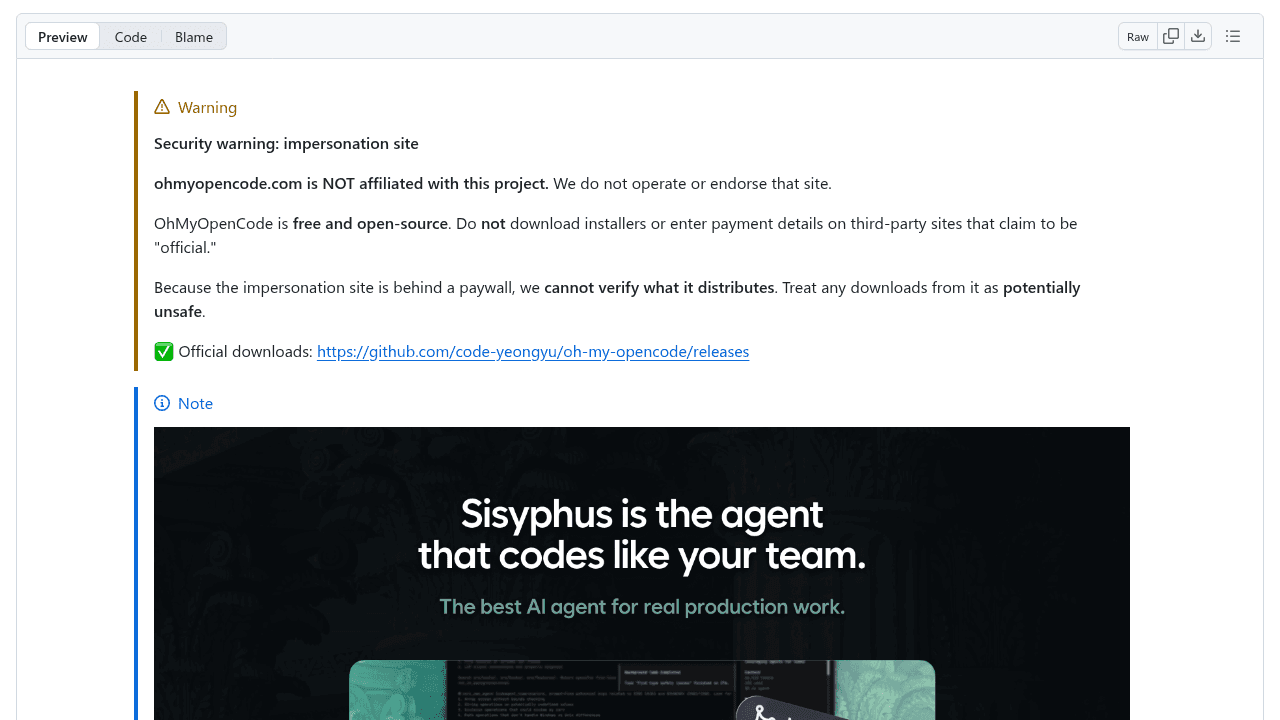
When code-yeongyu released Oh My OpenCode on December 3, 2025, it hit over 26,500 GitHub stars in weeks. The premise: AI coding agents should have the same IDE tooling human developers use.
The IDE Gap in AI Coding Agents
Most AI coding assistants operate with a handicap. They read code and suggest changes, but they lack the Language Server Protocol (LSP) integration that powers refactoring, go-to-definition, and navigation in modern IDEs. They also miss tools like AstGrep for syntax-aware code analysis.
Oh My OpenCode fills this gap by giving AI agents full access to LSP and AstGrep capabilities. Instead of treating code as text, agents can understand its structure, traverse call hierarchies, and execute refactorings—except across dozens of files at once.
When an agent needs to rename a function or find all implementations of an interface, LSP support turns a risky text-find-and-replace into a verified semantic operation.
What One Developer Built Differently
Oh My OpenCode is fully open-source, supports multiple AI models beyond Claude, and orchestrates sub-agents in parallel to tackle different aspects of tasks at the same time.
Where Claude Code and Cursor offer integrated commercial experiences, Oh My OpenCode prioritizes flexibility. Teams can swap between AI providers, modify agent behavior, and audit exactly how the system makes decisions.
The parallel agent architecture stands out. While a single agent works through problems one step at a time, Oh My OpenCode can assign one agent to handle tests, another to update documentation, and a third to refactor implementation—all working toward the same goal at once.
26,500 Stars and Growing Pains
Rapid adoption brought complications. Anthropic took action to restrict use of Claude Code subscriptions within Oh My OpenCode, citing terms of service violations. The enforcement highlighted a real tension: when does an open-source tool that interfaces with a commercial API cross the line from integration to circumvention?
Token consumption is another tradeoff to consider. The parallel agent approach consumes more API tokens than sequential processing—speed versus cost. Teams need to evaluate this based on their workflows and budgets.
These are natural tensions for a repository growing this fast and an open-source project figuring out how to coexist with commercial APIs.
Different Tools, Different Tradeoffs
Claude Code excels at polish and integration for teams that value a managed experience. Cursor optimizes for individual developer workflows with minimal setup. Oh My OpenCode serves teams that need open-source flexibility, multi-model support, or the raw processing power of parallel agents despite higher token costs.
A startup might choose Oh My OpenCode for cost control and model flexibility. An enterprise team might prefer Claude Code's managed experience. A solo developer might favor Cursor's simplicity.
What This Means for AI Development Tooling
One developer identified a gap—proper IDE tooling for AI agents—and built a solution that thousands adopted within weeks.
The IDE-for-agents question is far from settled. Oh My OpenCode shows that open-source can move fast on problems commercial players haven't prioritized. The API restrictions and token consumption debates show that technical innovation alone doesn't resolve business model tensions.
Competition drives the space forward. Developers benefit from having real choices backed by different philosophies.