NanoClaw: 500 Lines That Isolate AI Agents in Containers
OpenClaw runs agents in a single Node process with shared memory. NanoClaw's creator saw a security problem and built 500 lines of TypeScript that puts each agent in OS-level containers. The Docker partnership validates the isolation strategy, though running inside containers brings its own challenges.
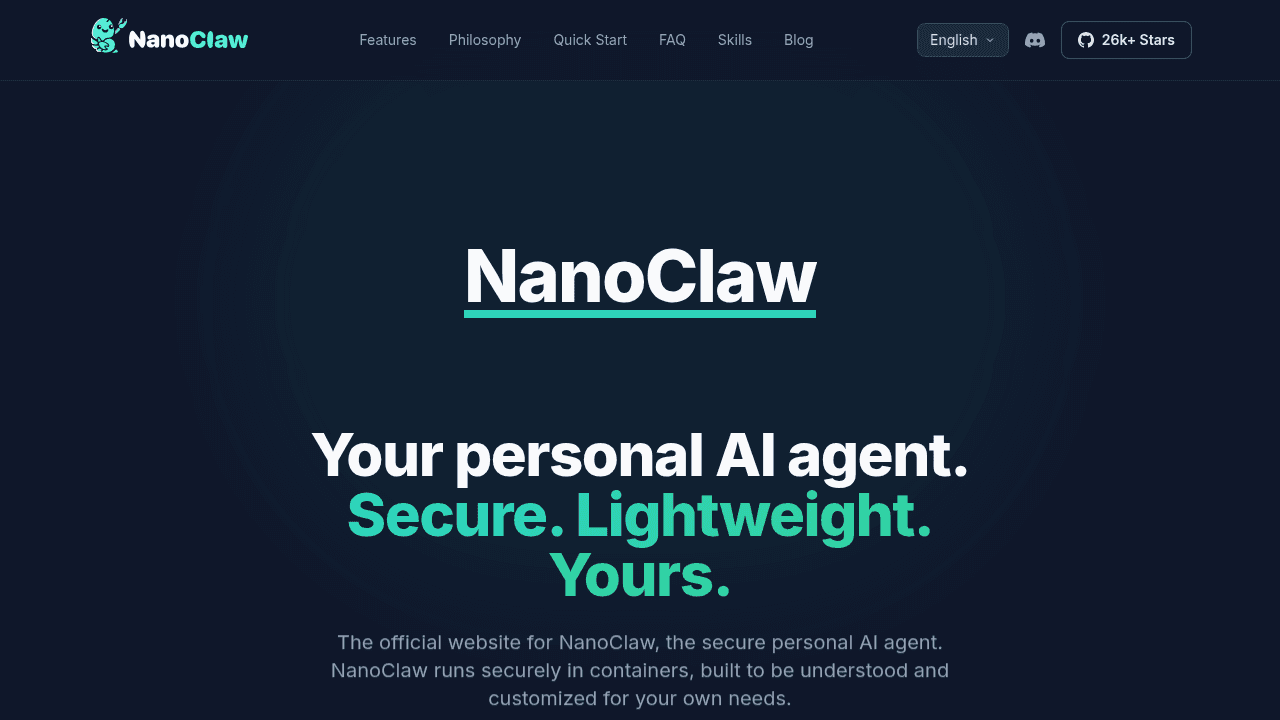
OpenClaw created the AI agent framework category. Then a developer looked at its architecture and saw a problem: agents running in a single Node process with shared memory and application-level permissions. The solution was NanoClaw, about 500 lines of core TypeScript that makes a different bet—OS-level container isolation for each agent.
The project gained over 22,000 GitHub stars and caught Docker's attention fast enough to result in a partnership. That momentum suggests the architectural trade-off is resonating with teams who treat security as non-negotiable.
The Architectural Split: Shared Memory vs. Container Isolation
OpenClaw's integrated approach runs multiple agents within a single process. This optimizes for performance and feature integration—agents can share state, communicate efficiently, and tap into a broader toolkit. It's a valid choice when you trust your codebase and want tight coordination between agents.
NanoClaw inverts that priority. Each agent runs in its own container, isolated at the OS level. If one agent attempts something malicious or crashes unexpectedly, it can't touch another agent's memory space or escalate privileges through the parent process. The trade-off is explicit: accept some operational complexity in exchange for defense-in-depth security.
Neither architecture is wrong. They optimize for different scenarios. OpenClaw serves teams building complex, coordinated agent systems. NanoClaw targets environments where isolation boundaries matter more than shared state.
500 Lines and a Clear Vision
The minimal codebase isn't just aesthetic. When you're auditing security-critical infrastructure, every line of code represents potential attack surface. NanoClaw's core fits in 500 lines of TypeScript—small enough to read in an afternoon, inspect thoroughly, and reason about with confidence.
This focus comes at a cost. OpenClaw ships with more built-in tooling, integrations, and abstractions. NanoClaw deliberately omits features that would balloon the codebase. The philosophy is Unix-like: do one thing well, compose with other tools when needed.
For security teams conducting threat modeling exercises, that constraint becomes an advantage. Fewer dependencies mean fewer supply chain risks. Simpler architecture means clearer security boundaries.
Docker's Validation of Container-First Strategy
NanoCo partnered with Docker to address enterprise deployment concerns. The integration with Docker Sandboxes enables agents to run in disposable MicroVMs—ephemeral compute environments that vanish after execution. Container isolation taken a layer deeper.
The Docker relationship validates the architectural bet. Container platforms have spent years hardening isolation primitives, dealing with privilege escalation attacks, and optimizing for multi-tenant security. NanoClaw uses that work instead of reimplementing it.
For DevOps teams already operating containerized infrastructure, NanoClaw slots into existing deployment patterns. No need to bolt security onto a monolithic agent runtime after the fact—the isolation model matches how they already think about workload boundaries.
The Irony of Containers Running in Containers
There's an open GitHub issue worth acknowledging: NanoClaw experiences crashes when running inside its own container. The isolation strategy that defines the project becomes recursive in certain deployment scenarios, and that introduces genuine engineering challenges.
Running containers inside containers involves namespace conflicts, networking complexity, and resource allocation questions that don't have obvious answers. The issue remains open because solving it properly requires careful design work, not quick patches.
The transparency here matters. Open source thrives when maintainers acknowledge hard problems rather than papering over them.
Who This Trade-Off Serves
NanoClaw makes sense for teams where agent isolation is a requirement, not a nice-to-have. Financial services platforms running untrusted code. Research environments executing arbitrary models. Multi-tenant SaaS products where one customer's agent can't leak data to another's.
It also appeals to infrastructure teams operating lightweight hardware with reduced local resource needs. The 1.76x higher fork ratio compared to OpenClaw suggests developers are using it as a base for custom builds—taking the minimal core and extending it for specific contexts.
Both OpenClaw and NanoClaw serve real needs. One prioritizes integration and features. The other prioritizes auditability and isolation. The choice depends on which constraints matter more for your deployment model.
qwibitai/nanoclaw
A lightweight alternative to OpenClaw that runs in containers for security. Connects to WhatsApp, Telegram, Slack, Discord, Gmail and other messaging apps,, has memory, scheduled jobs, and runs directly on Anthropic's Agents SDK