Mastra: TypeScript AI Framework from Gatsby Team
Explore how the Gatsby team built Mastra, a TypeScript-first AI framework that addresses production-grade LLM development challenges. This article covers Mastra's enterprise-focused architecture, type-safe agent workflows, and community-driven ecosystem that's reshaping AI development standards.
The team behind Gatsby hit a wall in 2024. Despite years of experience scaling complex web platforms, they found themselves wrestling with fragmented tooling when building production-grade AI assistants. Existing frameworks forced developers into low-level orchestration battles, hardware dependencies, and brittle context management between frontend and backend. "We couldn't find a TypeScript-native toolkit to build, test, and observe reliable AI agents across LLM providers," the team explained. "So we built Mastra to scratch our own itch: to make AI agent development feel as robust as modern frontend engineering." The missing pieces were seamless observability, version control, and safe human-in-the-loop workflows—all crucial for real-world, user-facing AI products.
Enterprise AI Workflows Hit TypeScript's Missing Link
Modern LLM APIs had unlocked massive potential, but the tooling ecosystem lagged behind enterprise needs. Teams building AI assistants faced a brutal choice: embrace Python-heavy ML frameworks with poor web integration, or cobble together fragile JavaScript solutions without proper observability. The core challenge wasn't just connecting to OpenAI or Claude—it was building reliable, pausable workflows that could gracefully handle context switching, memory management, and human intervention. Without type safety and proper debugging tools, AI agent development felt more like experimental scripting than production software engineering, making it nearly impossible to ship customer-facing AI products with confidence.
From Web Platform Expertise to AI Infrastructure
Mastra's foundation emerged directly from the Gatsby core team's hard-won experience with complex, dynamic platforms. The breakthrough moment came during internal discussions about LLM workflow pain points, leading to the repository's creation on August 6, 2024. Early prototypes demonstrated that TypeScript could deliver type-safe agent definitions and plug-and-play LLM integration without sacrificing observability. By October 2024, the team hit a crucial milestone: CLI prototypes that let developers "spin up a new project in just 5 minutes," according to WorkOS documentation. January 2025 marked another leap with Mastra Cloud's launch, enabling automatic deployment and agent UI testing directly tied to GitHub. The obstacles were real—LLM API inconsistencies, real-time web context management, and making long-lived agents resumable and inspectable—but each challenge drove specific innovations in context managers, storage-backed workflows, and pluggable evaluation systems.
TypeScript-First Architecture Bridges Web and AI Development
Mastra's technical innovation centers on several industry firsts that separate it from Python-dominant alternatives:
- Universal Type Safety: Full TypeScript coverage for agent logic, models, and tools with seamless Node.js, Next.js, React, Deno, and Bun runtime support
- Model Router Architecture: Unified interface connecting 40+ foundation model vendors (OpenAI, Anthropic, Gemini, Llama) through dynamic routing, eliminating vendor lock-in
- Advanced Agent Memory: Built-in context, semantic, and working memory systems enabling complex multi-turn workflows with human-in-the-loop pausing capabilities
- Production-Grade Observability: Automatic logs, traces, and evaluation hooks for continuous agent behavior monitoring and iteration
- Developer Experience Tools: CLI scaffolding with npm create mastra@latest and ready-to-use integrations with popular libraries like Vercel AI SDK UI and CopilotKit
The framework's pluggable ecosystem includes GitHub and Cloud IDE agents specifically designed to prevent LLM hallucinations by keeping models synchronized with live documentation. This approach transforms AI development from experimental prototyping into engineering discipline with familiar web development patterns.
Ecosystem Acceleration Through Community-Driven Innovation
Mastra has rapidly gained traction with 18,245 GitHub stars and 255 contributors within its first year, signaling strong developer adoption. Real-world applications include GitHub repo analyzers, documentation Q&A systems, and AI-driven customer support chatbots deployed in production environments. The framework's influence extends beyond individual projects—its observability-first approach and model router patterns are being emulated across the TypeScript AI ecosystem, establishing new standards for LLM-powered application reliability. With active Discord communities and multiple open-source starter templates, Mastra represents a bottom-up shift toward treating AI agent development as mainstream software engineering rather than experimental research.
Check out Mastra to explore the TypeScript AI framework reshaping how developers build production-ready AI assistants.
mastra-ai/mastra
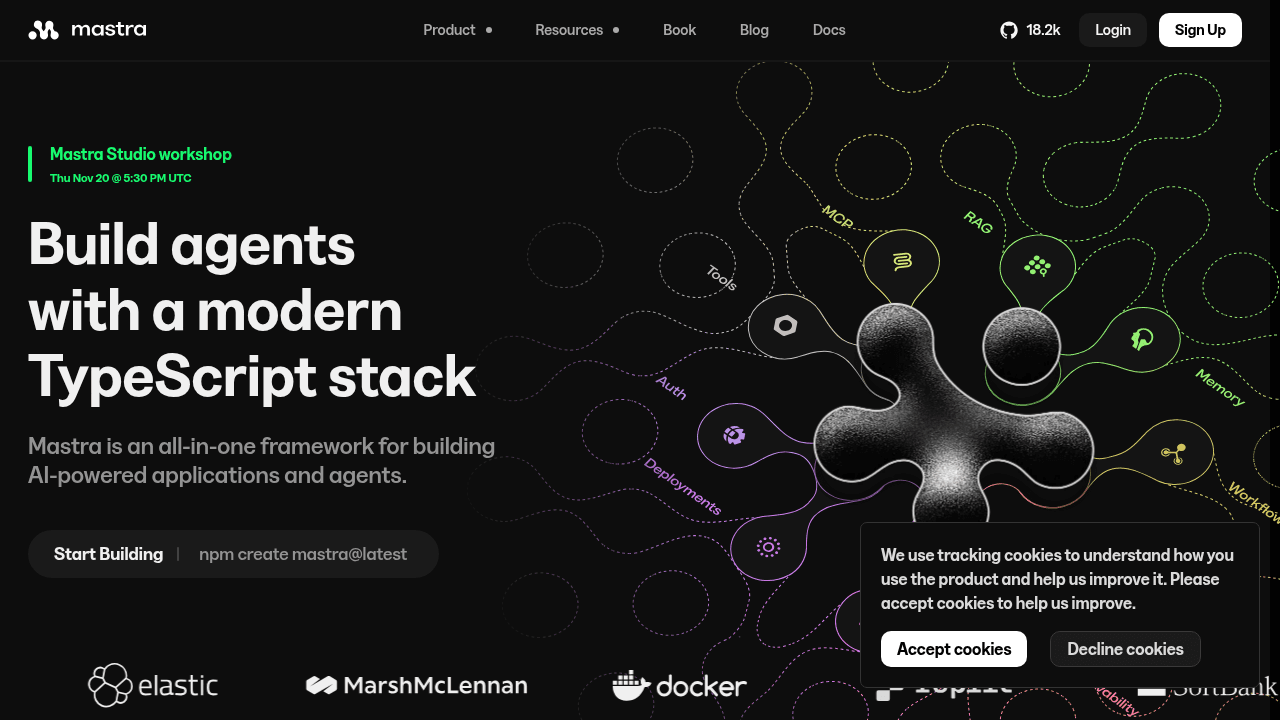
From the team behind Gatsby, Mastra is a framework for building AI-powered applications and agents with a modern TypeScript stack.