Ink Kit: The Web3 Component Library That Found the Gap
When building their Layer 2 blockchain, Kraken's team discovered generic component libraries weren't optimized for onchain React patterns using wagmi and viem. Ink Kit filled that gap with web3-specific templates and components. Though now deprecated, its existence validated a real need in the ecosystem and pointed developers toward modern alternatives.
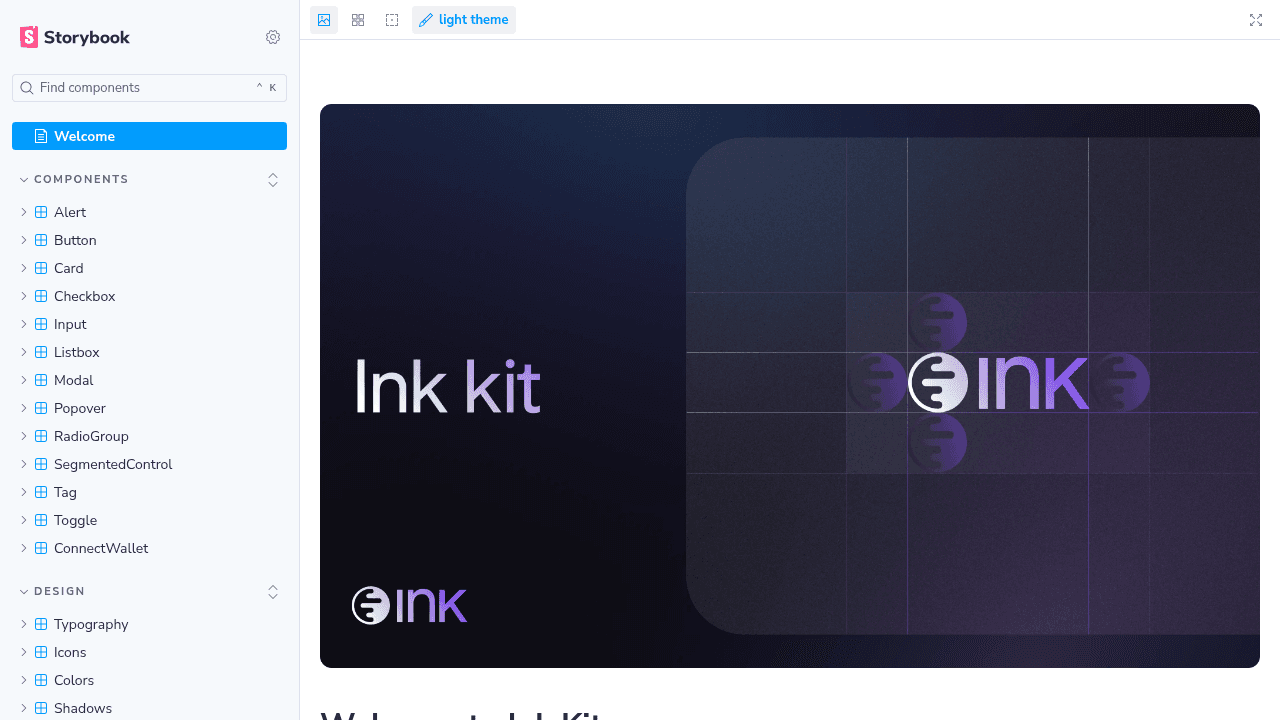
When Kraken's team built Ink, their Layer 2 blockchain, they ran into a problem that had nothing to do with consensus mechanisms or gas fees. They needed to build interfaces for onchain applications—wallets, NFT galleries, DeFi dashboards—and discovered that generic component libraries weren't built for the patterns these apps required.
React developers working with web3 libraries like wagmi and viem face different challenges than those building typical web applications. Connecting wallets, displaying blockchain states, handling transaction flows—these patterns don't map cleanly onto libraries like Chakra or Material-UI. The Ink team built internal tooling to solve this for their own blockchain, then recognized they'd addressed a broader gap. That tooling became Ink Kit, an open-source component library for onchain React applications.
The Gap Nobody Else Had Filled
Component libraries excel at common web patterns: forms, modals, navigation menus. But onchain interfaces introduce requirements these libraries don't anticipate. Applications need components that understand wallet connection states, display blockchain data with appropriate formatting, and handle the asynchronous nature of transactions. Building these patterns from scratch for every project means reinventing solutions to the same problems.
Ink Kit targeted this niche. Rather than competing as another general-purpose UI library, it focused on the intersection of React development and blockchain integration. The library assumed developers were already working with wagmi and viem, building directly on those foundations rather than abstracting them away.
What Ink Kit Actually Built
The library provided app layout templates designed around common onchain interface patterns—structures for wallet-connected applications that handled the typical flow states developers encounter. Components came with animations and theming built for blockchain UIs, addressing the visual language that had emerged in web3 applications.
The package dependencies reveal the strategy: deep integration with the React web3 tooling rather than reinventing primitives. This meant developers could drop Ink Kit components into existing wagmi/viem projects without fighting abstraction layers.
For teams building on Ink blockchain, the library offered immediate productivity gains—templates that matched their platform's patterns and components that handled common onchain interaction flows. The developer experience focused on reducing the friction between "I need a wallet connection button" and "I have a functional wallet connection flow."
The Natural Evolution of Open Source
In March 2025, the official documentation acknowledged what had become clear: Ink Kit was no longer actively maintained. The team's recommendation? Use shadcn/ui, Radix UI, Chakra UI, or Mantine instead.
This isn't a failure story. The project solved a real problem, validated that the web3 component space needed attention, and ran its course. The web3 development world evolved—other libraries incorporated lessons from web3 challenges, and the gap Ink Kit originally identified narrowed. Rather than maintaining a stagnant codebase, the team pointed developers toward actively developed alternatives.
Good open source stewardship sometimes means recognizing when a project has served its purpose. The Ink team built what they needed, shared it when it proved useful, and stepped aside when better options emerged. Repository activity shows a version update as recently as March 19, 2025, but the trajectory is clear.
Where to Go Instead
The recommended alternatives represent the current state of React component libraries, each with strengths for different use cases. shadcn/ui offers copy-paste components with full code ownership. Radix UI provides unstyled primitives for custom design systems. Chakra UI and Mantine deliver component libraries with built-in theming.
None were built for onchain applications the way Ink Kit was, but that's partly because the distinction matters less now. As web3 patterns matured and became more standardized, the need for blockchain-specific component libraries decreased. Developers can build onchain interfaces with general-purpose tools—especially when those tools learned from projects like Ink Kit that explored the space first.
The project's legacy isn't in ongoing commits. It's in demonstrating what web3 React applications needed before most developers realized there was a gap to fill.
inkonchain/ink-kit
React component library for onchain applications - See README for modern alternatives