Anthropic Skills: The Missing Layer for AI Agents
Context window bloat has plagued enterprise AI deployments since the first agents shipped. Teams crammed everything into prompts, burned budgets on fine-tuning, or built Rube Goldberg multi-agent systems. Anthropic Skills introduces a fourth way: modular expertise packages that agents invoke without context overhead. Fortune 500 companies and major SaaS platforms are already using it in production.
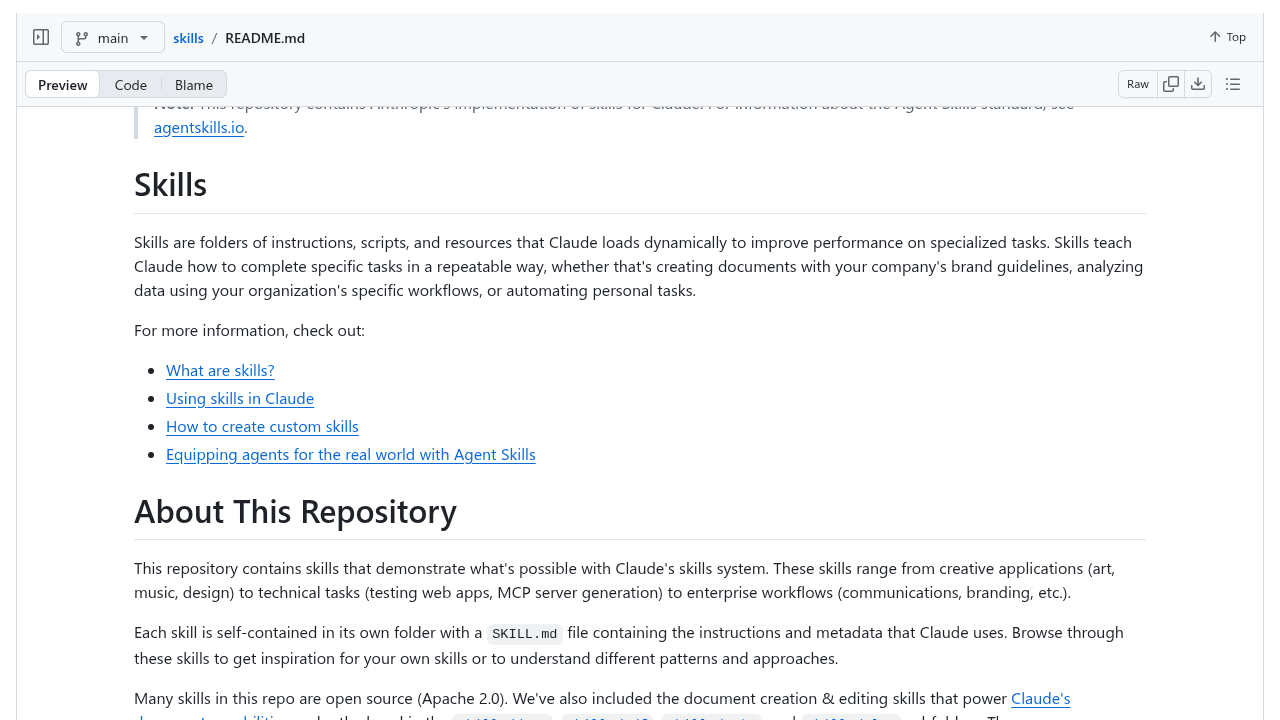
Your production agents hit the same wall: they need specialized expertise without burning through context windows. Cram knowledge into prompts, and you're paying for thousands of wasted tokens. Fine-tune your model, and you've locked that knowledge into weights you can't easily update. Build a multi-agent framework, and you've just signed up for operational complexity that makes simple tasks feel like distributed systems problems.
The Context Window Problem Nobody Solved
The tension between general-purpose models and domain expertise has plagued enterprise AI since teams started shipping agents. Fortune 500 companies struggled with this across legal, finance, accounting, and data science workflows—production environments where agents needed to know company-specific procedures without bloating every interaction.
Context bloat kills performance. You can't ship an agent that loads your entire compliance handbook into every conversation. Fine-tuning solves nothing because the expertise stays baked into model weights instead of remaining modular and updateable. Multi-agent orchestration frameworks add infrastructure overhead that small teams can't maintain.
Anthropic's Skills introduces a fourth option: portable packages of procedural knowledge that agents invoke on-demand, without context overhead.
What Skills Actually Are (and Aren't)
Think of Skills as executable knowledge modules—distinct from what your existing tools already handle. RAG retrieves data from documents. MCP handles tool execution. Fine-tuning embeds patterns into weights. Skills package how to do something into reusable components that extend a single LLM.
The architecture matters for teams evaluating their stack. When Stripe, Notion, Figma, Atlassian, Canva, and Zapier built Skills for the enterprise directory, they weren't replacing their APIs—they were creating instruction sets that teach Claude how to work with their platforms correctly. Box automates workflows. Rakuten handles cross-business-unit procedures. The pattern holds: procedural knowledge that doesn't fit into prompts or database queries.
Why Fortune 500 Teams Adopted This Fast
Production adoption tells you where the pain lives. Box integrated Skills into workflow automation. Canva uses it to streamline creative processes. Rakuten deployed it across business units that each need different operational knowledge.
The velocity matters. Teams didn't wait for a second version or extensive documentation—they shipped with it. That signals the context management problem was already bleeding money and engineering time. Anthropic's internal research showed 60% Claude usage across employee work, with 50% reporting productivity boosts and 27% tackling tasks that wouldn't have happened otherwise.
How Skills Fit With Existing Agent Infrastructure
Skills represent a third architecture pattern—modular extensions to a single LLM—positioned alongside full multi-agent orchestration frameworks like LangGraph. Different problems deserve different solutions. Your orchestration layer handles workflow coordination. Your RAG system retrieves context. Your MCP implementation manages tool execution. Skills handle the procedural expertise that doesn't map to any of those categories.
For engineering leaders, this means Skills complement rather than replace your existing infrastructure. You're not choosing between Skills and LangGraph. You're deciding whether your architecture needs modular procedural knowledge alongside retrieval and orchestration.
The Skill Erosion Contradiction
Anthropic's research here is worth examining. Their own study found engineers worry about losing technical depth despite feeling more productive. The productivity gains are real—2-3× output increases—but so are concerns about declining deep expertise and reduced peer collaboration.
Another study showed AI adoption decreased coding time while increasing time spent composing queries and interpreting AI output. Teams using Claude for learning new concepts saw inhibited skills formation. That's not a bug to hide—it's a tradeoff to manage deliberately in your organization.
What This Means for Production Agent Systems
Skills solve a specific infrastructure gap: packaging expert knowledge for agents without context overhead. Use them when you need repeatable procedures that don't fit into prompts, don't warrant fine-tuning, and operate within a single agent rather than requiring orchestration across multiple models.
The longer-term contribution extends beyond any single vendor. Anthropic open-sourced the Skills standard. Standardizing how we package and share expert knowledge for AI agents creates infrastructure that matters whether or not you use Claude. That's the kind of contribution that builds an ecosystem rather than just a feature set.