Hello-Agents: Learn What No-Code AI Tools Actually Do
Dify and Coze make building AI agents accessible through drag-and-drop interfaces, but they abstract away the underlying principles. Hello-Agents fills the gap with a systematic 16-chapter tutorial that teaches agent architecture from scratch, backed by a 900-person learning community despite some documentation rough edges.
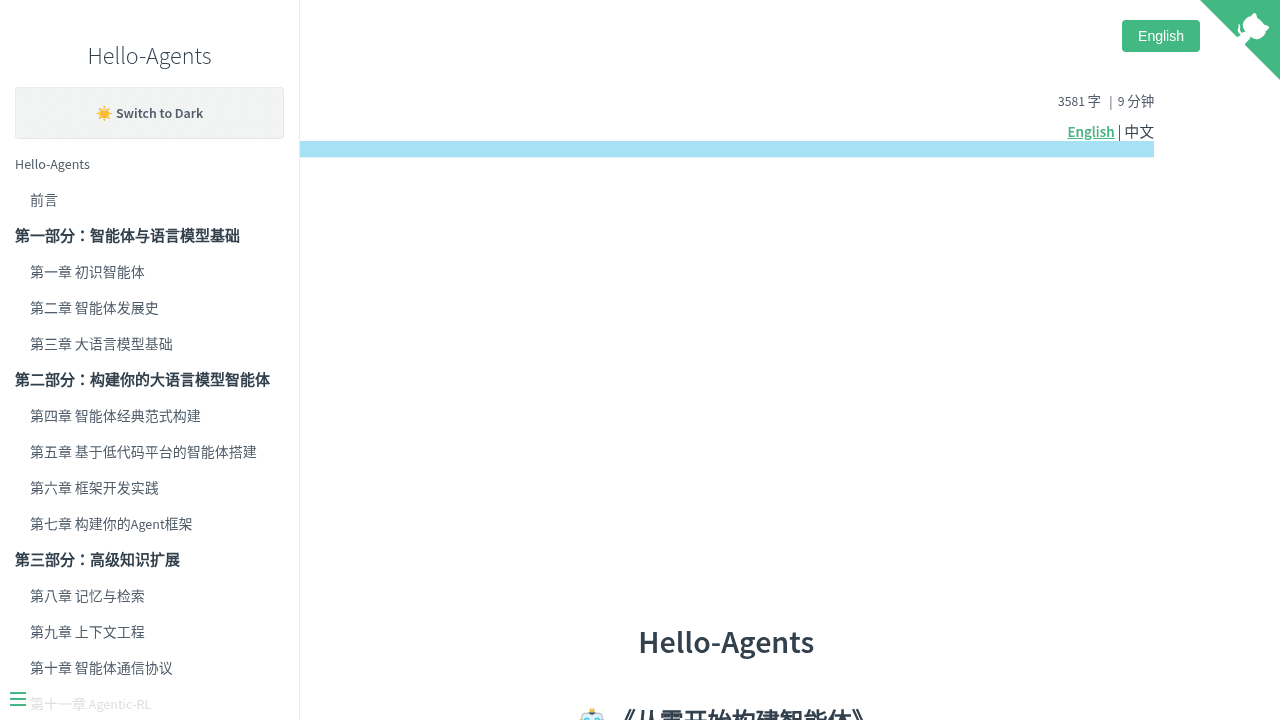
You can spin up an AI agent in Dify by dragging workflow blocks together. Ten minutes later, it's answering questions and calling APIs. Ask what's happening when it "remembers" a conversation or decides which tool to invoke, and the abstraction suddenly feels thick.
Hello-Agents teaches what those no-code platforms intentionally hide. The tutorial walks through 16 chapters of agent architecture—memory systems, tool orchestration, multi-agent coordination—with code samples that show how the pieces connect. It's not competing with Dify or Coze. It's the companion resource for developers who want to understand what happens when you click "deploy."
The Gap Between Building and Understanding
No-code agent builders solved a real problem. They let product teams prototype agentic workflows without waiting for engineering bandwidth. Dify, Coze, and n8n made agent development accessible by abstracting away the complexity of LLM orchestration, memory management, and tool integration.
That abstraction comes at a cost. You can connect a vector database to a retrieval node without understanding embedding spaces. You can wire up tool calls without knowing how function schemas work. The agents run, but the underlying principles stay opaque.
Hello-Agents addresses that gap directly. Where no-code platforms optimize for speed and accessibility, this tutorial focuses on agent principles rather than workflow-driven building. It's designed for developers who've already experienced the magic of agent builders and now want to see the mechanics.
What Hello-Agents Teaches
The curriculum follows a progression across 16 chapters. Early sections cover agent basics—what they are, how they differ from chatbots, why they need memory. Mid-level chapters dig into tool integration patterns and how agents decide which tools to call. Later material explores multi-agent systems where multiple agents coordinate on complex tasks.
Chapter 6 explores mainstream industry agent frameworks, showing how production systems handle reliability and standardization. Code samples accompany each concept, with exercises that ask you to implement variations.
Developer blogs document using the tutorial as structured learning—work through a chapter, run the code, modify it to test understanding. The progression from basics to frameworks gives a mental model that makes documentation for tools like LangChain or CrewAI suddenly readable.
Growing Pains of an Active Tutorial
Real usage means real bug reports. Users have flagged version conflicts with qdrant-client where Chapter 8.1.4 installs a version that breaks the HelloAgents framework's search API calls. Chapter 10.3.4 has parameter mismatches in the A2ATool implementation. Chapter 13.3's travel assistant fails in both single and multi-agent configurations.
These aren't hypothetical issues in documentation no one reads. They're reports from developers working through the material, hitting problems, and documenting them. The issue tracker shows engagement. An unused tutorial wouldn't have this kind of feedback.
The Community Signal: 900-Person Cohorts
Datawhale organizes group learning events with 900 spots for studying the Hello-Agents tutorial. That's not typical GitHub star inflation—it's coordinated, structured learning with check-ins and community contributions. The repository's appearance on weekly trending lists reflects adoption momentum.
Most GitHub tutorials get forked a few dozen times and quietly fade. Hello-Agents has hundreds of developers simultaneously working through the same material, comparing notes, and filing issues when examples break. That level of engagement suggests the gap between no-code convenience and agent fundamentals is widely felt.
Who This Is For (and Who It Isn't)
This tutorial assumes programming fluency and basic AI familiarity. If you've never touched Python or don't know what an LLM is, start elsewhere. If you've already built production agent systems, the early chapters will feel slow.
The sweet spot is developers who've experimented with agent builders—assembled a few workflows in Dify, tried the tutorials in Coze—and found themselves wanting more control or deeper understanding. Hello-Agents won't replace production frameworks, but it prepares you to use them by teaching what they manage under the hood.
Expect to invest real time. Sixteen chapters with hands-on exercises isn't a weekend skim. Expect rough edges—this is a tutorial under development, not polished documentation. But for developers tired of treating agent architecture as magic, it's the systematic resource the no-code boom created demand for.
datawhalechina/hello-agents
📚 《从零开始构建智能体》——从零开始的智能体原理与实践教程