Google's ADK Framework vs LangGraph: Cold Start Reality
Google's Agent Development Kit promises production-grade multi-agent orchestration with Kubernetes-inspired minimalism. Renault runs it in production. GitHub shows 20-second cold starts on Cloud Run. Technical deep-dive into how ADK compares to LangGraph and LangChain, what the cold-start issues mean for deployment, and why Google open-sourced enterprise tooling with rough edges.
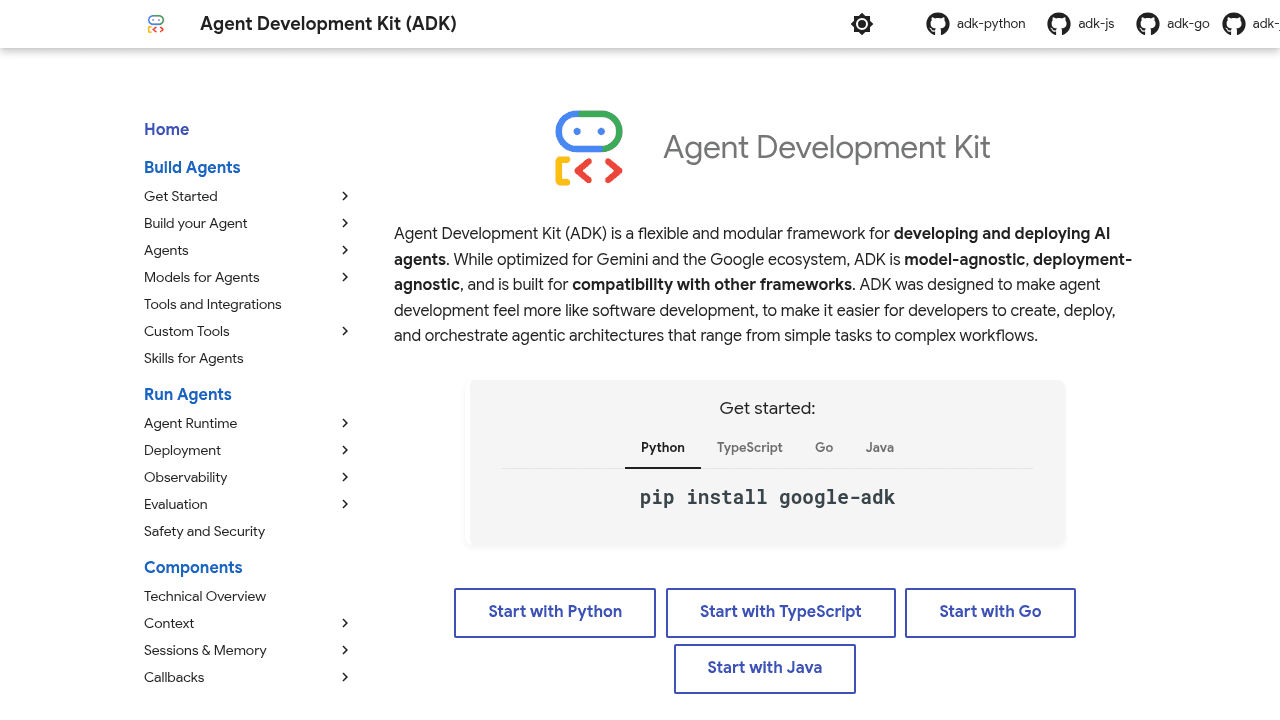
Google just open-sourced the agent framework powering Renault Group's AI systems, and developers immediately hit a wall: 20-second cold starts on Cloud Run. The Agent Development Kit (ADK) handles production-grade multi-agent orchestration, but GitHub issues show a framework still working through deployment challenges on its own platform.
What ADK Actually Does Differently
ADK takes a minimal approach to agent frameworks. Rather than forcing developers into opinionated workflows, it provides Kubernetes-inspired building blocks for the agentic space—thin abstractions that let teams construct their own patterns. For enterprise teams running complex multi-agent systems, rigid frameworks become constraints.
The design centers on structured workflows and orchestration at scale. Google built this to coordinate multiple AI agents across distributed systems, not to help developers prototype their first chatbot. The architecture reflects that: event-driven patterns, state management primitives, and coordination mechanisms that assume you're running more than one agent at a time.
Renault Runs This in Production
Renault Group runs ADK in actual production systems. While implementation details remain limited, the enterprise adoption validates the core thesis—teams need frameworks designed for production complexity, not rapid prototyping.
ADK vs LangGraph vs LangChain: Different Problems, Different Tools
The framework landscape serves different needs. LangGraph excels at prototyping with tools optimized for experimentation and iteration. LangChain focuses on lightweight chain construction, giving developers quick primitives for linking AI operations together.
ADK targets the space after prototyping succeeds—structured workflows, enterprise reliability requirements, and multi-agent coordination at scale. These aren't competing visions. Teams often prototype with LangGraph, then rebuild for production constraints that ADK addresses.
The Cold Start Problem: 20 Seconds on Cloud Run
The GitHub issues paint a clear picture. Developers report 8-20 second cold starts from import overhead, making serverless deployments painful. The framework loads significant dependencies on initialization, and Cloud Run's ephemeral container model amplifies the issue.
Beyond cold starts, sqlite3 IntegrityError crashes affect streaming responses in FastAPI mode, with duplicate event entries breaking state management. The local api_server shows slow response times that compound during development cycles.
These aren't theoretical problems—they're documented issues affecting deployment decisions. The community engagement is active, with detailed bug reports and discussion, but these remain open areas to watch for teams evaluating ADK.
What This Means for Production Deployments
The cold start problem matters differently depending on your deployment pattern. For systems with steady traffic where containers stay warm, the 20-second initialization becomes a deployment-time cost rather than a per-request penalty. For bursty workloads on Cloud Run, it's a harder constraint.
Platform teams have options: pre-warmed containers, persistent infrastructure instead of serverless, or accepting the cold start tax for lower-traffic endpoints. The question becomes whether ADK's production orchestration benefits outweigh the serverless tradeoffs for your use case.
Why Google Open-Sourced Imperfect Code
Google contributed production-grade tooling to the open source community, complete with rough edges. The irony isn't lost: Google's framework struggles with Google's own serverless platform. But that's how open source works—ship real code, let the community find the sharp corners, iterate together.
The detailed bug reports show engineers taking ADK seriously enough to document problems thoroughly. That's the investment that improves frameworks. Google gave the community production-tested orchestration primitives; the community gives back concrete feedback on deployment realities.
google/adk-python
An open-source, code-first Python toolkit for building, evaluating, and deploying sophisticated AI agents with flexibility and control.