Why 22K Developers Starred This GenAI Repository
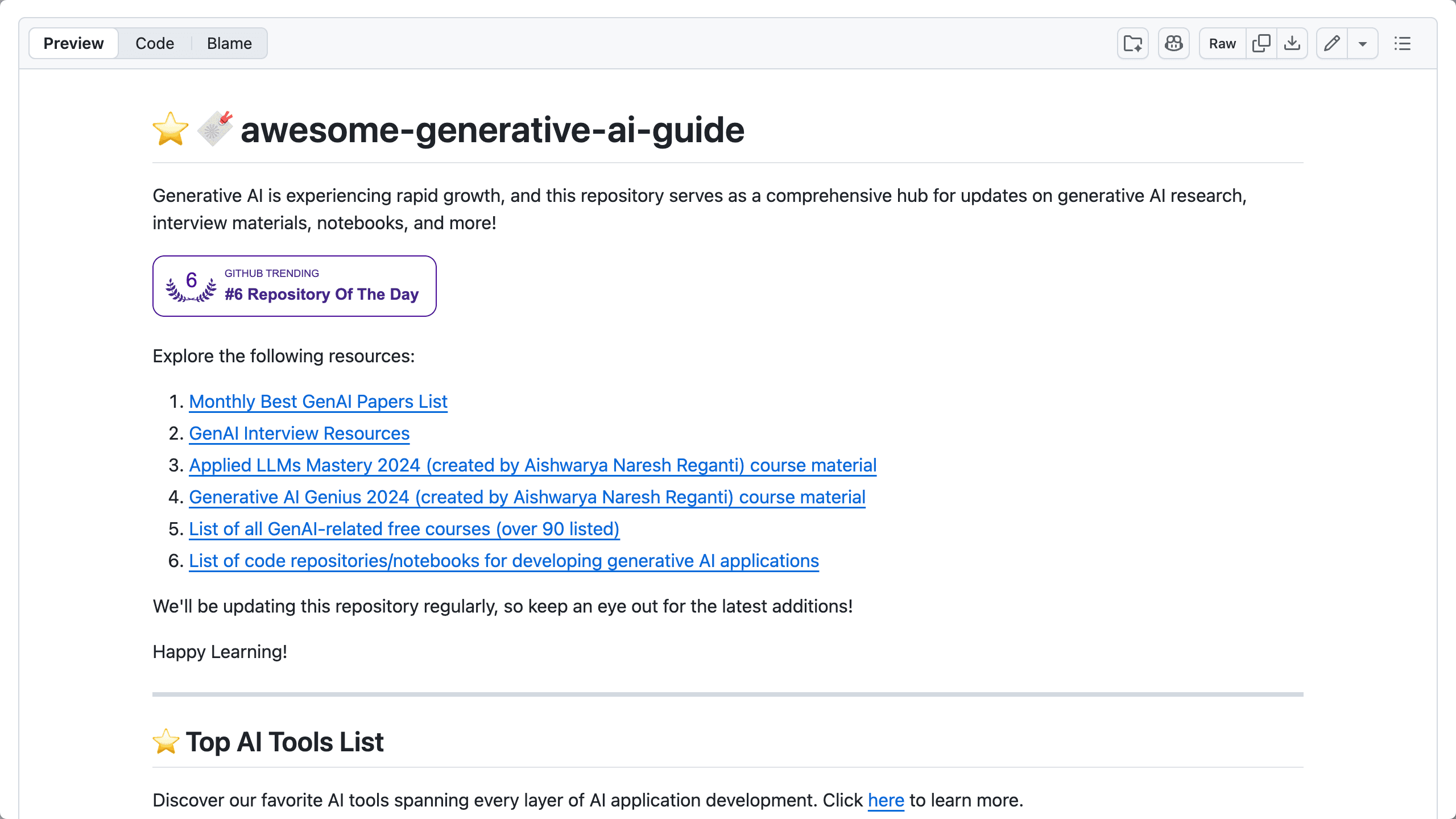
GenAI resources are fragmented across papers, blog posts, and tutorials. This curated repository turns that chaos into a structured resource for research updates, practical notebooks, and interview prep—becoming a "Single Source of Truth" for over 22,000 developers.
The Reality of GenAI Overload
Your Slack is pinging with another GPT-4 paper thread. Your RSS reader shows 47 unread AI articles. Someone just dropped a "must-read" LangChain tutorial in the team channel. Meanwhile, you still need to prepare a clear answer for "explain the difference between instruction tuning and RLHF" for an upcoming technical discussion.
The generative AI field moves faster than any individual can track. Research papers drop daily, and implementation tutorials are scattered across Medium, GitHub, and personal blogs. For practitioners trying to stay current without burning 20 hours a week on curation, the signal-to-noise ratio is broken.
The Solution: Filtration, Not Aggregation
You don't need more links; you need the right links. This repository applies strict editorial curation to solve the fragmentation problem.
Unlike algorithmic feeds on LinkedIn or Twitter that optimize for engagement and hype, this repository optimizes for practitioner relevance. The structure mirrors how developers actually work:
- Research: Understanding why a new paper matters.
- Code: Seeing how to implement it (Notebooks).
- Career: Preparing to discuss it (Interview Prep).
The curation accepts a trade-off: deliberately incomplete coverage in exchange for consistent quality. It doesn't list everything—only what actually moves the needle.
Inside the Repository
- Research Updates: Instead of listing every new ArXiv upload, this section highlights papers that introduce techniques used in production. It provides the title, key contribution, and relevance context, saving you from reading abstract after abstract.
- Practical Notebooks: These are not just showcases for libraries, but reference implementations. Whether it's building a simple instruction-tuned model or demonstrating prompt engineering patterns, these notebooks help you build a mental model through code.
- Interview Preparation: This section strips away academic jargon to focus on foundational understanding. It covers the core questions that appear in GenAI interviews, such as attention mechanisms, training approaches, and evaluation challenges.
How to Use It Effectively
Most of the 22,000+ developers who starred this repo don't check it every single day—and neither should you. It is designed as a high-signal reference tool:
- The Weekly Catch-up: Scan the latest additions once a week to see what shipped while you were coding.
- Just-in-Time Learning: When you need to learn a new concept (like RAG or LoRA), grab a notebook and run it locally.
- Career Prep: Use the question bank as a refresher before conversations with stakeholders or interviews.
Staying Current Without the Noise
That is the real value proposition: having a reliable starting point. When the noise becomes too loud, this repository ensures you spend your limited time understanding how attention mechanisms actually compute, rather than reading about the latest hype cycle.
aishwaryanr/awesome-generative-ai-guide
A one stop repository for generative AI research updates, interview resources, notebooks and much more!