Claude-Mem: AI Coding Context That Survives Restarts
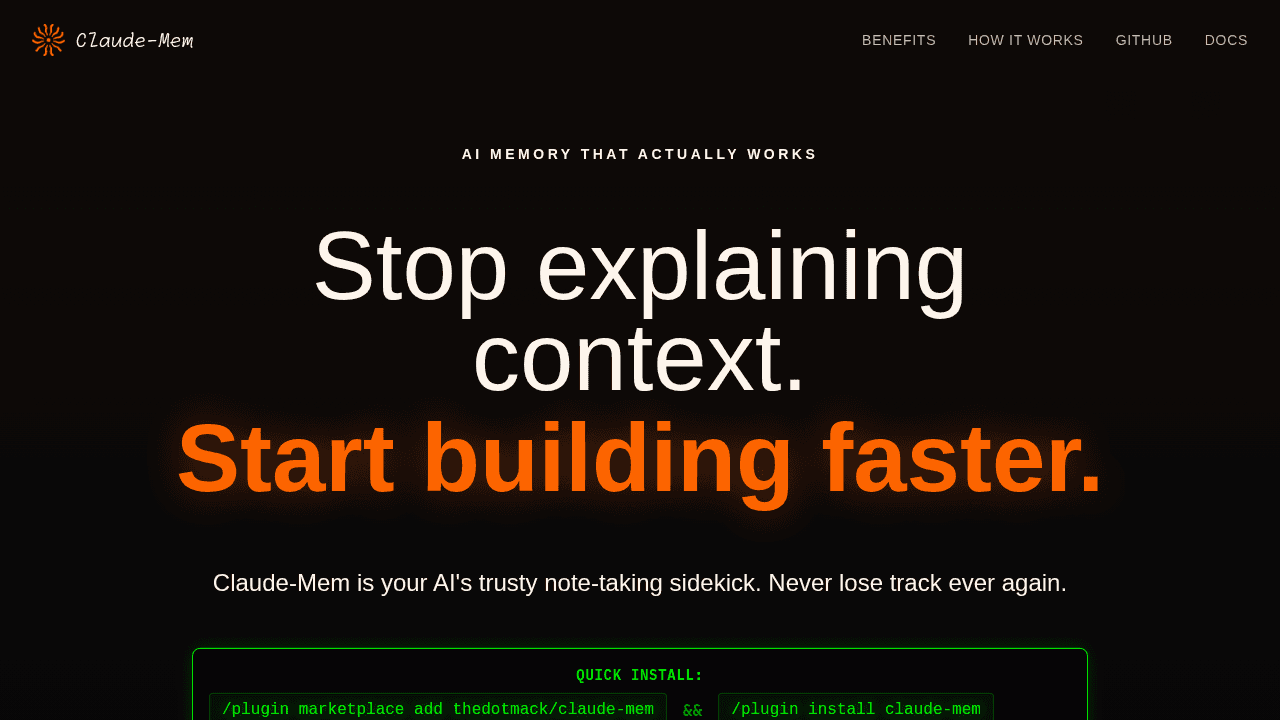
AI coding assistants forget everything between sessions. Claude-Mem extends Claude Code with persistent memory—capturing tool usage, summarizing decisions, and injecting historical context automatically. The approach works, but process spawning issues require attention.
You close your IDE on Friday after explaining your service architecture to Claude Code for the third time that week. Monday morning, you open the same project and ask a follow-up question. Claude has no idea what you're talking about. The conversation history is gone. You start over.
Claude-Mem gives AI coding assistants persistent memory across sessions. For developers working on multi-day projects, the difference between stateful and stateless assistance is the gap between a productive coding partner and a forgetful intern.
The Amnesia Problem: Why Your AI Assistant Keeps Forgetting
The frustration compounds over time. Day one, you explain your microservices architecture and why certain modules live where they do. Day two, you re-establish which files handle authentication versus authorization. Day three, you're once again clarifying why you're using dependency injection in this particular way. Each session starts from zero.
This isn't a flaw in Claude Code or similar tools—it's their design. Context windows reset with each session. Past decisions, architectural rationale, and file structure understanding evaporate. For quick one-off tasks, this barely registers. For complex refactoring work spanning weeks, it's death by a thousand re-explanations.
How Claude-Mem Builds Persistent Memory
The solution captures tool usage, file changes, and development decisions during coding sessions, then compresses them using AI-powered summarization. Instead of dumping raw conversation history back into the context window, it injects only the historical context you need.
The approach: observe what happens during a session, distill it into memorable patterns, store those patterns, and recall them intelligently. When you return to a project, Claude-Mem feeds the assistant condensed historical context: "Last week, you decided to split the payment service into two modules because of compliance requirements. You moved validation logic into middleware. The team discussed async event handling but deferred it."
That context doesn't flood the window with verbatim conversation replays. It provides enough breadcrumbs that Claude Code picks up where you left off rather than starting fresh.
What It Looks Like in Practice
Picture returning to a codebase after a long weekend. Without persistent memory, you're re-explaining architectural decisions made three sessions ago. With Claude-Mem running, the assistant already knows you're refactoring the authentication layer, understands why you're avoiding certain third-party libraries, and remembers the file structure conventions you established.
During multi-week refactoring efforts, this continuity changes the dynamic. You spend less time reconstructing context and more time actually coding. The assistant references past architectural choices without prompting. It maintains awareness of constraints you mentioned days earlier.
The Process Spawning Issue: Worth Knowing About
Claude-Mem extends Claude Code rather than replacing it, which introduces some technical challenges. GitHub issue #803 highlights a concern worth watching: the worker service spawns Claude subprocesses without cleanup, causing unbounded process growth and memory waste.
This isn't theoretical—users have reported memory accumulation during extended sessions. The issue deserves attention if you're running longer coding sessions or working on resource-constrained machines. It's the kind of growing pain common in projects working through early adoption.
The maintainers are aware of it. Keep an eye on process counts if you're adopting Claude-Mem early.
Who Should Use Claude-Mem
This tool makes the most sense for developers already using Claude Code on multi-day projects. If you're working on a complex codebase where architectural context matters across sessions, the value proposition is clear. Single-session tasks or simple scripts won't benefit much.
Teams collaborating on larger codebases could see outsized returns—the shared memory of architectural decisions becomes a form of knowledge persistence beyond what typical AI assistants offer.
Set expectations appropriately: Claude-Mem extends an existing tool, inheriting both its strengths and limitations. You're adding memory to Claude Code, not replacing your development workflow. For developers tired of re-explaining their codebase every morning, that addition might be exactly what their workflow needs.
thedotmack/claude-mem
Persistent Context Across Sessions for Every Agent – Captures everything your agent does during sessions, compresses it with AI, and injects relevant context back into future sessions. Works with Claude Code, OpenClaw, Codex, Gemini, Hermes, Copilot, OpenCode + More