Why AI Agents Forget Your Marketing Context Every Session
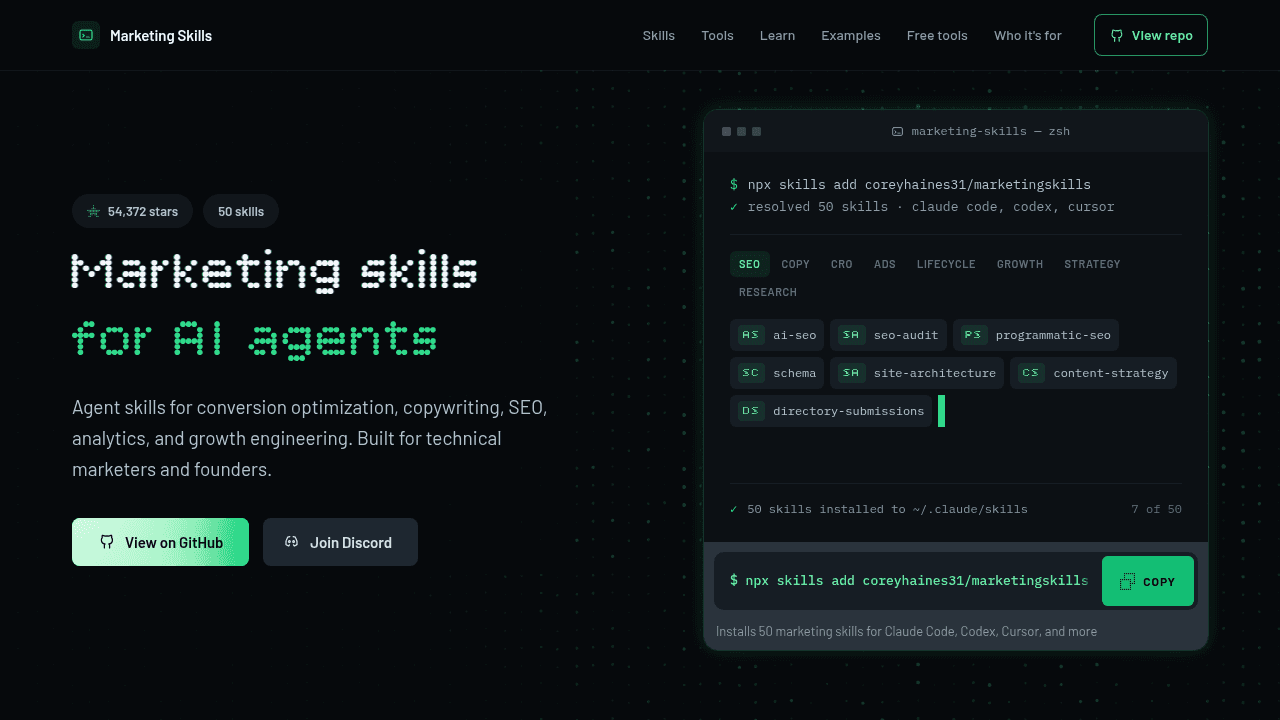
General-purpose AI coding agents can generate marketing content, but they produce generic output without persistent knowledge of your frameworks, audience, and brand voice. A GitHub repository with 50 marketing skills and 197 evaluations attempts to bridge this gap by providing domain-specific scaffolding—though activation issues suggest the tooling isn't quite ready for prime time.
You brief Claude on your StoryBrand framework, feed it customer avatar details, explain your product positioning. It writes decent ad copy. Two hours later, you open a new session for landing page work—and it's forgotten everything. You're back to prompting from scratch.
This isn't a capability problem. AI coding agents can technically perform marketing tasks, but they lack persistent memory of the frameworks, audience intelligence, and brand context that separate useful output from generic fluff. Every session resets to zero.
The Context Reset Problem
The friction shows up immediately. One Reddit user described Claude's default marketing output as unusable—generic copy that required explicit re-briefing on frameworks, match types, and customer details every single time. The agent could write, but without persistent context about how you do marketing, it produced work that marketers had to rewrite anyway.
The gap isn't technical sophistication. It's institutional memory. AI agents don't maintain the domain-specific scaffolding—frameworks like StoryBrand, audience segmentation models, product positioning documents—that marketing practitioners carry in their heads and expect tools to remember.
Domain-Specific Scaffolding as the Solution
The marketingskills repository treats this as an architecture problem: persistent marketing intelligence files that agents can reference automatically. Customer avatars, workflow templates, product context, and proven frameworks sit in version-controlled files rather than being re-prompted each session.
The use cases extend beyond copy generation. Users report applying it to landing page conversion optimization, SEO improvements, ad platform setup, keyword generation, and Meta advertising decisions—tasks where context about your specific audience and positioning matters more than generic content generation ability.
The project has grown fast. Version history shows growth from initial marketing skills to 50 distinct capabilities and 197 automated evaluations, plus agent plugins, CLI tools, and integration guides through continuous releases.
The Activation Gap
That velocity comes with stability trade-offs. A GitHub discussion reports the product-marketing skill never activated in 200 attempts, with positioning updates bypassing the expected context files entirely. When your core value is persistent context, routing failures that prevent agents from accessing that context break the premise.
For a repository with 50 skills and nearly 200 evaluations, these are growing pains—but they're worth watching. The difference between theoretical capability and reliable utility is whether the system actually loads your context when it matters.
The Emerging Space
The problem is drawing attention from multiple angles. Another project offers 15 marketing-specific abilities including brand copywriting, competitor intelligence, and Product Hunt launch planning—overlapping territory that validates the insight. Multiple open-source projects converging on the same gap suggests the community has identified a real barrier: AI tools need domain-specific memory layers to be useful for specialized work.
The overlap here clarifies more than it competes. It confirms that context persistence matters more than raw generation capability.
What This Means for Marketing Practitioners
The technical challenge isn't generating marketing text—AI models handle that trivially. The challenge is maintaining the frameworks and audience intelligence that make output relevant to your work rather than generic best practices.
Open-source experimentation here is valuable because it's forcing specificity about what "persistent marketing context" actually means in practice. Not vague promises about AI understanding your brand, but concrete questions: Which frameworks? What audience data? How does routing work? When does context get loaded?
The gap between AI capability and AI utility often comes down to memory. These projects are mapping that gap in public, activation issues and all.
coreyhaines31/marketingskills
Marketing skills for Claude Code and AI agents. CRO, copywriting, SEO, analytics, and growth engineering.