Vibe Kanban: Fixing the AI Agent Wait Time Problem
AI coding agents created a new workflow problem: wait times long enough to break focus, but too short to context-switch productively. Vibe Kanban addresses this through parallel agent execution and infrastructure management like port pooling, though memory issues with large conversations and monorepos remain real limitations.
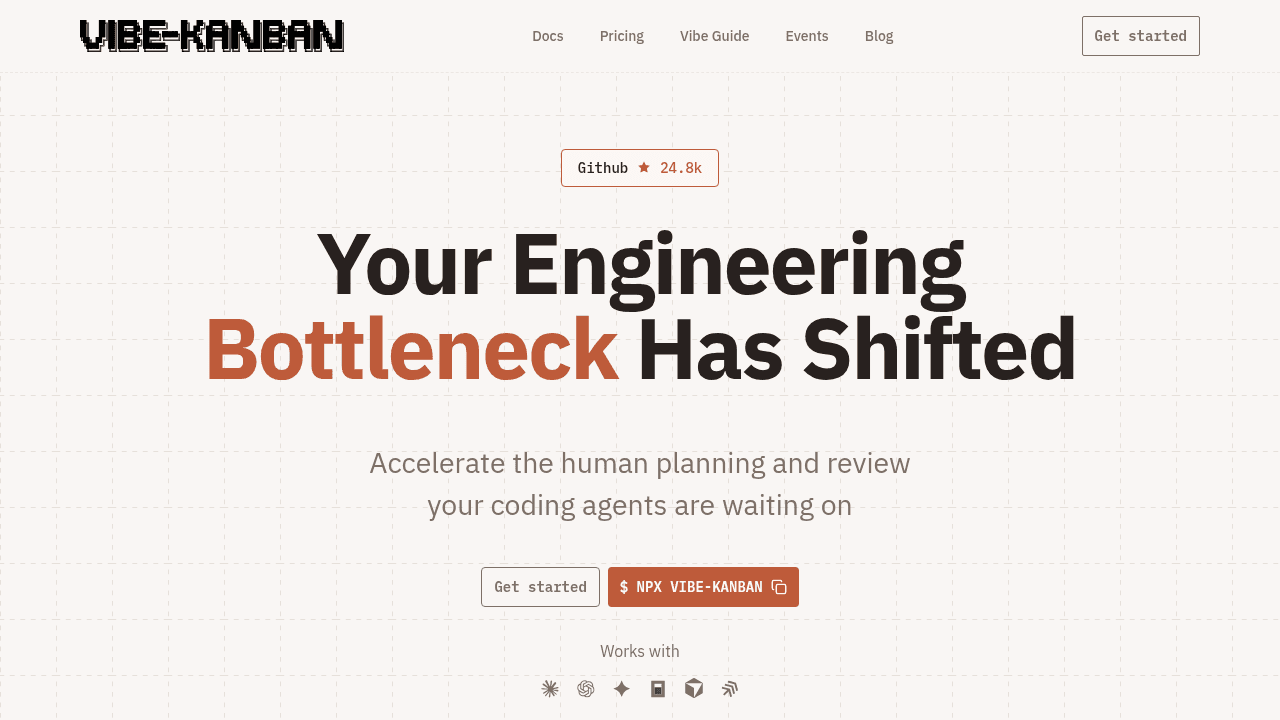
You ask Claude to refactor a function. Two minutes pass. You check Twitter. Three minutes. You've lost your train of thought. Four minutes later, the code is ready, and you're trying to remember what you were building.
AI coding agents created a new problem: they work fast enough to be useful, but slow enough to break your focus. The 2-5 minute execution window sits in a productivity dead zone—too long to stare at a terminal, too short to context-switch into meaningful work. Vibe Kanban treats this as an orchestration problem rather than a waiting problem.
The Problem AI Agents Created
The friction isn't that AI agents are slow. It's that they've trained developers to work synchronously when the workflow could be parallel. You queue a task, babysit the execution, review the output, then start the next one. Repeat until your afternoon disappears into a series of 3-minute intervals punctuated by distractions.
This didn't exist before AI agents became reliable enough to handle real development tasks. Now that tools like Claude Code, Gemini CLI, and Codex can contribute to codebases, the bottleneck shifted from "can AI do this?" to "why am I watching AI do this?"
How Vibe Kanban Enables Parallel Execution
Vibe Kanban applies kanban-style task management to AI coding agents. Instead of running one agent at a time, it orchestrates multiple agents working on different tasks simultaneously. You define the work, the system distributes it, and agents execute in parallel while you stay focused on other problems.
The infrastructure handling is where this gets practical. Multiple agents trying to spin up development servers collide on common ports like 3000. Vibe Kanban runs a daemon that manages a pool of ports, preventing conflicts without manual intervention. The system integrates with Claude Code, Gemini CLI, and Codex, letting you mix agents based on task requirements.
The workflow shifts from "start task, wait, review" to "queue five tasks, review completions as they finish." The time savings aren't about faster execution—they're about eliminating the context-switching tax.
Limitations to Watch
Vibe Kanban has the rough edges you'd expect from a project solving a problem that barely existed 18 months ago. Large conversations consume excessive memory and slow the interface, particularly in extended back-and-forth sessions with agents. Monorepo projects trigger memory leaks that compound as the system runs.
These aren't buried in documentation—they're tracked GitHub issues with active discussion. The BloopAI team is working through them. For developers working in large monorepos or running extended debugging sessions with agents, these constraints might matter. For those spinning up multiple short-lived tasks across smaller codebases, the parallel execution benefits likely outweigh the memory overhead.
The Competitive Landscape
Paperclip and Claude Code Dispatch approach similar workflow problems with different philosophies. Paperclip emphasizes agent customization. Claude Code Dispatch focuses on prompt optimization. Vibe Kanban bets on parallel orchestration and infrastructure management as the key differentiators.
Development continues with version 0.1 introducing cloud collaboration for issue tracking alongside local agent execution. The competitive landscape remains fluid—these tools are solving problems that didn't exist 18 months ago.
Who Should Try This Now
Vibe Kanban targets developers already frustrated by AI agent wait times. If you're running Claude or Codex multiple times per hour and recognize the 2-5 minute productivity dead zone, the parallel execution model addresses your workflow bottleneck.
Set realistic expectations about maturity. This isn't production-hardened infrastructure—it's a tool under active development. The memory issues matter if you work in large monorepos. The port pooling matters if you run multiple agents. Evaluate based on your context, not abstract potential.
BloopAI identified a pain point that only materialized once AI agents became useful enough to create workflow friction. Whether Vibe Kanban becomes the standard solution or inspires better alternatives, the problem it addresses is real and growing.
BloopAI/vibe-kanban
Get 10X more out of Claude Code, Codex or any coding agent