Smolagents: 1,000 Lines vs LangChain's Configuration Hell
Agent frameworks like LangChain drown developers in configuration bloat and debugging nightmares. Smolagents offers radical simplicity—1,000 lines of code, agents that write Python instead of JSON, 30% fewer steps. Real usage at Snowflake and 24k GitHub stars signal momentum, but code execution security isn't solved, documentation is sparse, and GitHub issues reveal growing pains.
You're four hours into debugging why your LangChain agent keeps hallucinating malformed JSON tool calls. The stack trace points to somewhere deep in the abstraction layer. Your weekend is gone. Again.
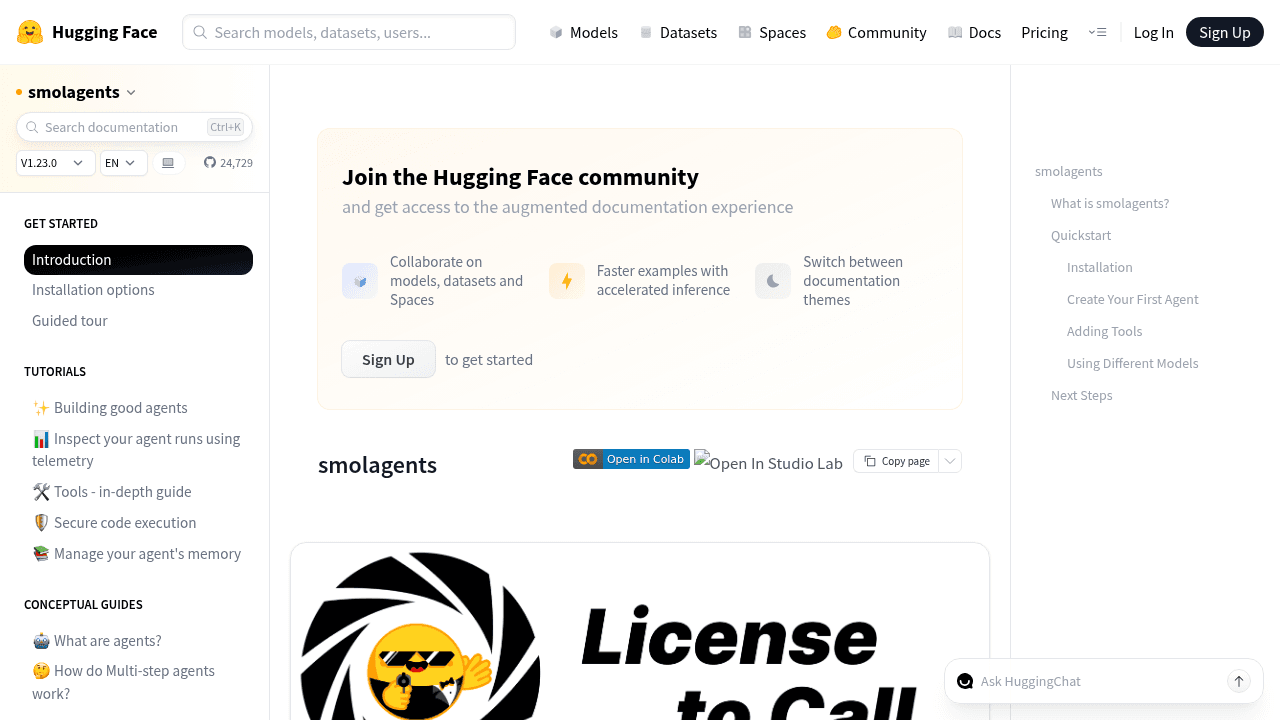
This is the moment smolagents was built for. Hugging Face's new agent framework strips everything down to ~1,000 lines of code and a different approach: instead of wrestling with JSON schemas and configuration files, let your LLM write Python.
The Configuration Problem
Modern agent frameworks bury you in layers. LangChain requires detailed configurations to wire together toolkits and LLMs, turning what should be straightforward into hundreds of lines of setup code. When something breaks—and it will—you're debugging not just your logic but the framework's abstractions.
The JSON blob problem runs deeper. Traditional agents output structured tool calls that need parsing, validation, and error handling. Each step adds friction. Each failure mode needs custom handling.
How Smolagents Works
Smolagents takes a different path: agents write executable Python code directly. No JSON schemas. No parsing layers. The LLM generates search("query") or calculator.add(5, 3) as code snippets that run in a controlled environment.
The efficiency gains are measurable. The framework reduces agent workflow steps by 30% compared to traditional JSON-based approaches while improving accuracy on standard benchmarks. When your agent can compose actions as actual code, you get native error handling, familiar debugging tools, and the full expressiveness of Python.
That 1,000-line codebase isn't marketing. It's the entire core—no hidden complexity, no sprawling dependency trees.
Real Usage
The momentum happened fast. After prior attempts at agent frameworks failed to gain traction, smolagents accumulated 24,000 GitHub stars in months, riding the wave of maturing open-source LLMs finally capable of reliable code generation.
Real deployments followed. Snowflake is using smolagents for multi-step AI workflows. The Open Deep Research project integrated it specifically for agents that generate code snippets rather than structured outputs. These aren't toy examples—they're production systems betting on the architecture.
The Security Problem
Code execution changes the threat model completely. When your agent writes Python that actually runs, every LLM hallucination becomes a potential os.system("rm -rf /") scenario.
Sandboxed environments help. You can run agents inside E2B containers or Docker, creating isolated execution contexts. But isolation isn't perfect—container escapes exist, resource limits can be bypassed, and privilege escalations happen.
This isn't a solved problem. It's a calculated risk you need to understand before deploying.
Where Smolagents Breaks
The GitHub issues tell a story of growing pains: parsing failures when LLMs generate slightly malformed code, token overflow on complex workflows, incompatibilities with tools like MCP and OpenAI's API. These surface-level bugs signal deeper immaturity.
Documentation remains sparse. Developers report insufficient examples and guides, making experimentation harder than it should be. You're often reading source code to understand intended behavior.
LangChain vs LlamaIndex vs Smolagents: What You're Trading
The framework landscape splits along architectural lines. LangChain builds abstractions for every component—chains, agents, memory, tools—giving you power at the cost of complexity. LangGraph adds DAG-based flows for multi-agent orchestration.
Smolagents goes the opposite direction: minimal code loops, self-contained agents, deep Hugging Face Hub integration. You're choosing between framework abstractions and explicit control, between comprehensive tooling and tight simplicity.
Does Minimalism Scale?
The 1,000-line approach works well for focused use cases. Whether it holds at production scale—when you need complex error recovery, monitoring, and enterprise integrations—remains open.
You might find yourself rebuilding abstractions one utility function at a time. Or you might discover that explicit code beats framework magic every time. The answer depends on whether you'd rather fight configuration overhead or build your own infrastructure.
huggingface/smolagents
🤗 smolagents: a barebones library for agents that think in code.