Sim Raised $7M to Build Open-Source AI Agent Workflows
Sim positions itself as an Apache-2.0 alternative for visual AI agent orchestration, choosing open source despite venture backing. The project's rapid adoption—26,000 GitHub stars and 60,000+ developers—suggests the market wanted explicit agent-focused tooling with modern stack choices. We examine the technical decisions, early traction, and growing pains of a project trying to make multi-step agent workflows less brittle.
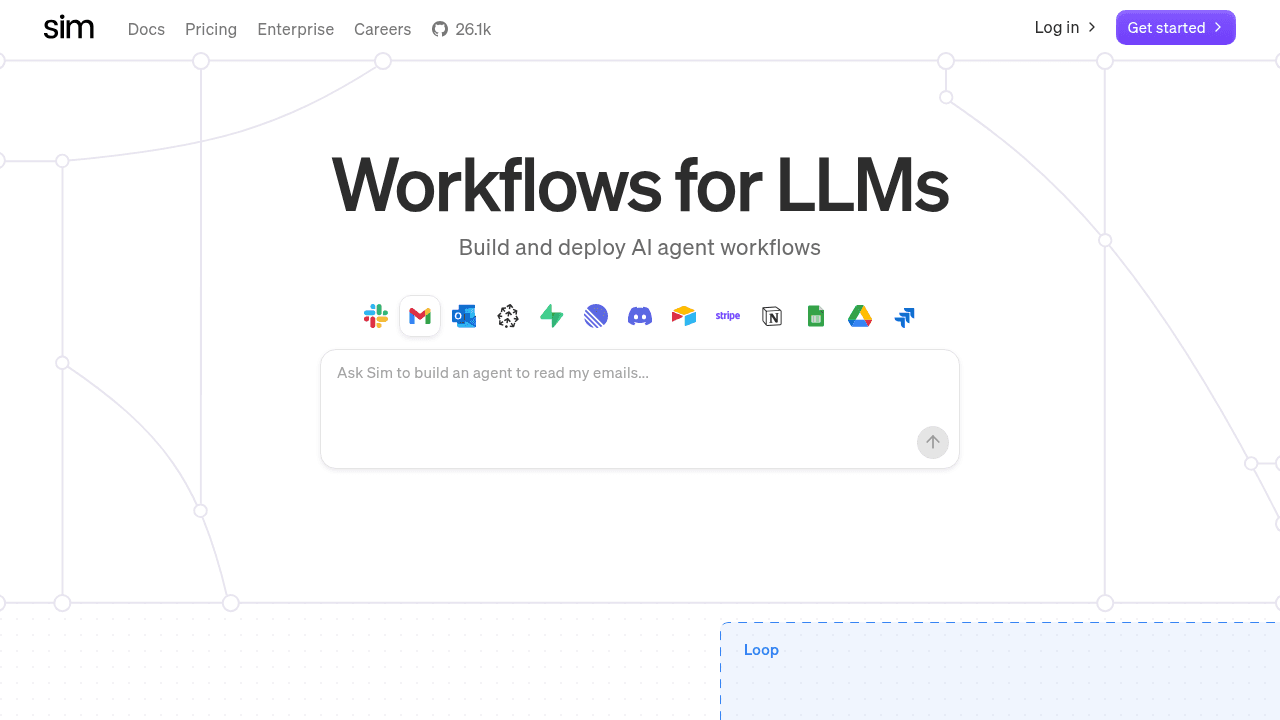
Two Y Combinator founders watched developers struggle with the same problem: multi-step agent workflows that worked in demos but fell apart in production. Emir Karabeg and Waleed Latif built Sim, an Apache-2.0 licensed visual orchestration platform designed for AI agents rather than general automation. 26,000 GitHub stars later, they've raised $7M from Standard Capital.
Why Agent Workflows Break Differently Than Automation
Multi-step agent systems have reliability challenges that webhook-based automation platforms weren't built to handle. When an LLM call fails in step three of a seven-step workflow, you need visual debugging that shows where the context got lost. Sim handles this with agent-specific building blocks: dedicated nodes for tool calling, conditional branching based on model outputs, and executable graphs that let you trace how your workflow reached a particular state. It's the difference between debugging a Python script with print statements versus stepping through it with a proper debugger.
Apache-2.0 vs. Fair-Code: Different Trade-offs
Licensing matters when you're building venture-backed infrastructure. Sim chose Apache-2.0—full open source, no strings attached—while n8n uses a fair-code model that restricts commercial hosting. Both models make sense for their respective goals. Apache-2.0 means developers can fork, modify, and commercialize without asking permission. For teams evaluating build-versus-buy decisions, that freedom matters. The trade-off: Sim needs to find business model leverage elsewhere, likely in hosted services or enterprise features, without restricting the core platform.
The Stack: Bun, Drizzle, ReactFlow
Technical decisions reveal priorities. Sim runs on Bun rather than Node, uses Drizzle ORM for type-safe database queries, and builds its flow editor on ReactFlow. Bun's speed matters when you're orchestrating multiple LLM calls that already carry latency costs. Drizzle's TypeScript-first design means fewer runtime surprises when your workflow schema evolves. ReactFlow gives you a canvas optimized for node-based UIs without reinventing layout algorithms.
26K Stars, 60K Developers, and Growing Pains
The traction is real: 60,000+ developers are building workflows that connect to 100+ apps. So are the growing pains: a code injection vulnerability in version 1.0.0 earned a CVSS score of 6.3, exploitable through the function execution route. Open GitHub issues include Gmail trigger configuration problems, auth callback 404 errors, and router block failures. This isn't unusual for a project moving this fast—it's the cost of shipping. Developers are adopting Sim despite rough edges because the alternative is building visual orchestration from scratch or adapting general automation tools to agent-specific problems.
What $7M Buys: Standard Capital's Bet on Agentic Workflows
Series A funding in a crowded automation market signals investor conviction that visual agent orchestration is a distinct category, not just a feature request for existing platforms. The challenge: maintaining open-source credibility while scaling a funded company. That means transparent roadmaps, responsive maintainership, and resisting the temptation to gate-keep features behind commercial licenses. The technical debt—security patches, Windows compatibility, API stability—needs addressing before enterprise adoption becomes viable.
Who This Is For (And Who Should Wait)
Current best fit: developers prototyping complex agent workflows who value open-source flexibility and can work around early-stage instability. The Apache-2.0 license matters if you're building commercial products or need deployment control.
Who should wait: teams requiring production-grade stability or those already satisfied with n8n, Zapier, or code-first orchestration. The CVE and open issue count aren't dealbreakers for experimentation, but they're real considerations for customer-facing deployments.
Sim chose the hard path—open source in a market where proprietary moats are tempting. Whether that pays off depends on execution, but the early traction suggests developers wanted someone to try.
simstudioai/sim
Build, deploy, and orchestrate AI agents. Sim is the central intelligence layer for your AI workforce.