YouTuber Open-Sources $700 Offline Knowledge Server
Commercial offline knowledge servers sell for $200-$700. A YouTuber just released the same capability for free under Apache 2.0. Project N.O.M.A.D. bundles local AI (Ollama/Qdrant), Wikipedia, Khan Academy, and offline maps into a self-hosted system that works without internet—and Hacker News is paying attention.
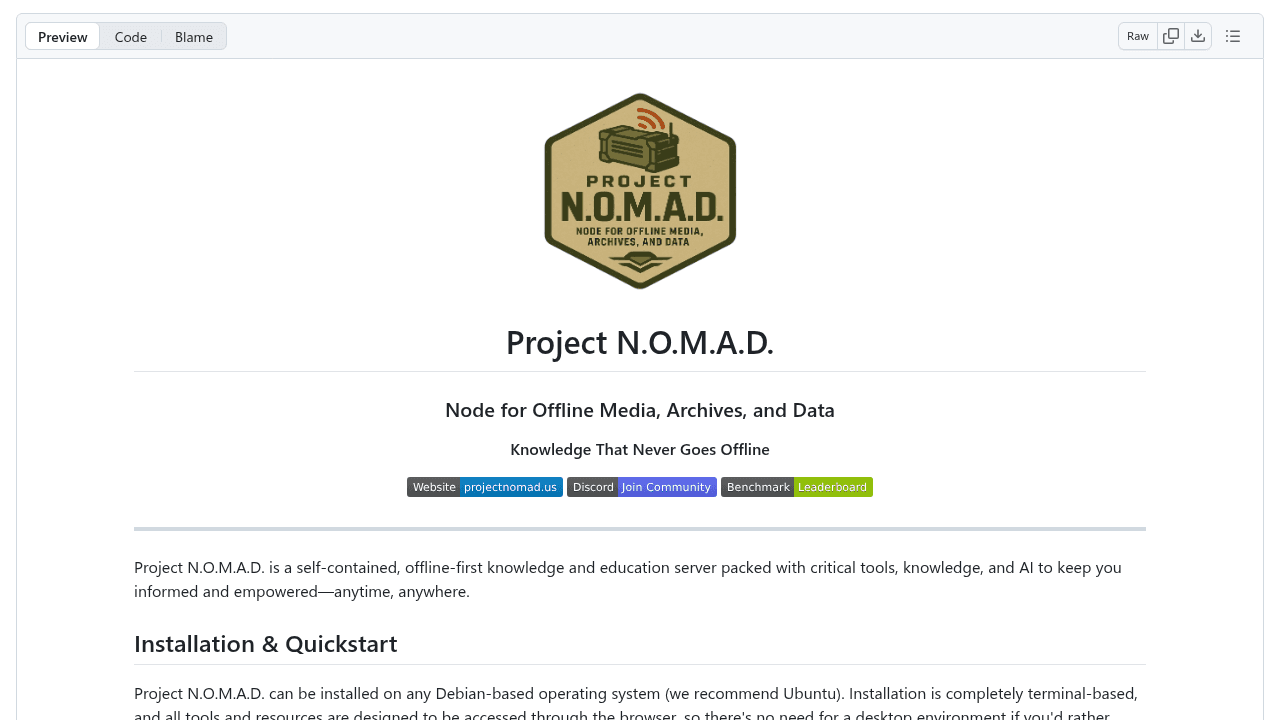
Commercial offline knowledge servers retail between $200 and $700, targeting households concerned about information access during outages. Chris from Crosstalk Solutions just released the same capability for free. Project N.O.M.A.D. bundles local AI inference, Wikipedia, Khan Academy, and offline maps into a self-hosted system that works without internet—and it's drawing attention from the homelab community.
What Project N.O.M.A.D. Actually Does
Run AI models, search encyclopedic knowledge, access educational content, and navigate maps without an internet connection. Under the hood, it combines Ollama for local language model inference, Qdrant for vector search, Wikipedia dumps, Khan Academy materials, and ProtoMaps using OpenStreetMap data for navigation and route planning.
The system provides information resilience during extended outages, rural deployments, or scenarios where connectivity isn't guaranteed. Deploy it on a local server, and you get AI responses, reference lookups, and mapping tools that keep working when the network doesn't.
The Commercial Context
Commercial products in this space got to market first and deliver real value—professional support, polished interfaces, and plug-and-play setup that non-technical households need. Those products solved a genuine problem and deserve credit for creating the category.
The open-source alternative matters because technically skilled users now have options. Self-hosters and homelab enthusiasts can deploy the same capabilities without the price tag, customize the stack to their needs, and inspect every component. The Apache 2.0 license ensures that freedom extends to modification and redistribution.
Why Open Source Instead of Monetizing
Chris could have packaged this as another commercial product. The decision to release under Apache 2.0 lowers the barrier for anyone with Docker skills to build their own offline knowledge infrastructure. That choice reflects a philosophy about democratizing access to information resilience technology rather than extracting rent from it.
The work involved—configuring Ollama and Qdrant to play together, packaging Wikipedia and Khan Academy content, integrating offline maps—represents real engineering effort. Giving that away signals confidence that value comes from enabling others, not gatekeeping the solution.
Hacker News Reception and Community Momentum
The project hit Hacker News multiple times in early 2025. One thread framed it as "Offline Survival Computer Bundles AI, Wikipedia, Khan Academy" while another called it "Knowledge That Never Goes Offline". The GitHub repository accumulated 23,000+ stars, and Cybernews covered it as an "Apocalypse Ready off-grid knowledge server", noting the contrast with commercial pricing.
The reception shows the community values having a free alternative. Self-hosters and preppers are actively evaluating whether the project meets their deployment needs.
Real-World Use: The Bug Report That Shows Adoption
Active use means active bug reports. One user documented poor inference performance on an RTX 3090 Ti running the gemma4:31b model—the model loads into 20GB VRAM but inference runs slower than expected. That's the kind of issue that surfaces when people deploy the system rather than just starring the repo.
These reports provide the feedback loop that helps open-source projects mature.
Who Should Consider Running This
Project N.O.M.A.D. targets self-hosters, homelab enthusiasts, and technically-minded individuals interested in information resilience. If you're comfortable deploying Docker-based systems and managing your own infrastructure, this provides an alternative to commercial offerings. Set realistic expectations about technical requirements—this isn't an appliance, it's a project that assumes you know how to troubleshoot deployment issues.
For that audience: offline AI, encyclopedic knowledge, educational content, and maps, packaged under an open license that respects your freedom to modify and redistribute. The commercial products will continue serving households that need turnkey solutions. This serves everyone else.
Crosstalk-Solutions/project-nomad
Project N.O.M.A.D, is a self-contained, offline survival computer packed with critical tools, knowledge, and AI to keep you informed and empowered—anytime, anywhere.