Open-Source Job Search Automation vs. Paid SaaS
Job search automation doesn't require a subscription. A GitHub project with 70,000 stars runs AI-powered application workflows entirely on your machine, giving you full control over data and customization. The team tightened permissions, added privacy warnings, and respects platform boundaries—while competing philosophies like Huntr solve the same problem through SaaS.
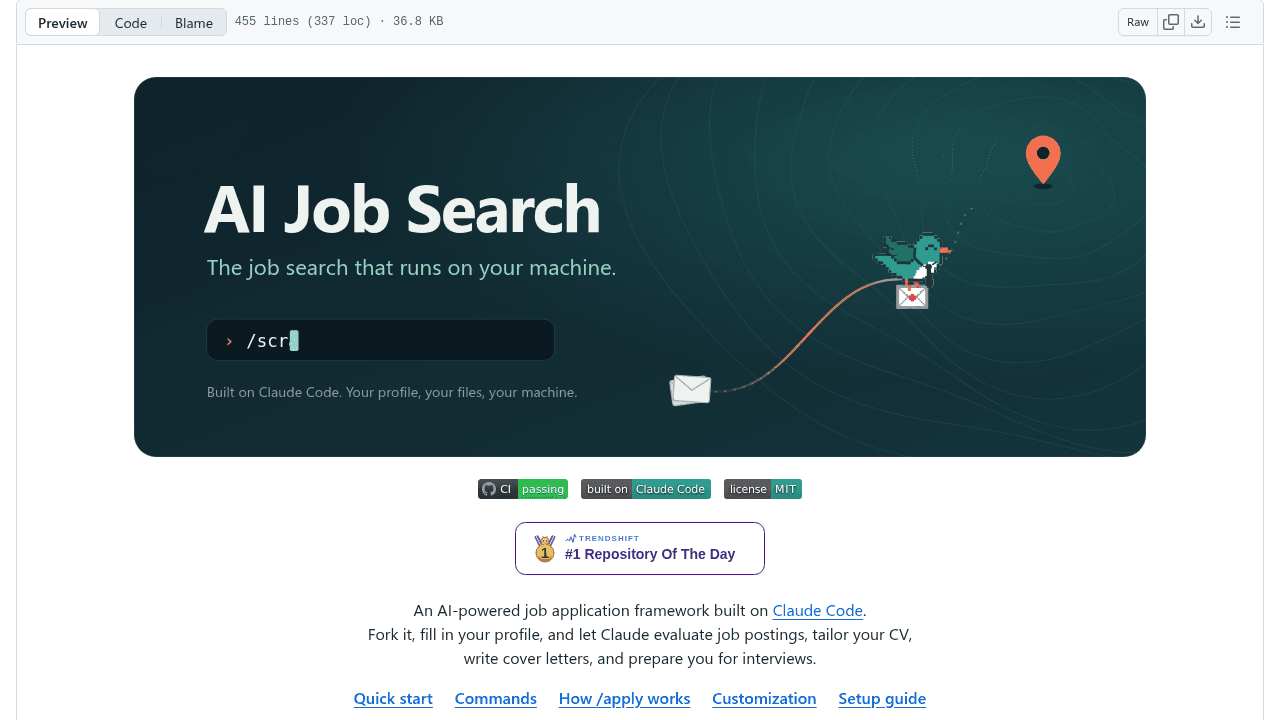
Searching job portals, evaluating role fit, tailoring CVs and cover letters, preparing for interviews—the manual work repeats for every application. An open-source project with 70,000 stars runs AI-powered workflows to automate that stack on your machine. No subscriptions, no hosted services, no data leaving your desk.
The approach contrasts with SaaS tools like Huntr, which combine semantic resume matching, autofill, and AI cover-letter generation behind a subscription. Both solve the same problem—scaling job search beyond human throughput—but choose different trade-offs. Huntr offers turnkey convenience and support; the open-source alternative offers control, customization, and privacy.
The Problem: Manual Job Search Doesn't Scale
The bottleneck isn't writing a single resume. It's repeating the evaluation-tailoring-application cycle dozens of times while staying responsive to new listings. A comment on a similar project captured the unmet need: automating the workflow from discovery through submission, not just generating documents. That's the workflow gap both open-source and commercial tools address.
Two Philosophies, Same Goal
The open-source model runs workflows locally. You fork the repository, configure it for your stack, and execute searches, document generation, and application prep on your own hardware. Data never touches a third-party server. If you need region-specific job boards or custom templates, you modify the code—community forks already exist for general use and regional adaptations like Brazil.
SaaS competitors host the entire pipeline. You authenticate, upload your resume, and let their infrastructure handle matching, generation, and tracking. You pay monthly for convenience and updates without maintaining infrastructure. For many job seekers—especially non-developers—that trade-off makes sense.
The local-first approach resonates with technical users who value transparency and want to inspect, audit, or extend the automation themselves. The SaaS path works for users who prioritize speed and support over configurability.
What Running Local Actually Means
The project integrates with the Model Context Protocol (MCP) ecosystem, where tools like Resume Matcher tailor resumes locally or remotely across more than 100 LLMs, driven by Claude Code, Cursor, or Codex through an MCP server. Workflows execute on your machine using your API keys, your models, and your data structures. If a step fails or produces unexpected output, you can debug the logic directly rather than filing a support ticket.
Community forks demonstrate the model's flexibility. Regional adaptations add local job boards; general-use forks tweak templates or matching heuristics. The repository becomes infrastructure you own, not a service you rent.
Security and Privacy by Design
Early versions shipped with broad defaults. A security review identified unsafe permissions because the application had Bash, Edit, and Write access, and scraper execution was pre-approved for any CLI path. The team tightened those permissions in v1.7.3, removing unsafe defaults and requiring explicit approval for filesystem operations.
Version 1.2.0 added a warning that public GitHub forks remain public, meaning personal profile data written into tracked files can be exposed. The notice reminds users to review commit history before publishing forks—a detail that shows the maintainers take responsible stewardship seriously.
The LinkedIn integration states that automated access to LinkedIn job pages violates LinkedIn's Terms of Service and limits the tool to personal use with low request volume. That boundary shows the project respects platform rules rather than encouraging ToS violations at scale.
When Open Source Makes Sense
The 70,000 stars and active fork community suggest the local-first model resonates with developers and technical job seekers who want privacy, customization, and self-hosting. If you're comfortable running CLI tools, configuring API keys, and debugging workflows, this approach gives you control that hosted services can't match.
If you prefer turnkey setup, support channels, and abstracted infrastructure, SaaS alternatives like Huntr serve those needs. The choice isn't ideological—it's operational. Different users have different tolerances for maintenance, different privacy requirements, and different comfort levels with code.
The project's decision to open-source rather than monetize empowers a specific audience: technical users who value tools they can own and modify. That's not a critique of commercial alternatives; it's a recognition that builder choice and the diversity of solutions let both models coexist.
ai-job-search-dev/ai-job-search
The job search that runs on your machine. AI job application framework built on Claude Code: evaluate postings, tailor CVs, write cover letters, prep interviews. Fork it and own it.