Impeccable: Fixing AI's Generic UI Problem
AI coding assistants keep generating the same UI: Inter font, purple gradients, cards within cards. Paul Bakaus identified this pattern and created Impeccable, a design language that guides LLMs toward distinctive design decisions instead of regurgitating their training data.
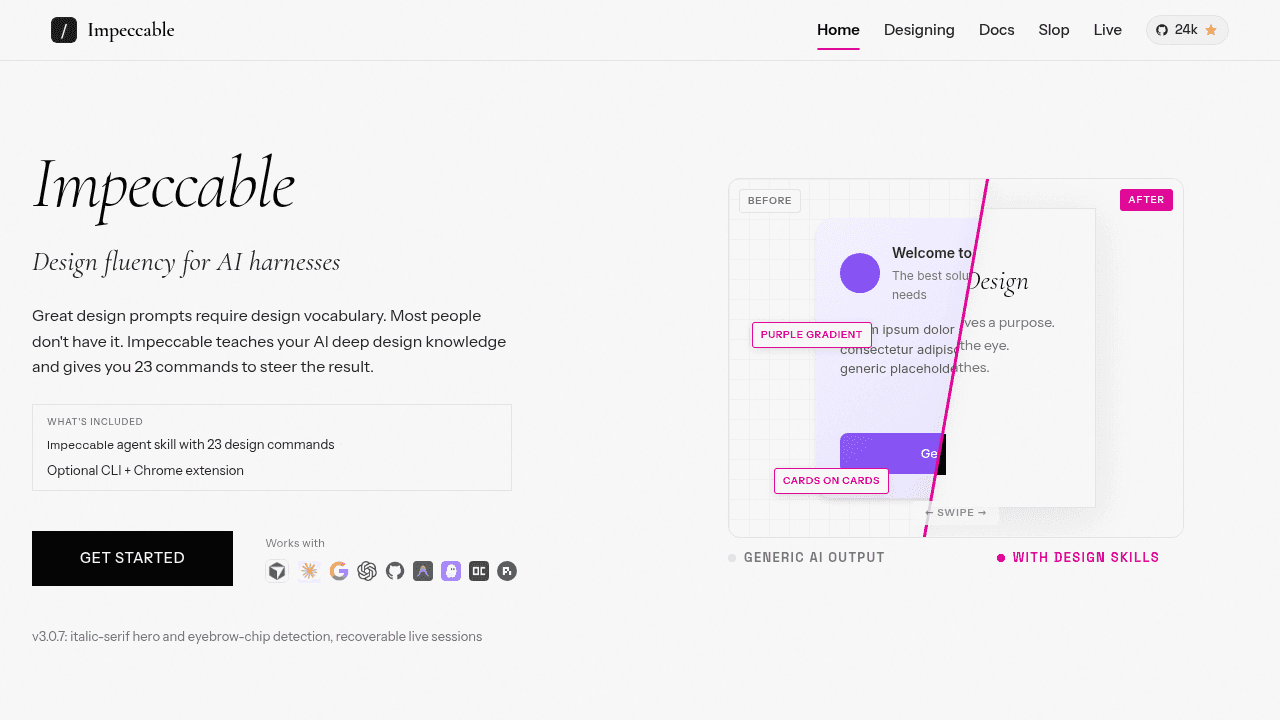
Every AI-generated interface looks identical. Inter font cascading down the page. Purple gradients bleeding into cards nested inside other cards. Gray text sitting awkwardly on colored backgrounds. Developers using Claude, Cursor, and other AI coding assistants have been living with this design déjà vu for months, but jQuery UI creator Paul Bakaus finally named the pattern—and built something to break it.
The AI Slop Pattern Nobody Was Naming
Open an AI-generated admin dashboard, then open another. The resemblance isn't coincidental. LLMs keep reaching for the same visual vocabulary: rounded corners at predictable radii, shadow depths that feel copied from a single Figma file, spacing that suggests the AI learned design from exactly three popular component libraries. The homogeneity became so pronounced that developers in r/ClaudeCode started comparing notes about how to escape what they called "AI slop look" in their interfaces.
The problem wasn't that AI tools were producing broken designs—they were producing identical designs, regardless of the project's actual needs or brand identity.
Why LLMs Keep Making the Same Design Mistakes
The root cause lives in the training data. Impeccable addresses this training data homogeneity directly: when LLMs learn from thousands of generic templates built with the same popular design systems, they can't help but regurgitate those patterns. Inter became the default because it appears everywhere in the training corpus. Purple gradients proliferated because they dominated landing pages during the years that fed the models. Cards nest inside cards because that's how most tutorial code structures components.
This isn't a failing of AI coding assistants themselves. Claude and Cursor work well at translating intent into code. The limitation is narrower: they're drawing from a well that contains mostly similar-looking water.
How Impeccable Works as a Skill System
Bakaus approached this as a prompt engineering problem. Impeccable functions as a design language that guides LLMs toward more distinctive decisions before they start generating components. The installation works through npx skills add pbakaus/impeccable, integrating directly with AI coding tools that support the skills framework.
Rather than fighting against an AI's learned patterns after it generates code, Impeccable front-loads alternative design thinking into the conversation. It's a set of constraints and suggestions that push models away from their training data defaults—nudging them toward typeface combinations that aren't Inter, color palettes that don't default to purple, and layout patterns that don't immediately reach for nested cards.
The system doesn't lock developers into a rigid design language. It provides enough opinionated guidance to break the homogeneity problem while leaving room for project-specific adaptation.
The Community Response
The 26,000+ GitHub stars suggest Bakaus identified something developers were frustrated by. In AI coding communities, Impeccable has become shorthand for addressing the visual sameness problem. Developers report using it to clean up the aesthetic monotony that creeps into AI-assisted projects, particularly when building customer-facing interfaces where brand differentiation matters.
That adoption rate—in a space where new prompt engineering tools launch weekly—indicates real utility. The problem was widespread enough and annoying enough that a solution naming and addressing it directly resonated immediately.
Who Built This and Why It Matters
Bakaus brings jQuery UI credentials to the problem, which lends weight to his diagnosis of AI-generated interface patterns. Someone who helped shape how developers thought about reusable UI components in the pre-React era recognizing a pattern problem in the LLM era carries significance.
The project is young, with the expected rough edges of open source tools growing fast. But the core insight—that AI coding assistants need better design guidance systems, not just better code generation—feels durable. Impeccable might evolve, fork, or inspire alternatives, but it named a problem that wasn't going away on its own.
pbakaus/impeccable
The design language that makes your AI harness better at design.