Hugging Face AI Agents Course: Beyond the Hype
Building reliable AI agents requires more than chaining LLM calls—tool parameter bugs, context overflow, and fragile reasoning loops kill most production deployments. Hugging Face's AI Agents course addresses these pain points through hands-on work with smolagents, the GAIA benchmark, and real-world multi-step reasoning tasks. Free certification ends May 1, 2025.
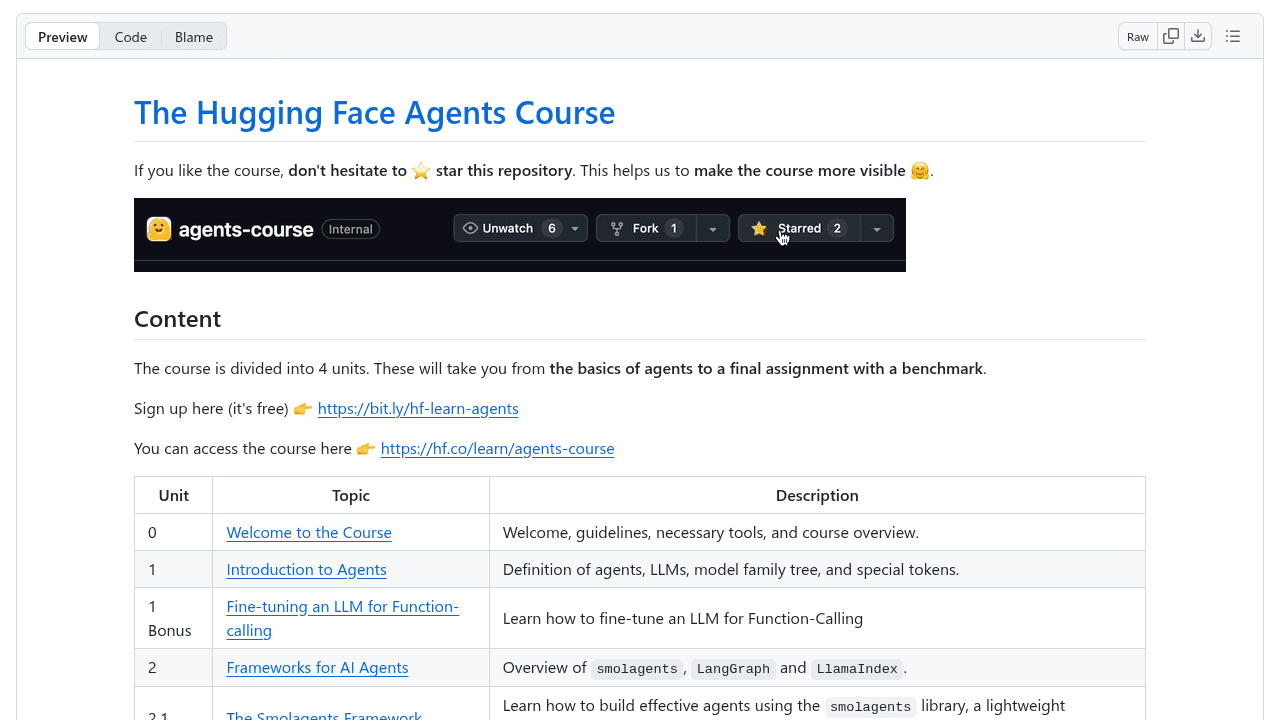
Hugging Face AI Agents Course: Beyond the Hype
Your LangChain demo worked perfectly in the notebook. Then you deployed it. Tool calls started failing with cryptic parameter errors. Context windows exploded during multi-step research tasks. The exact answer matching you relied on returned garbage 40% of the time. Welcome to the gap between AI agent hype and production reality.
Hugging Face's AI Agents course tackles these failure modes head-on, teaching the debugging and architecture skills that most agent tutorials skip. The free certification window closed May 1, 2025, but the course material remains available—worth working through if you're building agents that need to actually ship.
Why Most AI Agent Demos Fail in Production
The thought-action-observation loop looks clean in theory. In practice, it breaks in predictable ways: tool parameter naming inconsistencies between frameworks, context length explosions when agents spiral into recursive research loops, vision task failures on local hardware without GPU acceleration.
The GAIA benchmark—designed to test multi-step reasoning across web research, coding, and vision tasks—exposes these weaknesses. Some submissions attempted to game leaderboards by using RAG over ground truth data instead of building genuine agent capabilities. The incidents confirmed what production engineers already knew: reliable agents are harder to build than LinkedIn thought leaders admit.
The course addresses these pain points directly. Units cover fine-tuning LLMs for function-calling, debugging tool chains with smolagents, and handling integration across LangGraph and LlamaIndex. Students deploy working agents to Hugging Face Spaces and submit to real benchmark leaderboards—no notebook-only handwaving.
What the GAIA Benchmark Actually Tests (And Why Agents Fail It)
GAIA requires agents to solve problems demanding multi-step reasoning: researching obscure facts across multiple web sources, writing and executing code to process data, analyzing images without access to pre-labeled datasets. Agents must chain these capabilities together while maintaining context and producing exact answers.
Most implementations struggle with longer reasoning chains. They hallucinate tool parameters, lose track of intermediate results when context windows fill up, or fail vision tasks that require more than passing an image URL to GPT-4V. The benchmark surfaces these fragilities quickly.
The course structures units around these challenges. Students work through web research tasks that test context management, coding exercises that expose tool-calling bugs, and vision problems that don't work if you're just proxying requests to commercial APIs.
How This Differs from DeepLearning.AI and Other Agent Courses
DeepLearning.AI offers "Building Code Agents with smolagents." Stanford runs "Agentic AI: A Primer For Leaders." Udemy and Microsoft provide beginner-friendly overviews. These courses teach agent concepts, but Hugging Face's version integrates directly with the transformers-agents library and smolagents framework that production deployments increasingly use.
Weekly units shipped with live Q&A sessions and an active Discord community—accountability mechanisms missing from self-paced alternatives. The competitive leaderboards created pressure to actually complete challenges rather than skim notebooks. Students like Justinwwkey and MDalamin5 forked course materials into personal projects implementing custom tools and agents, suggesting practical applicability beyond coursework.
Who This Course Is (and Isn't) For
The course assumes Python fluency and prior LLM experimentation. If you haven't hit context limits debugging a ReAct agent or cursed at tool parameter type mismatches, the problems being solved won't resonate yet. Beginners chasing agentic AI hype will find the vision tasks and longer reasoning chains frustrating without foundational knowledge.
Mid-to-senior ML engineers who've watched AutoGPT demos fail in staging environments will recognize the pain points immediately. The course trains debugging skills for production scenarios: handling exact answer matching failures, managing context budgets across multi-step workflows, integrating vision models without leaking to external APIs.
The May 1 certification deadline has passed. The course material remains accessible, but the free certification window is closed. Given GAIA benchmark difficulty and the depth required for vision tasks, working through this material requires consistent effort—but it builds production-grade agent skills that transfer across whatever framework trends next.
huggingface/agents-course
This repository contains the Hugging Face Agents Course.