GraphRAG: When Standard RAG Can't Answer Global Questions
Standard RAG fails when questions require understanding entire datasets—asking about themes, patterns, or entity relationships across documents. GraphRAG uses knowledge graphs and hierarchical summaries to answer these global queries, trading faster indexing for slower, more expensive searches. Real adoption data, performance benchmarks, and competing approaches reveal when the tradeoff makes sense.
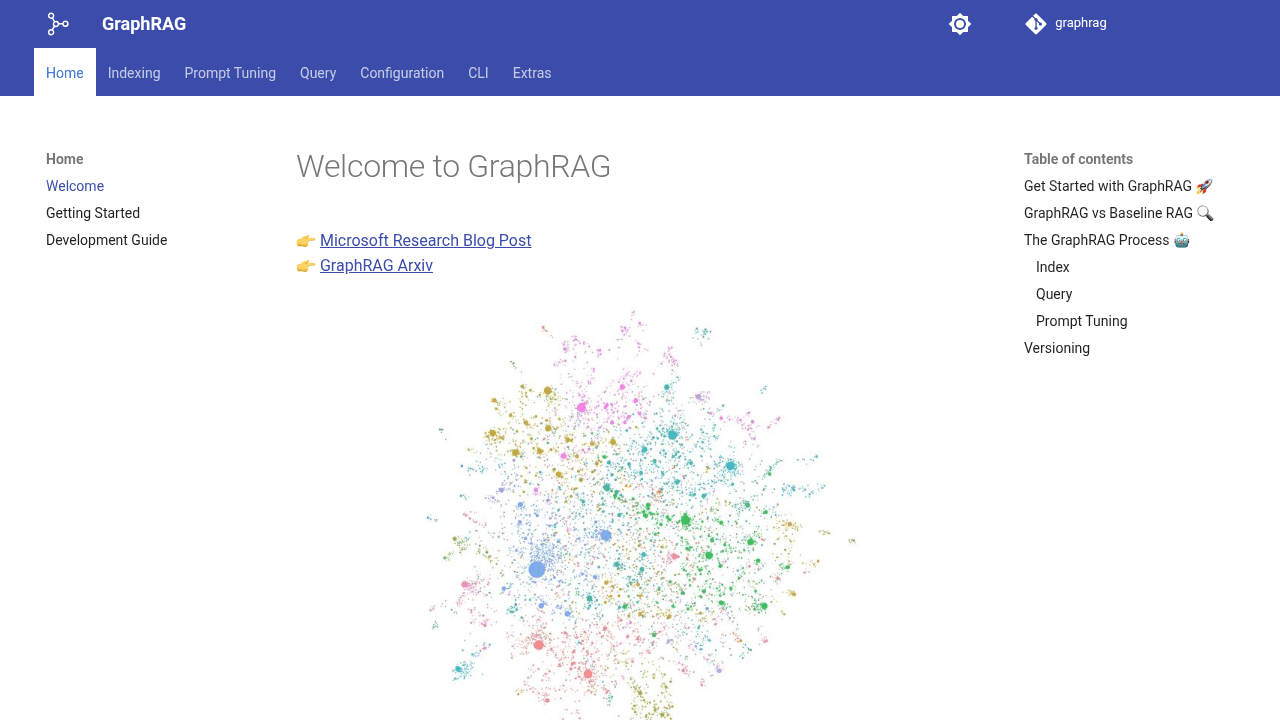
Your RAG system retrieves perfectly relevant chunks when you ask "what did the CEO say about Q3 revenue?" But ask "what are the dominant themes across all quarterly reports?" and it falls apart. That's not a retrieval failure—it's a fundamental architectural limitation. Standard RAG optimizes for finding the top-k most similar passages, not synthesizing patterns across entire document collections.
Microsoft's GraphRAG tackles this gap. Instead of waiting until query time to figure out what's relevant, it builds a knowledge graph during indexing—extracting entities, mapping relationships, and creating hierarchical summaries of document communities. When you ask that themes question, GraphRAG already knows which entity clusters matter and has pre-generated summaries at multiple levels of abstraction.
How Graph-Based Retrieval Changes the Game
Traditional RAG treats documents as isolated chunks waiting to be retrieved. GraphRAG treats them as interconnected nodes in a network. During indexing, it identifies entities (people, organizations, concepts), establishes how they relate, and groups related entities into communities using graph algorithms. Each community gets summarized at different hierarchical levels—think topic clusters within broader themes.
Query time becomes graph traversal. Instead of retrieving individual chunks based on semantic similarity, GraphRAG navigates the entity graph and community structure, pulling summaries that capture dataset-wide patterns. The system can connect the dots across documents in ways that chunk-based retrieval cannot.
This shift enables new query types: relationship mapping between entities mentioned in different documents, identifying themes across hundreds of files, or surfacing patterns that no single passage explicitly states.
The Performance Tax Is Real
GraphRAG's power comes with measurable costs. Individual LLM calls during query processing average 2 seconds, and a query hitting 10 communities can take 22+ seconds before returning results. Token consumption runs higher than traditional RAG during both indexing (entity extraction, relationship mapping, summary generation) and querying (multiple community summaries evaluated per search).
These aren't bugs—they're tradeoffs. GraphRAG optimizes for analytical queries where correctness and comprehensiveness matter more than sub-second response times. Research synthesis, intelligence analysis, and strategic document review fit this profile. Real-time chatbots serving thousands of concurrent users don't.
The adoption data suggests organizations understand this distinction. Over 203 US companies across financial services, consulting, and software development run GraphRAG in production. Amazon Web Services published integration guides showing how to implement GraphRAG using Bedrock Knowledge Bases with Neptune graph databases—validation that these use cases justify the complexity.
Other Approaches
The graph-based RAG problem has attracted multiple solutions. FastGraphRAG uses PageRank algorithms instead of community clustering, claiming faster performance and lower costs while supporting incremental data updates—addressing one of GraphRAG's rough edges. LlamaIndex's Property Graph Index offers another implementation, though benchmarks confirm that graph-based approaches generally consume more tokens and require longer indexing than traditional RAG.
Each implementation optimizes different constraints—query speed, indexing efficiency, update flexibility, or token consumption. The field is still determining which tradeoffs matter most for which use cases.
When to Choose Graph-Based Retrieval
The decision hinges on your data characteristics and query patterns. Entity-rich datasets with meaningful relationships—legal document collections, research paper archives, organizational knowledge bases—benefit most from graph structures. Query patterns that require synthesis across documents rather than pinpoint fact retrieval justify the performance overhead.
Token budgets and latency requirements set practical boundaries. If you need sub-second responses or operate on tight inference costs, traditional RAG with well-tuned chunking strategies remains more practical. If your users formulate complex analytical questions and expect comprehensive answers worth waiting for, graph-based approaches merit evaluation.
The broader lesson: RAG's limitations have become clear enough that multiple research teams are exploring architectural alternatives. GraphRAG represents one direction, with real production deployments proving the tradeoffs work for specific problem domains.
microsoft/graphrag
A modular graph-based Retrieval-Augmented Generation (RAG) system