GraphRAG Hit 30K Stars, Then the Industry Moved On
GraphRAG exploded from launch to 30K stars in twelve months by solving RAG's multi-hop reasoning gap with knowledge graphs. Real deployments at LinkedIn showed dramatic wins. Then LightRAG and operational realities shifted the landscape—revealing what actually matters in AI infrastructure adoption.
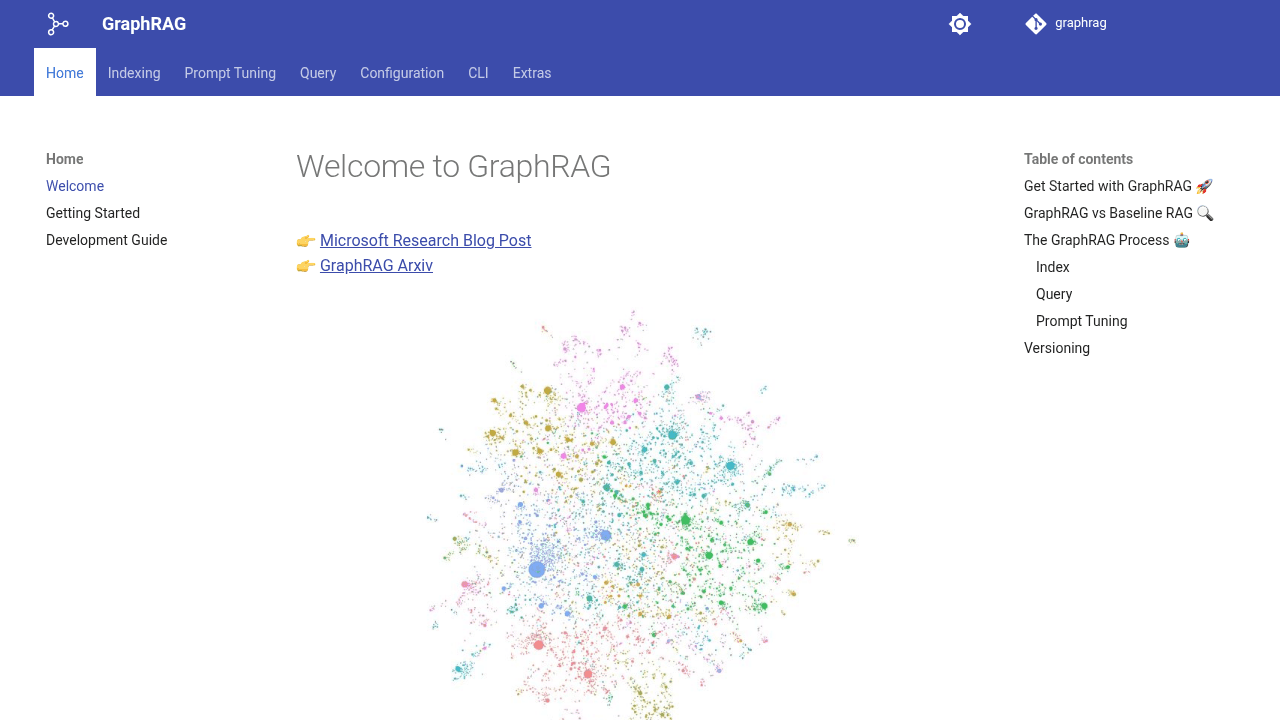
Microsoft's GraphRAG launched with a specific promise: fix the problem where traditional RAG systems can't connect dots across disparate information to answer complex queries. Ask a baseline RAG system to synthesize insights from scattered documents or reason across multi-hop relationships, and it struggles. GraphRAG's knowledge graph approach was supposed to solve that.
The repository hit 28.8K stars in twelve months. 188 US companies deployed it across financial services, IT consulting, and entertainment. LinkedIn reported the most concrete win: cutting ticket resolution time from 40 hours to 15 hours. Cognee AI, a GraphRAG-based framework, accumulated ~7,000 stars and 200-300 active projects. By mid-2024, this was the most discussed AI infrastructure topic in the RAG space.
Then the operational realities hit.
Where the Architecture Hit Operational Reality
GraphRAG's graph-based approach required multiple LLM API calls for entity extraction, embedding generation, and hierarchical community building. That made indexing costly and slow. The system's entity resolution matched primarily by name, causing issues when different concepts shared identical labels. Graph indices grew noisy without separate deduplication steps.
Huawei researchers documented scalability issues—rendering graphs becomes exponentially harder as data volume increases. An unbiased evaluation framework found GraphRAG's performance gains more moderate than Microsoft's original claims suggested.
These weren't theoretical concerns. Teams implementing GraphRAG discovered it was slow to run and frequently hit rate limits during indexing.
LightRAG and the Speed Reckoning
The industry didn't wait for GraphRAG to optimize. LightRAG emerged with faster indexing, incremental updates, and lower cost, directly addressing GraphRAG's operational pain points. The competitive landscape expanded: LlamaIndex offered production-ready RAG pipelines with comprehensive vector store management, while LangChain provided more out-of-the-box components for diverse LLM architectures.
Neo4j rolled out native RAG capabilities. Contextual AI shipped an agentic metadata search tool with multi-hop traversal. By mid-2025, momentum had shifted toward faster, cheaper alternatives.
Microsoft's Quiet Repositioning
Microsoft didn't abandon GraphRAG—they repositioned it. The technology now lives inside Microsoft Discovery Platform, marketed as "an agentic platform for scientific research" rather than a general-purpose RAG solution. That's strategic clarity, not retreat. GraphRAG's architecture makes sense for scientific workflows requiring deep multi-hop reasoning over large document collections, even if operational costs rule it out for typical enterprise deployments.
Meanwhile, LangChain and LlamaIndex added improved knowledge graph integrations, expanding graph-based RAG beyond Microsoft's implementation. The graph technology adoption wave continues, with GQL standard support spreading across platforms.
What This Cycle Teaches Infrastructure Teams
GraphRAG's trajectory reveals the gap between architectural innovation and deployment pragmatics. The graph-based approach correctly identified RAG's multi-hop reasoning limitations. But in AI tooling, operational friction—indexing speed, API costs, incremental updates—determines adoption faster than technical elegance.
For ML infrastructure leads evaluating RAG architectures: measure deployment friction before innovation claims. The system that ships faster and costs less often wins, even when the slower alternative solves deeper problems.
microsoft/graphrag
A modular graph-based Retrieval-Augmented Generation (RAG) system