Claude Task Master Hit 24,700 Stars in 9 Weeks
Claude Code shipped with a plan mode that can't track dependencies or multi-step workflows. An independent developer built the missing orchestration layer, and the community responded with 24,700 GitHub stars in nine weeks. Developers are using Task Master to stop AI agents from wandering off-task and breaking code.
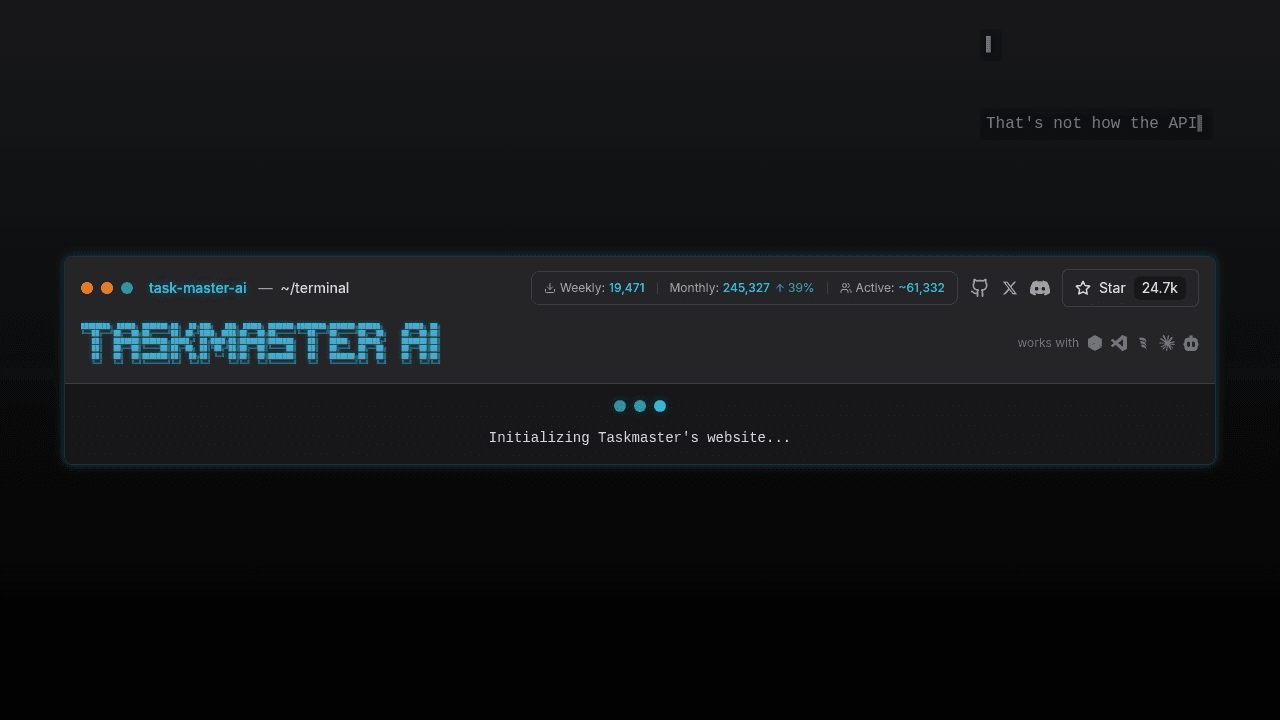
Point Cursor or Claude Code at a multi-file feature request, and they'll attack the entire project at once, lose track of requirements halfway through, or break working code while chasing a single bug fix. The problem isn't the models—it's the lack of structure around task decomposition and execution.
Claude Task Master addresses this. Drop a natural-language PRD into the tool, and it parses the spec into a dependency-aware task graph—small work items that agents execute one by one, inside your editor. No context juggling. No agents veering off-script.
The repository hit 24,700 stars in roughly nine weeks, a rare acceleration rate even in the AI tooling space. Reddit and Hacker News threads filled with developers calling it necessary infrastructure for keeping agents on-task. The momentum spawned forks—rzp-labs, robson-paproski, eighty9nine—and downstream extensions like a VS Code/Cursor plugin that surfaces the task hierarchy directly in the sidebar.
What Anthropic Left Out
Claude Code ships with a plan mode, but it only handles a single task at a time. No dependency tracking. No persistent project context. If your feature spans three files and requires database migrations before UI work, plan mode won't sequence that for you—you're back to manual ticket grooming and hoping the agent doesn't skip a step.
Task Master fills the orchestration layer. Initialize a project with npx task-master-ai init, point it at a PRD, and the tool generates a .taskmaster directory with structured tasks, dependencies, test strategies, and priorities. Each task becomes a discrete execution unit that agents can tackle without breaking the rest of the codebase.
The MCP integration matters here. Cursor users are installing Task Master via MCP deeplinks, which lets the tool hook into Claude Code's workflow without switching contexts. One Hacker News thread describes a workflow where Task Master via MCP replaces manual ticket grooming entirely—create the PRD, let Task Master structure the tasks, then execute with Claude Code.
Real Workflows
Tutorials walk through concrete usage: a developer initializes a new project, drops in a PRD file, asks Task Master to parse it, and watches the tool break the spec into a dependency graph stored in tasks/. The PageAI walkthrough shows Task Master computing the next task based on completion status and priorities, then reusing that structure across sessions—no need to re-prompt the agent with the full context every time.
The friction reduction is real. Instead of feeding long specs to an agent and hoping it doesn't lose the thread, developers describe using Task Master to turn those specs into clear PRDs that Task Master then turns into actionable, ordered work. The agent stays focused because the task scope is small enough to fit in its working memory.
Trade-Offs
Task Master introduces process overhead. You're adding a PRD-centric step to your workflow, which some teams may not need if they're only using agents for one-off refactors. The VS Code extension notes that performance on very large task lists still needs optimization, and the tool only operates in workspace contexts—no single-file quick fixes without a .taskmaster directory.
It also requires API access to LLM providers like Anthropic Claude, so you're paying for external tokens and living with network latency. That's a constraint, not a dealbreaker, but it means Task Master isn't a local, offline solution.
Why This Matters Now
The spike in adoption aligns with Claude Code's MCP release and the broader shift toward spec-first, agent-oriented development. Task Master isn't a replacement for coding agents—it's infrastructure that makes them practical. When developers talk about learning "AI-oriented codebase documentation and planning tools," they're signaling that the bottleneck has moved from model capability to workflow design.
The forks, extension proliferation, and tutorial wave suggest this isn't a flash in the pan. It's a response to a gap that Big Tech hasn't addressed, and the community validated it with stars and pull requests.
eyaltoledano/claude-task-master
An AI-powered task-management system you can drop into Cursor, Lovable, Windsurf, Roo, and others.