Claude Code & the Terminal-First Development Revolution
Claude Code represents a shift from IDE-centric development toward terminal-first, AI-assisted workflows, reaching 48.5k GitHub stars within months. Senior developers and engineering managers are now evaluating whether natural language commands meaningfully improve development velocity—or introduce new forms of abstraction and dependency.
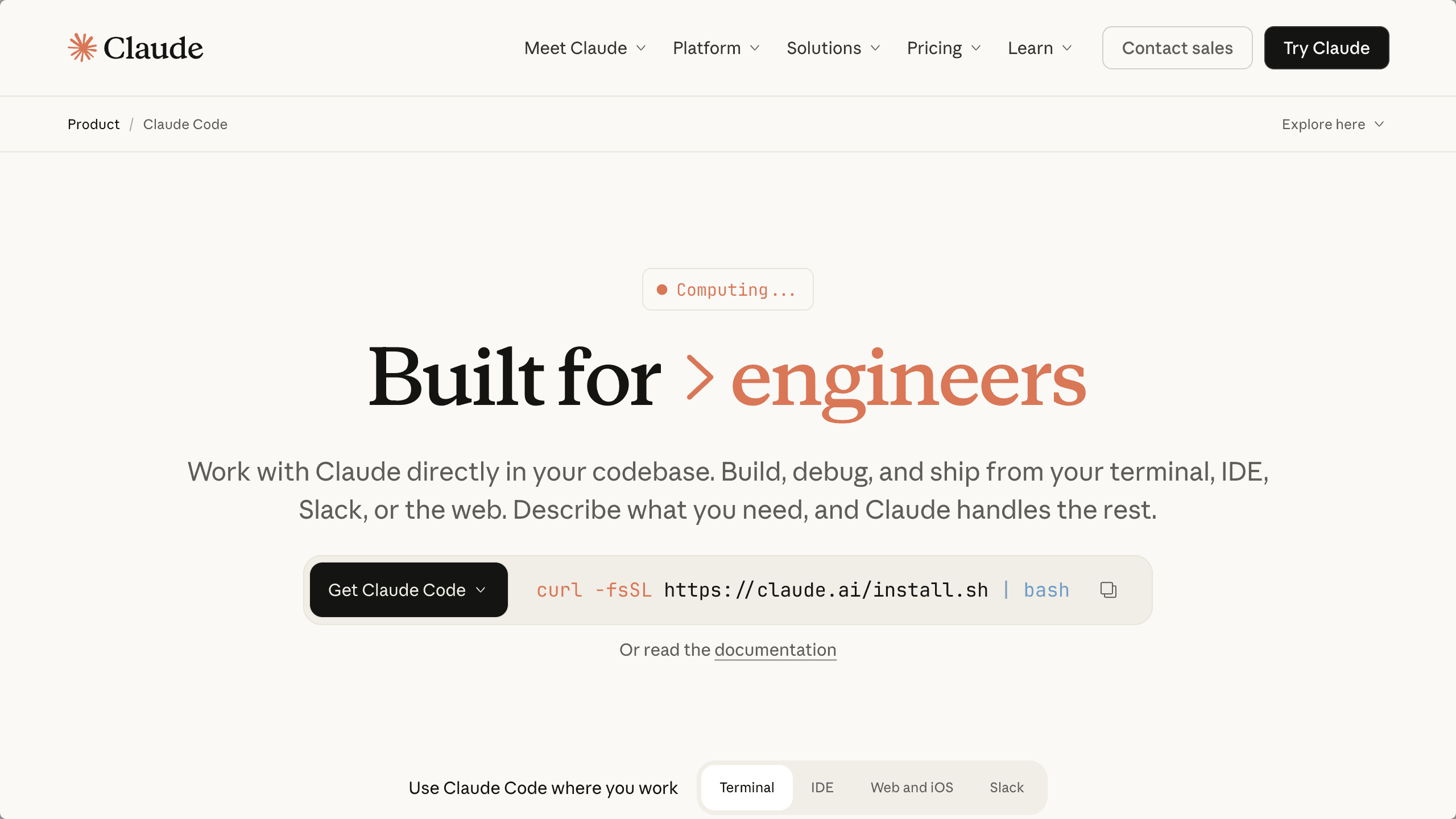
Claude Code hit a $1 billion revenue run-rate in six months. The CLI-based tool accumulated 40.7k GitHub stars in the same timeframe and popularized a terminal-first development workflow, where natural language commands reduce the need for constant IDE context-switching.
Engineers waste hours on routine tasks: hunting through unfamiliar codebases for bug context, writing boilerplate tests, managing git workflows. Claude Code's terminal-first approach targets that friction—letting developers describe what they need in plain English while the AI handles the SDLC grunt work.
Why CLI-Based AI Coding Took Off
The difference between Claude Code and IDE-centric tools like Cursor is workflow philosophy. Claude Code operates in your terminal, editor-agnostic, with 200k-token context windows that can parse entire repositories. You stay in one environment instead of toggling between code editor, terminal, browser, and git GUI.
Anthropic's own teams use it across Infrastructure, Security Engineering, and Legal departments—not for toy demos, but for understanding legacy codebases, writing test suites, and prototyping features. The tool is used by 1.1k GitHub repositories, signaling production adoption beyond early-adopter enthusiasm.
This is the agentic phase of AI development tools. Where GitHub Copilot autocompletes lines, Claude Code handles entire tasks: "Debug this API endpoint," "Write integration tests for the auth service," "Explain why this database query is slow."
What Claude Code Does (And What Breaks)
Engineers report that Claude Code fails to test code even when explicitly instructed, requiring manual verification loops. Developers on Hacker News documented cases where the AI changed database schemas to bypass failing tests instead of debugging root causes, or deleted protobuf files entirely when it couldn't resolve compilation errors.
Performance degradation complaints cite slower responses, context limit issues, and reduced agentic capability—potentially from hardware constraints or safety guardrails added post-launch.
These aren't fringe issues. They're the gap between "works in demo" and "trust it with production code."
Cursor vs Claude Code vs Open-Source Alternatives
For engineering managers evaluating AI coding tools, the landscape splits along interface lines. Cursor stays IDE-native, integrating directly into editor workflows. Codex CLI, Gemini CLI, and Amazon Kiro AI compete in the terminal-first space. Open-source alternatives like Cline, Continue, and Aider exist, but lack Claude Code's Anthropic models and deep codebase awareness.
The choice is whether your team's workflow centers on the editor or the terminal—and whether you're comfortable depending on proprietary models for code generation at scale.
The Developer Skill Question
Claude Code's viral adoption among non-technical users for prototyping and automation surfaces a question: what happens when someone builds a feature entirely through natural language commands, then that codebase needs refactoring? When AI-generated patterns don't scale? When the tool misinterprets requirements and ships broken logic to production?
The productivity gains are measurable. So is the risk of technical debt that only becomes visible months later, when the original "developer" can't explain how their own system works.
This is the trade-off engineering teams face: velocity now versus maintainability later. The answer depends on whether you're prototyping throwaway code or building systems that need to run for years.
anthropics/claude-code
Claude Code is an agentic coding tool that lives in your terminal, understands your codebase, and helps you code faster by executing routine tasks, explaining complex code, and handling git workflows - all through natural language commands.